Dehydrating Strawberries
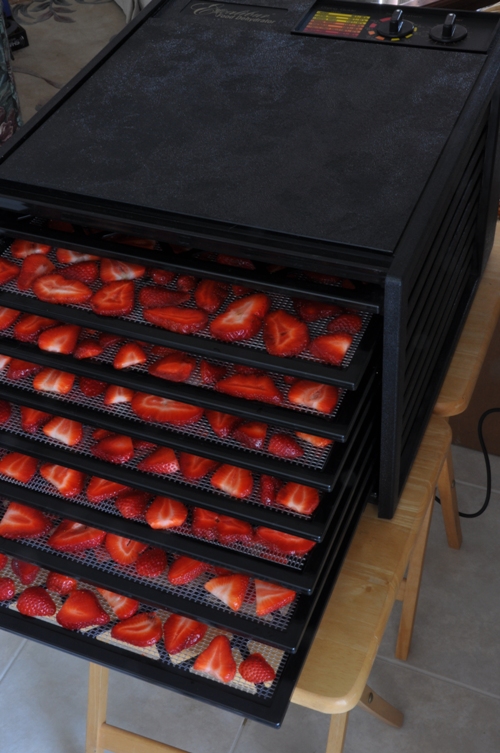 Okay folks, here is something that is so simple I can’t believe we haven’t done it until now!?! Dehydrating! Actually, the reason we haven’t done it in the past is because our oven temperature wasn’t low enough and there is just too much shade where we live to do it outside. However, all this has changed since we recently purchased the Excalibur 3900. Look out berries, look out citrus, veggies, apples, and more! We plan to make dehydrating a regular part of our preserving plan and the skies are the limits.
First up, dehydrating some freshly picked strawberries. We love making our own granola cereal and often purchase dehydrated fruits to include. But now we won’t have to because we can top our cereal, yogurt, or ice cream with these beautiful berries. We know where they came from, we picked them with our own two hands, washed them thoroughly, and sliced each one with care. There is something so satisfying about doing it yourself. Don’t you agree?
We don’t think the following recipe will be very helpful unless you have a dehydrator and even then the drying times may vary but we thought we’d include it to show you how easy it really is. Who knows maybe you have a dehydrator or are thinking about getting one? This might encourage you to add dehydrating to your preserving projects. It really is simple, simple, simple!
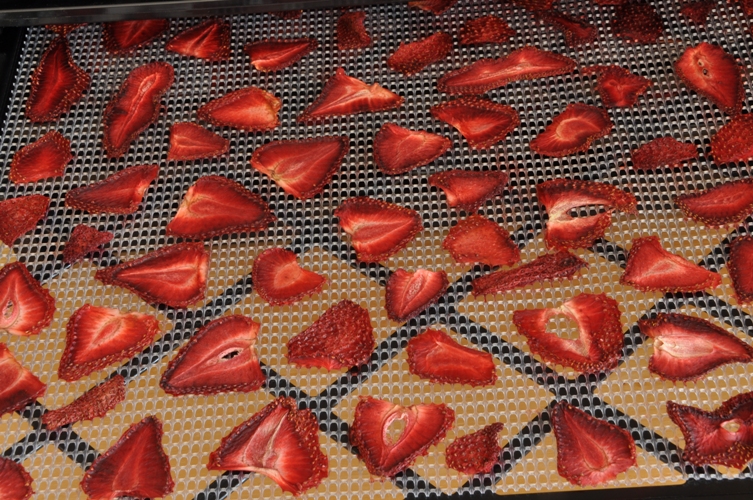
RECIPE FOR DEHYRDATING STRAWBERRIES:
- strawberries (use as many or as little as you want to dehydrate) ~ approximately 11 lbs will fill all 9 trays on our unit
- Wash strawberries well and remove stems.
- Cut into 1/4″ slices. Note: It’s important to try to cut the slices all the same thickness so that they will evenly dry.
- Lay berries onto dehydrating tray arranging them closely but not touching.
- Place trays into dehydrator for 8-10 hours.
- Check after 7 hours to see if they are the texture you like. If not, continue to dehydrate for up to 5 more hours. You want them pliable and leathery but not soft.
- Label and store in clean sterilized mason jars.
Put up Total:
- 2 x 500mL Weck Mold Jars
- 2 x 500mL regular mouth mason jars
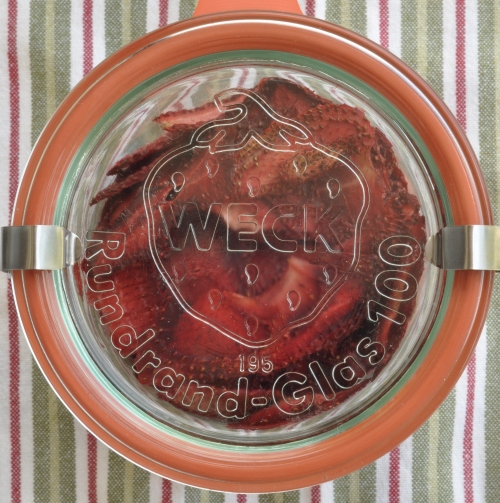
Note: If you live in a warm/humid part of the world you may want to refrigerate your dehydrated fruits and veggies. We live in Canada and will store them in our pantry. If condensation appears in your jars or Ziploc bags then they require further drying.
Tomato Jam ~ I put that “$@%!” on everything!
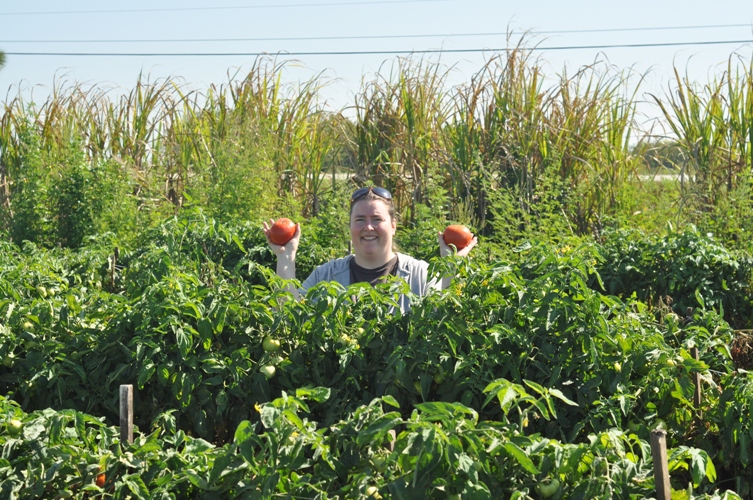
It’s tomato season here in South Florida and the fields are full of plump juicy red tomatoes. At Bedner’s, pick your own farm, you can forage for a heaping bucket of tomatoes in about 5-10 minutes. The vines are dripping with green and red tomatoes in a variety of sizes, with most of them being about as large as your fist. We spent more time taking photos and basking in the sunshine than picking the tomatoes.
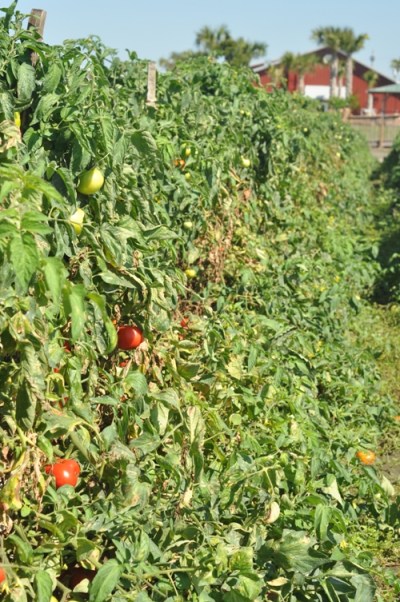
Last summer, we made 5 batches of this delicious tomato jam and we thought that would be more than enough! But, we put that “$@%! “on everything from toast and eggs to meatloaf and chicken. We open a new jar about every 2 weeks and we have our doubts about whether or not our supply will last until our Ontario tomatoes arrive sometime in late July. It’s now a staple in our home and replaced ketchup in most cases…and, that say’s a lot about how good it is because I’m a Heinz girl and love, love, love ketchup! So, we are deviating away from our citrus and strawberry plans to make a quick batch of this jam and honestly if I had my way I’d make more than one batch!
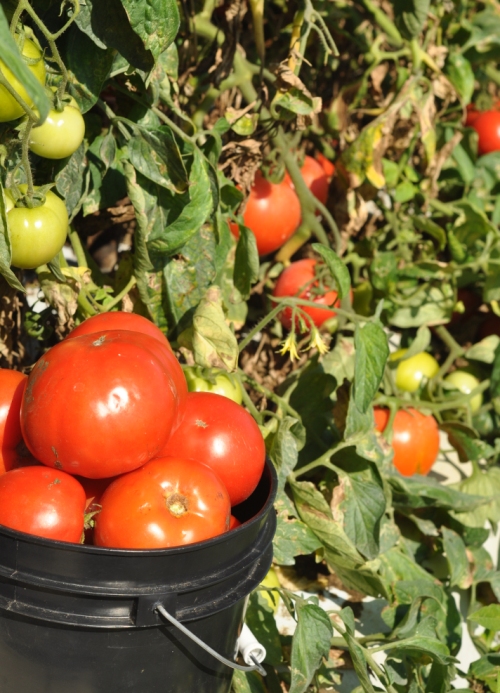
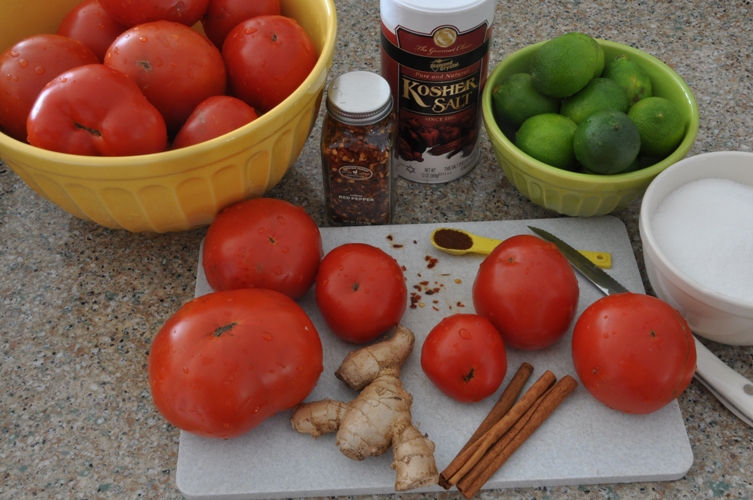
You can find the recipe for this tomato jam here. It is really easy to make and we would strongly recommend giving it a try, especially for those of you who are just starting your canning careers. It takes about 1/2 hour to prep the ingredients and is made much easier if you select large tomatoes.
The majority of your time will be spent cooking it down. That takes about 1 to 1 1/2 hours because tomatoes are full of water but it doesn’t require too much attention at first. Just the occasional stir for the first 30 to 40 minutes will do the trick.
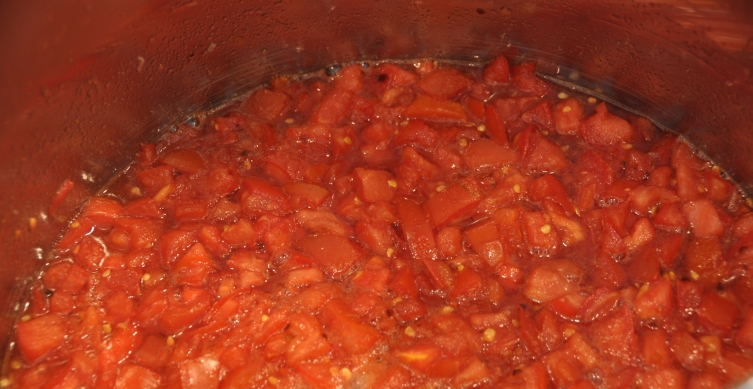
After about 40-60 minutes you will notice that the tomato jam has reduced by about half. Be sure to stir it more frequently so that it does not stick or burn to the bottom. Notice in the photo how much it has reduced. Notice the starting level on the side of the pot.
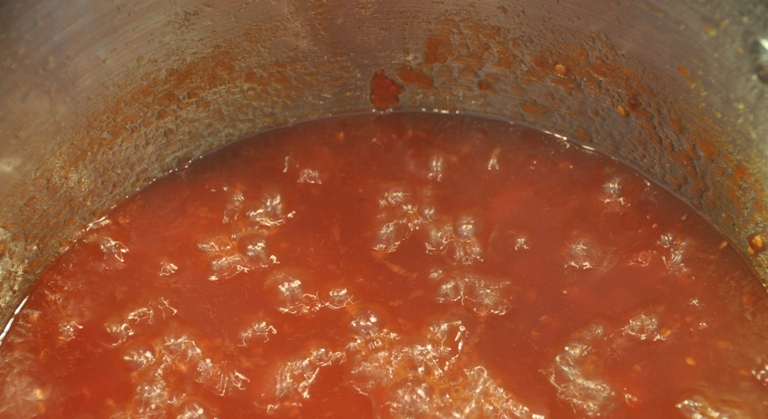
It is ready to jar when you can draw your spoon or heat proof spatula across the bottom and see the pot. The jam is much thicker and now a rich red/burgundy colour. It appears glossy and the bubbles are smaller.
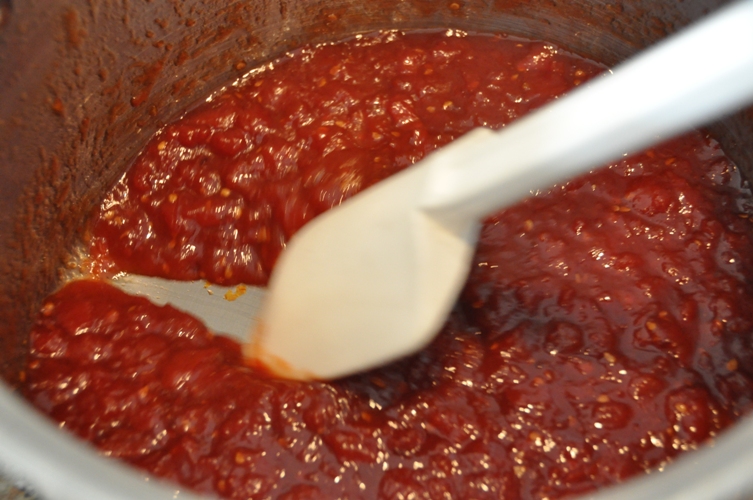
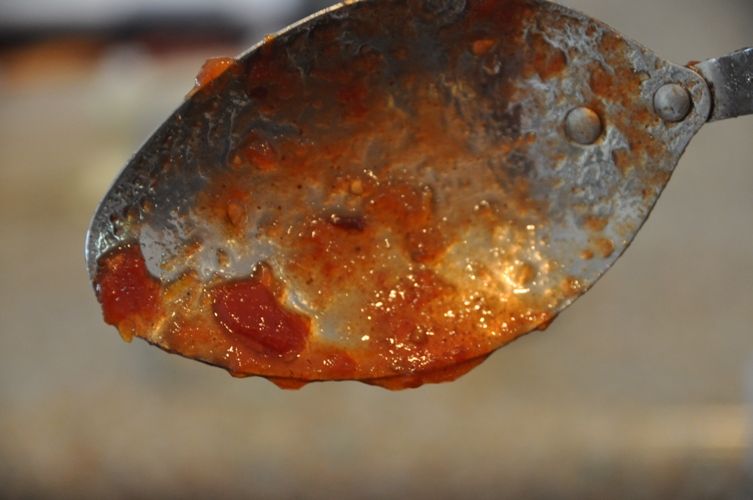
At this point you should remove it from the heat and do your frozen spoon test. Collect a small representative of the jam on your spoon and hold it horizontally. If the jam collects into a large mass and does not run easily you know it is ready. If it continues to run quickly and forms syrupy drops return it to the heat and test again in a few minutes. The photo below demonstrates a successful spoon test, this jam is ready to jar.
Jar and enjoy!
Put up Total:
-
3 x 250mL regular mouth diamond jars
-
1 x 500mL tulip weck jar
Note: this jam always yields 5 x 250mL (half pint) jars, give or take a spoonful. This is another great way to know that it is ready to jar. If you have more than this amount chances are it is still too runny. And, for those interested, this jam has a pH of 3.66 (+or – .02).
Fruity Flame Sauce ~ A Tropical Hot Sauce
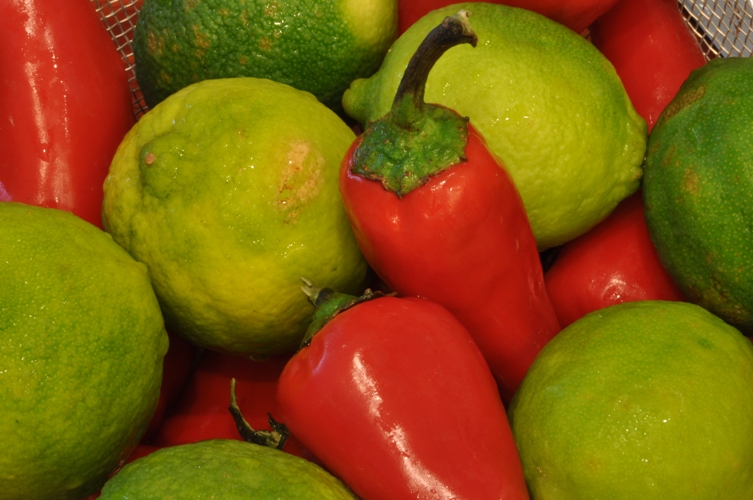
Making hot sauce has always been a favorite past time around our home. Matt loves it and coats most meals from chicken wings to pizza in Franks. But, he also loves to experiment with different peppers, fruits, and vinegars to create hot sauces with a unique flavour and a little more heat.
Hot sauce is a great condiment to keep on hand and it can easily be tailored to your liking, to compliment an array of dishes. This recipe is a carribean inspired sauce that will enhance most mexican and island dishes. Experiment with different citrus juice or by adding other tropical fruits like papaya or bananas. Just as long as it’s hot, you can’t go wrong!
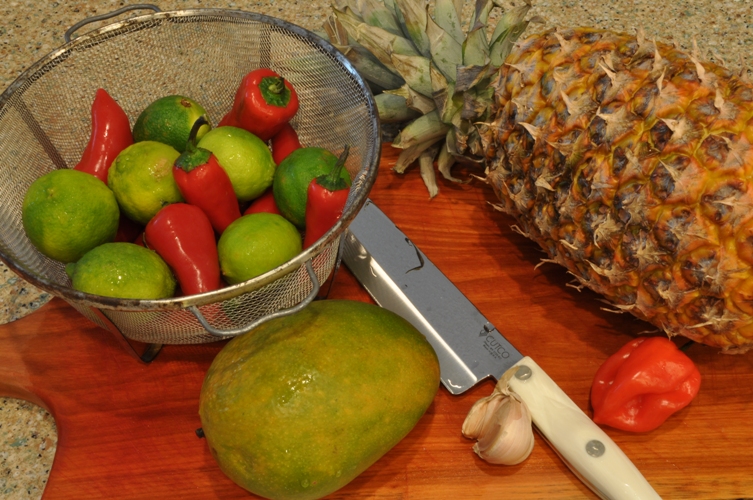
RECIPE FOR HOT SAUCE:
- 1 mango
- 2 cups coarsely chopped pineapple
- 1/2 cup freshly squeezed lime juice (approximately 7 limes)
- 4 cloves garlic
- 1/2 tsp fresh grated nutmeg
- 12 red jalapenos seeded and cut in half
- 1 Habanero seeded and cut in half
- 1 tbsp kosher salt
- 2 tbsp white wine vinegar
- In a medium size stainless steel saucepan saute garlic.
- Add all other ingredients (except the vinegar) bring to a boil over medium high heat, reduce heat to low and simmer for approximately 45 minutes.
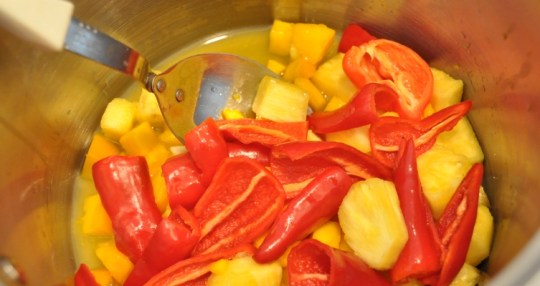
- Using an immersion blender puree until mixture is smooth. Stir in vinegar.
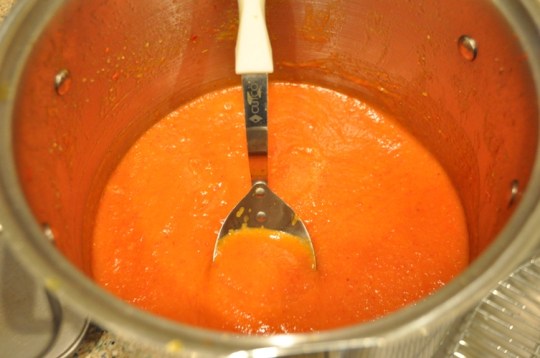
- Ladle hot sauce into clean sterilized jars and refrigerate.
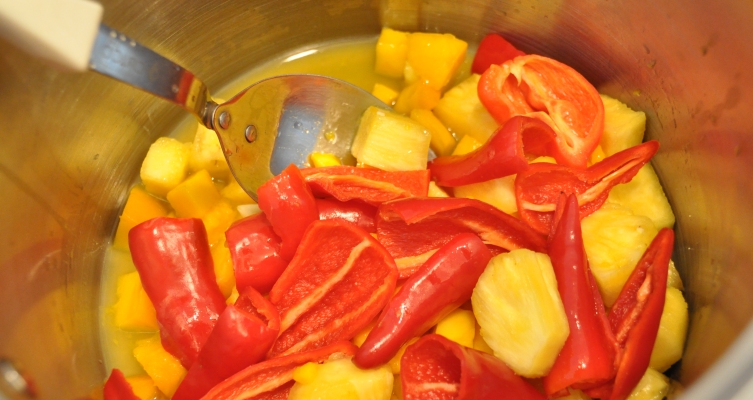
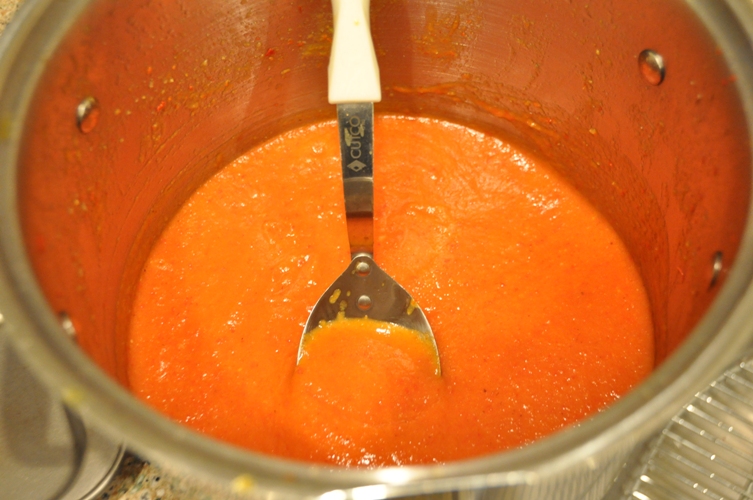
This hot sauce has a really sweet pineapple flavour up front but upon swallowing, you will definitely feel the heat. And, forget about letting in linger in your mouth…that’s just out of the question!
Put up Total:
- 750mL ~ 3 repurposed glass jars
A Strawberry Jam Shoutout!

The other day we all went to a pick your own strawberry farm here in South Florida. I remember as a child going to a strawberry field every summer near Owen Sound and spending the afternoon with my mom and younger brother picking berries. I think more were eaten than picked but these are cherished childhood memories and even now, as an adult going to a pick your own farm brings these good memories flooding back.

It’s a great way to spend quality time with loved ones and a wonderful way for children to learn about where food comes from. All in all it is something I think everyone should try at least once. Just remember to leave the cell phones behind so that you can thoroughly relish in the moment and the wonder of what mother nature provides.
 Bedner’s is a pick your own farm about 20 minutes from where my mom lives. You take a tractor ride out to the fields where you arrive to find endless rows of strawberry plants all teaming with large red delicious berries.
The beds are slightly raised and covered in black plastic that keeps the soil from washing away. I greatly appreciated the raised beds because I’m having some trouble with my back but I wasn’t thrilled to see so much plastic. Strawberries are available to pick at Bedner’s for approximately 3 months. That is just amazing to me as our season in Northern Ontario lasts about 3 weeks. These berries were huge and extremely sweet for their size. At home the berries are considerably smaller but so so sweet. I’ve always assumed that was the trade-off (smaller berries equals sweeter berries). But, I’m pleased to report these big fellers were delicious.
RECIPE FOR STRAWBERRY JAM (modified from Blue Chair Jam Cookbook ):
- 4 pounds strawberries (approximately 12 cups; the cup measurement will vary and is difficult to correctly obtain when using whole berries)
- 2 1/2 pounds granulated white sugar (approximately 6 cups)
- 3 small lemons
- 1/3 cup freshly squeezed lemon juice (approximately 1 small lemon)
- 2 1/2 oz Drambuie
- Peel 3 small lemons removing a thin layer of the outer rind to cut into star-shaped pieces. The rind can also be cut into thin strips or excluded altogether. Remove the remaining white pith and slice the lemons into 1/4 inch rounds then quarter each slice. Put the star-shaped rinds and the lemon quarters in two separate bowls, covering with water. Cover each dish and set aside for 8-12 hours.
- Next day ~ Prepare for water bath canning. Place a few spoons and a plate in the freezer to test for doneness later on.
- Discard the water in both bowls of prepared lemons. Put 1 cup of water in a small stainless steel saucepan and add lemon stars/rinds. Bring to a boil over med-high heat and boil for approximately 20 minutes or until rinds are tender.
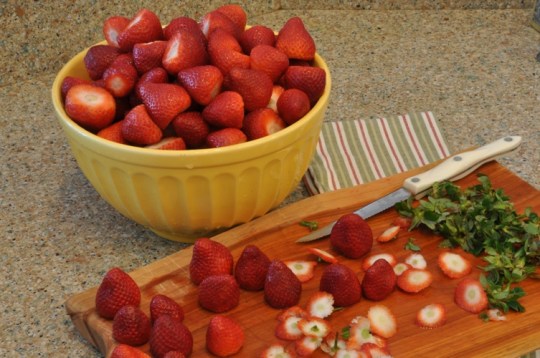
- Wash strawberries well, remove tops and cut larger berries in half (or leave whole if that is your preference.) Keep in mind that strawberries are one of the fruits that are sprayed with a lot of pesticides so washing well is important.
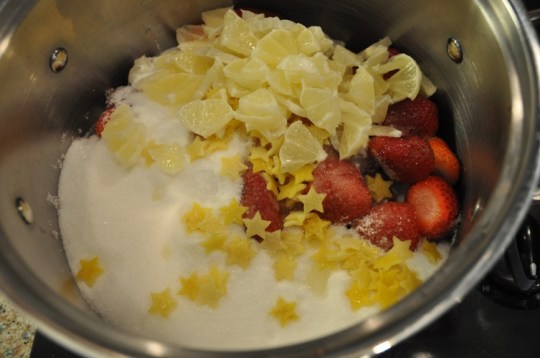
- Combine strawberries, sugar, lemon membrane pieces, and rind in a large stainless steel saucepan and bring to a boil. Boil hard for 30-40 minutes, stirring constantly to be sure that it does not stick to the bottom. Note: You may want to reserve the star lemon rinds and add them a little later on. Although, they did maintain their shape the colour is lost during the cooking process.
- After 30-40 minutes remove the mixture from the heat and skim the foam. Add lemon juice and Drambuie and return to a boil for 5 minutes. Test for doneness.
- Ladle hot jam into hot sterilized jars leaving 1/4″ headspace, remove air bubbles, and top up jam if necessary.
 Wipe rims with damp paper towel. Center lids on rims and tighten rings until resistance is met (finger-tip tight). Process for 10 minutes in a hot water bath.
 - Remove lid and wait 5 minutes. Remove jars, let cool, check seals, label, and store.

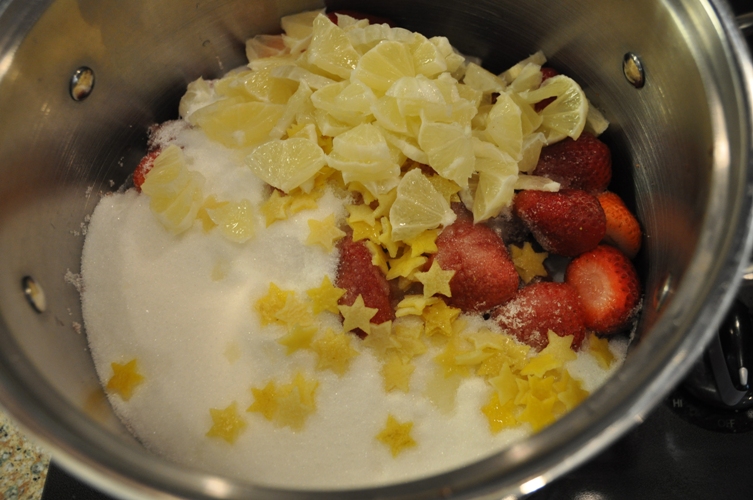
Please note: the times for cooking above may vary depending on both your stove and the pot you use. We are working in a different kitchen and believe that our stove at home would probably reduce cooking time by 15-20 minutes throughout the whole process.
Put up Total:
- 1 x 250mL regular mouth diamond jar
- 2 x 500mL Weck Deco jars
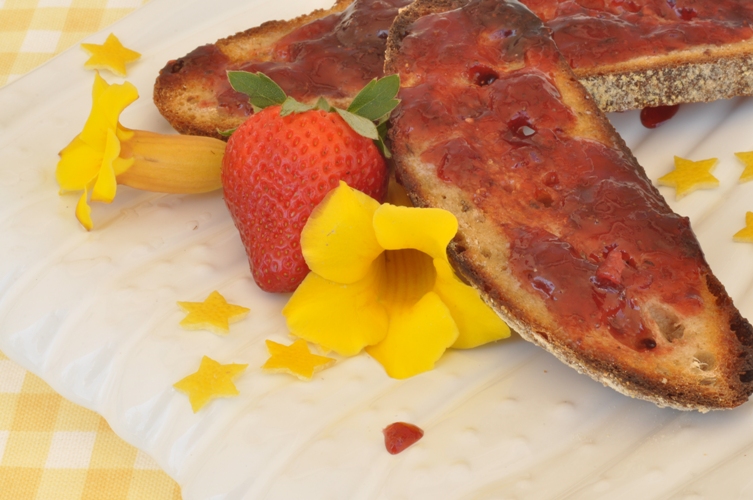
This jam is so delicious that it will have a special place in our pantry. The star lemon rind pieces add that little bit of lemony goodness that can only be described as a fresh flavour. The colour is rich, the strawberry taste intense, and the Drambuie blends in perfectly. I strongly recommend trying this jam.
Extreme Eating Challenge
Disclaimer: No jars were harmed during the making of this next post.
Just a couple of bruised egos.

Last night we met up with my sister, her husband, and another so-called extreme eater, named Guy, to take on an extreme eating challenge at the Extreme Eatery in Delray Beach. Let’s just say there was one challenge winner and two losers. Guy should change his name to Boy and Matt should never take on another timed eating challenge again!
You could choose your challenge. Matt chose the 3lb burger with a pound of french fries. Everything on the plate had to be consumed in 45 minutes. “D” and Boy selected the philly steaks, approximately 2lbs of meat and buns but the fries were just for show.

At first all was well. The boys were starving and full of confidence but as Matt’s 3 pound burger arrived the hope of succeeding diminished slightly. This burger was MASSIVE. Gluttonous in fact. Anyone who knows Matt knows he can eat but he is slow. Slow, slow, slow! A timed challenge just seemed wrong!?!

Why are you eating the lettuce?

Notice "D's" walker in the background!?!
My sister’s husband, “D”, is a huge eater and has the mental will of an ox. I was fairly confident he would succeed because he’s just too committed to lose. He was our chanllenge winner!! “D’s” handsome mug will now hang on the wall of this establishment as a token of this milestone along with maybe 20 others!
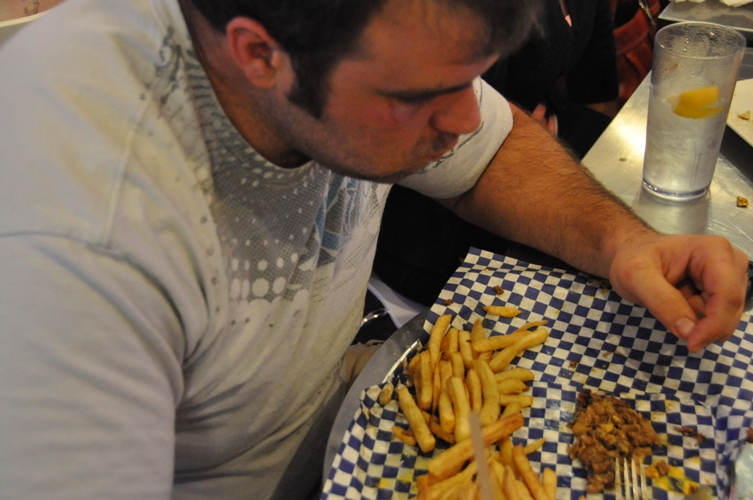
Good to the last bite?

Smallest Loser
Despite the fact that Matt did not succeed he went down chewing. He didn’t lose because he was full he lost because he ran out of time. Can you believe that he washed it all down with a pint of beer and wanted to stop to get ice-cream on the way home?
Spring into Action ~ Pickled Asparagus
Before we left Canada you could almost smell spring in the air…almost. But, here in Florida everything is in full swing. Asparagus is ready and available everywhere, the tractors are operating to take people to the pick your own sections where the tomatoes and strawberries drip from the plants, and bins are overflowing with a variety of citrus. It’s a preservers paradise!
With our trip to Vietnam scheduled for April and May we are likely to miss pickling asparagus, fiddleheads, and wild leeks. Luckily, we don’t have to worry about the asparagus because we are able to do it now.
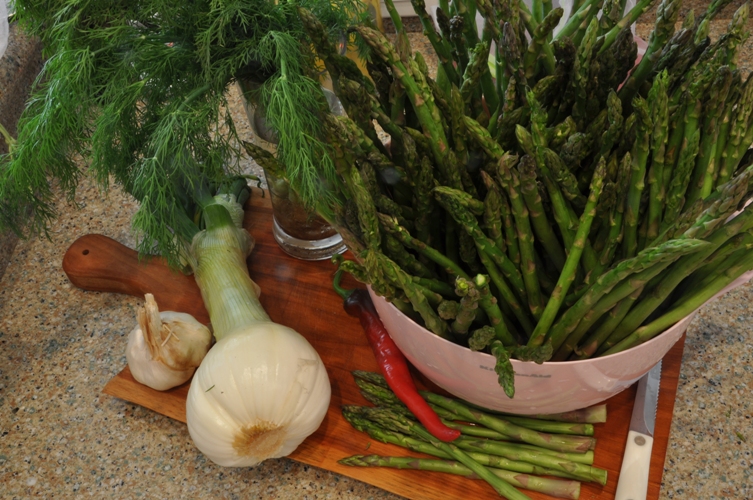
RECIPE FOR PICKLED ASPARAGUS:
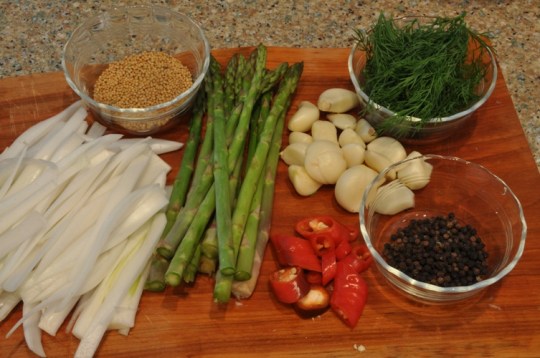
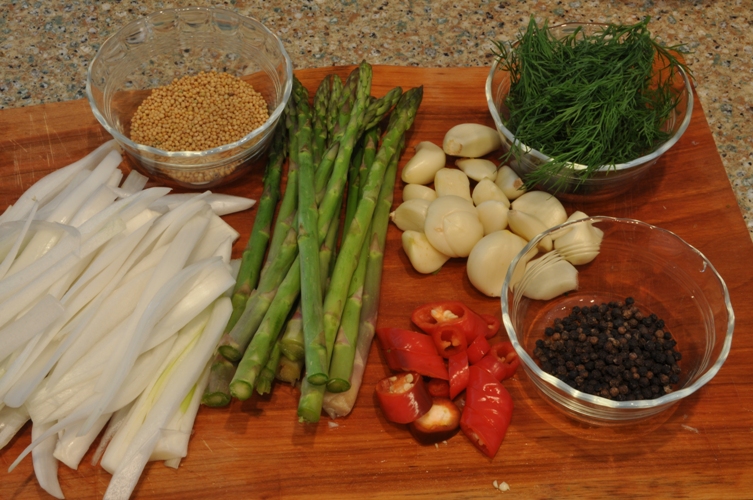
- 6 pounds of asparagus
- 8 cups vinegar
- 8 cups water
- 8 tbsp sugar
- 8 tbsp pickling salt
- 1 sweet Florida onion (or any readily available variety)
- 1 long hot chili pepper (optional)
- 8 tsp mustard seeds
- 4 tsp black peppercorns
- 54 sprigs of dill weed; approximately one bunch (it’s not as much as it seems) and/or add 1-2 tsp of dill seeds to each jar
- 16 garlic cloves
- Wash asparagus well and trim each piece to fit in jar. The asparagus should be 1″ less than the rim of the jar. Place asparagus in a large shallow dish or cooler and cover with ice water for 1 hour. Note: this will help to keep the finished product more crunchy.
- Meanwhile, slice onions and chili pepper(if using) in strips and peel garlic cloves.
- Prepare for water bath canning. Sterilize jars in the oven at 250F for 30 minutes.
- In a large stainless steel preserving pan bring vinegar and water to a rolling boil.
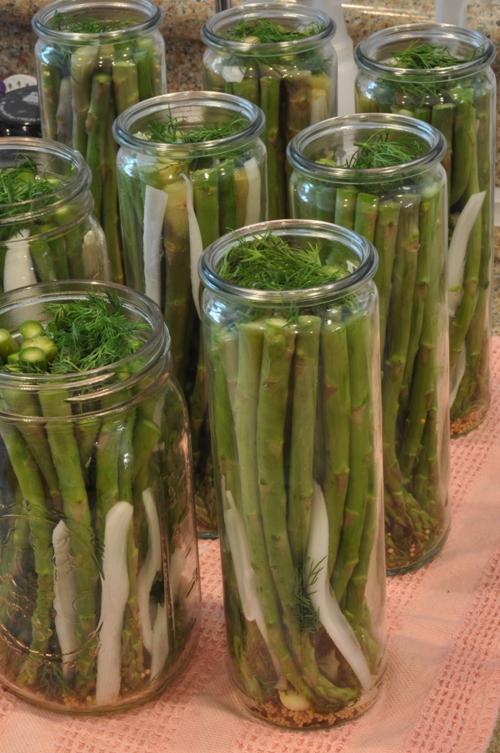
- Place 2 cloves of garlic, 1 tsp mustard seed, 1/2 tsp black peppercorns, and 6 sprigs fresh dill weed, several strips of onion, and 1-2 chili rounds in each jar.
- Blanch asparagus in the brine for approximately 2 minutes or until heated through. (Note: we did not blanch them but think this would have helped our water bath reach a rolling boil much quicker. We will blanch them next time.)
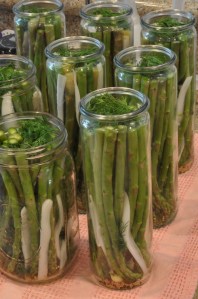
- Remove asparagus from brine. Working quickly, place blanched asparagus into sterilized jars, packing the jars well. (Note: tips down or tips up…it’s up to you. We pack them tips down because it makes lifting them out of the jars easier.) Ladle hot brine into each jar leaving 1/2″ headspace. Remove air bubbles and adjust headspace, if necessary, by topping up with hot brine.
- Wipe rims using a damp paper towel, center lid on jar and screw band on to finger tip tight. Process for 10 minutes.
- Remove lid and wait 5 minutes before removing jars. Let jars cool, check seals, label, and store.
Put up Total:
- 6 x 500mL weck asparagus jars
- 3 x 500mL wide mouth mason jars (Note: these jars could have been packed tighter ~ to yeild 2 x 500mL mason jars)
Admittedly, this was not a complete success. The asparagus shrivelled quite a bit and although we’ve read that happens (and that they may rehydrate) we think that our asparagus was in the processor too long (it took a long time to reach a boil). Next time, we will make sure to keep the jars hot right up until they are ready to be packed and blanching the asparagus will help too. We also think choosing thicker pieces may prevent some shrivelling because the larger the piece the less they shrivelled. We hoped to get a chance to try making these again before we depart home to Ontario but with so much citrus to choose from the asparagus may have to wait.
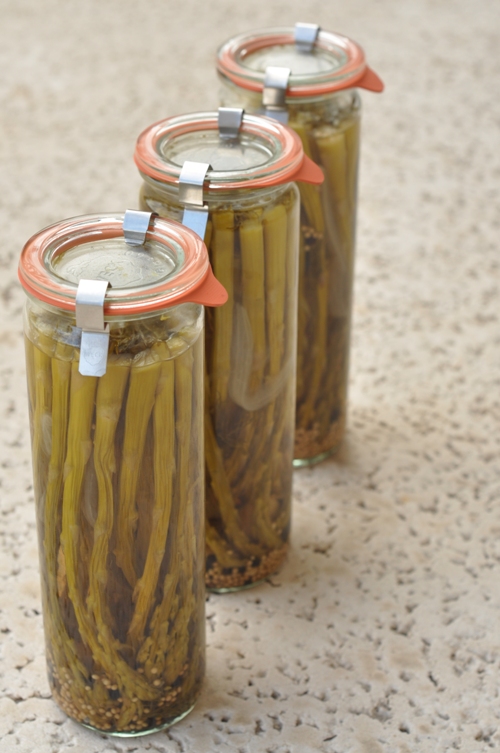
We can say this for sure…despite the fact they are a little stringy (over processed) the taste is great! Pickling anything whether it is asparagus, beans, carrots, or cauliflower is a wonderful preserving project for first time canners. Preparing to pickle any kind of vegetable doesn’t take long and small batches can be refrigerated if you want to avoid processing. We encourage you to spring into action and get ready for another exciting canning and preserving year by trying something pickled!
We’d love to hear about how your pickled asparagus turns out? Does it shrivel? And, what are you planning to pickle this year? Any favorite recipes?


 Putting Up With The Turnbulls