Bitter Heat ~ A Marmalade with Kick!
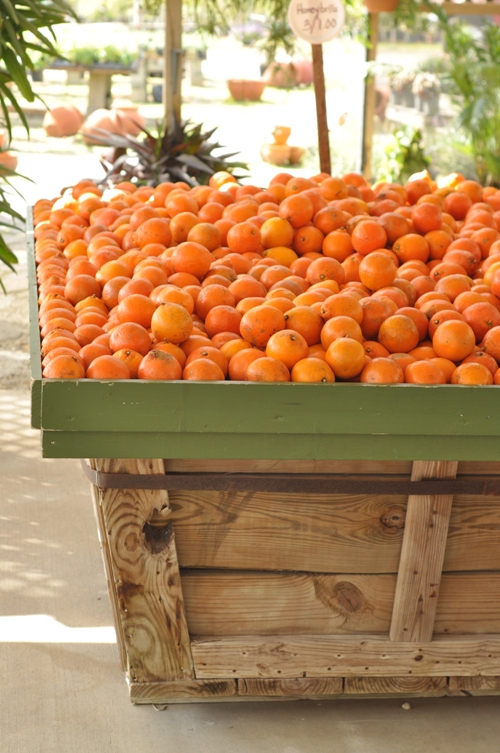 Now, that we are here (in Florida) and surrounded by all that southern goodness…you know the kind I mean; the oranges, lemons, limes, grapefruits, peppers, and all other colourful heat loving fruits and veggies, we just can’t stop ourselves from making some of our favorite preserves.
Last year, we made one batch of this marmalade which equates to approximately eight 250mL jars (1/2 pints)…not a lot but a lot when you consider we make about 20 different kinds of marmalade each year; it’s enough or at least that’s what we thought. But, one year later we’ve consumed each and every jar, leaving us pining for more! I can honestly say this one was a big hit and made our top 5, right between our favorite grapefruit marmalade and our pineapple ~ lime. It was one of Matt’s favorites because it packs the fiery heat he loves. For me, it borders on having too much heat but it’s a good kind of heat, the kind only habaneros and good scotch whiskey leave behind…if you know what I mean!?! It’s a heat that comes from behind but doesn’t burn the entire mouth.
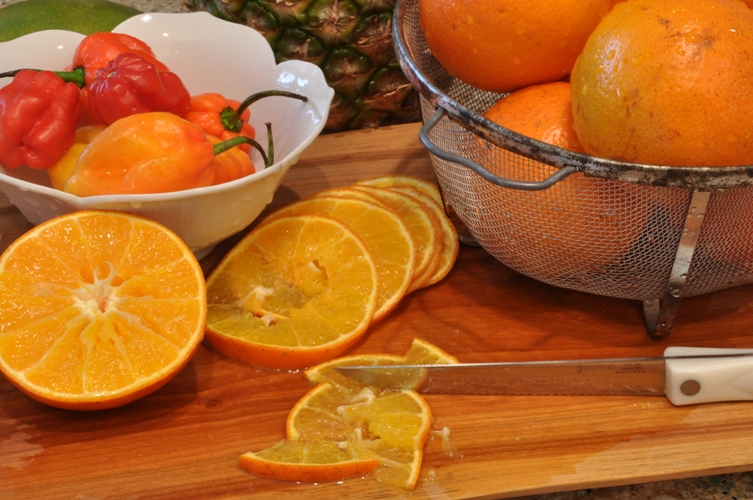
RECIPE FOR BITTER HEAT MARMALADE:
- 2 1/4 pounds honey bell oranges; approximately 4 honey bells
- 2 small lemons; finely grated zest and juice
- 1/3 cup habanero peppers; approximately 3 habenaro peppers
- 6 cups water
- 8 cups sugar
- Wash oranges and lemons well. Place one small plate and several spoons in the freezer to check for doneness later on.
- Slice oranges into thin strips and then quarter.
- Combine oranges, lemon zest and juice and water in a large stainless steel saucepan. Bring to a boil over high heat, stirring constantly. Reduce heat and boil gently, stirring occasionally, for 40 minutes.
- Meanwhile, cut habaneros into fine pieces on a separate plate. Note: We always use a separate plate when cutting any kind of hot pepper and wearing gloves is also a good idea. This way you can be sure not to contaminate your cutting board and skin with that burning hot intensity these peppers pack.
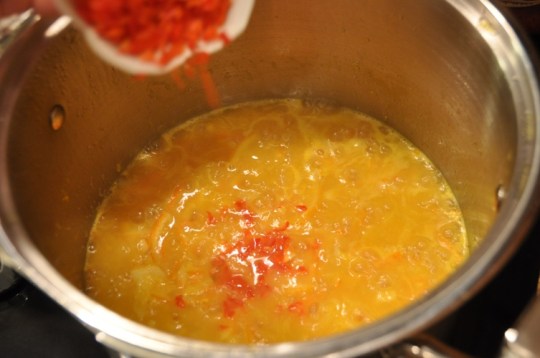
- Add habaneros. Partially cover the pot and continue boiling for approximately 30 minutes, stirring occasionally.
- Prepare for water-bath canning.
- Add sugar, stirring to combine. Boil hard, stirring occasionally for approximately 10-15 minutes or until mixture reaches gel stage. After about 10 minutes test for doneness using your frozen plate and/or spoons.
- Skim foam.
- Ladle hot marmalade into hot sterilized jars, leaving 1/4″ headspace. Remove air bubbles and adjust headspace, if necessary, by adding hot marmalade. Wipe rim with a damp paper towel. Center lid on jar. Screw band down until resistance is met, then increase to finger-tip tight.
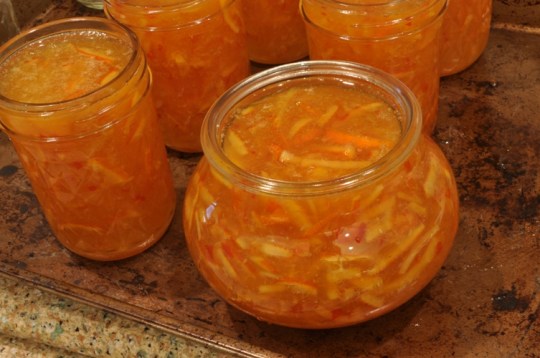
- Place jars in canner, ensuring they are completely covered by at least 1 inch of water. Bring to a full rolling boil and process for 10 minutes. Remover canner lid and wait 5 minutes before removing jars.
- Check seals, label jars, and store in a cool space for up to 1 year.
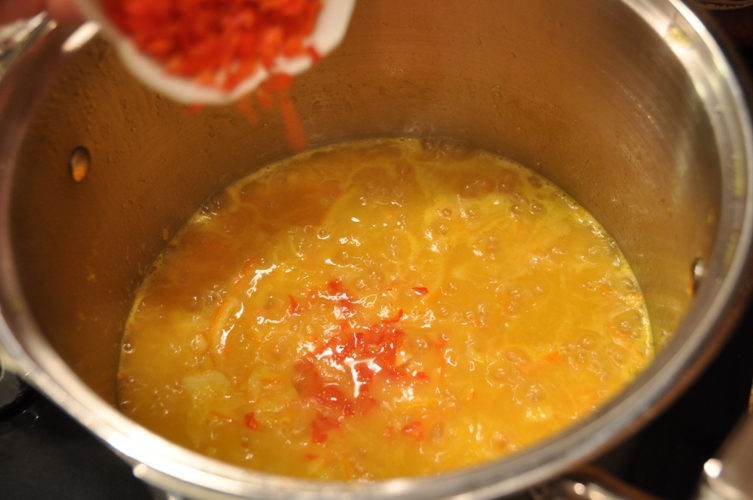
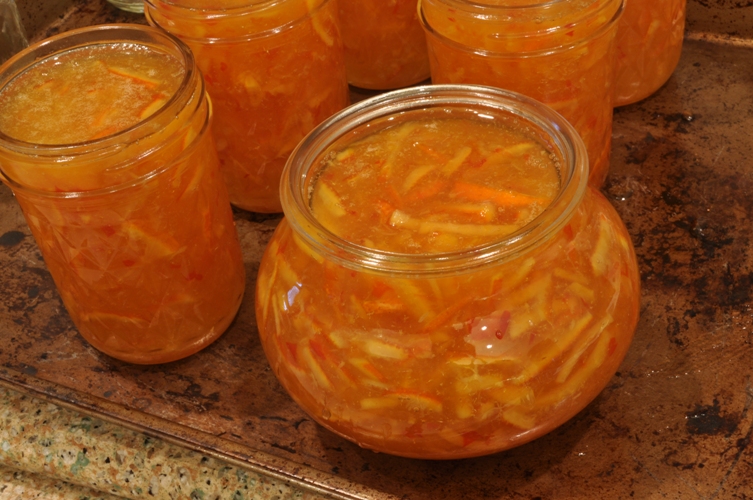
This marmalade can pack as much or as little heat as your taste buds can handle. If you like a marmalade with kick (or should I say punch) than, this is the one for you! If not, try it anyway using a milder pepper or by cutting back on the number of habaneros. Be sure to watch this one carefully as it approaches the final stage and start testing for doneness early. When using as much sugar as this recipe calls for it can set up a lot quicker than you’d expect. We may have over done it a little!?! Thankfully, this is one of our favorites and we will be making a second batch.
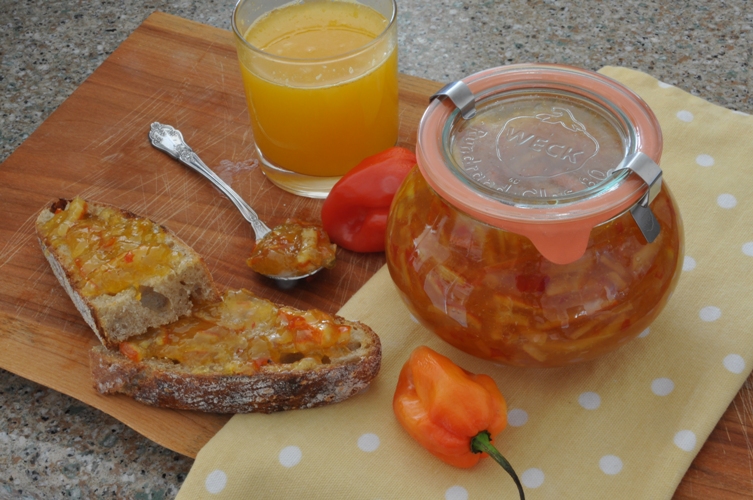
Put up Total:
- 5 x 250mL regular mouth diamond jars
- 1 x 500mL deco Weck jar
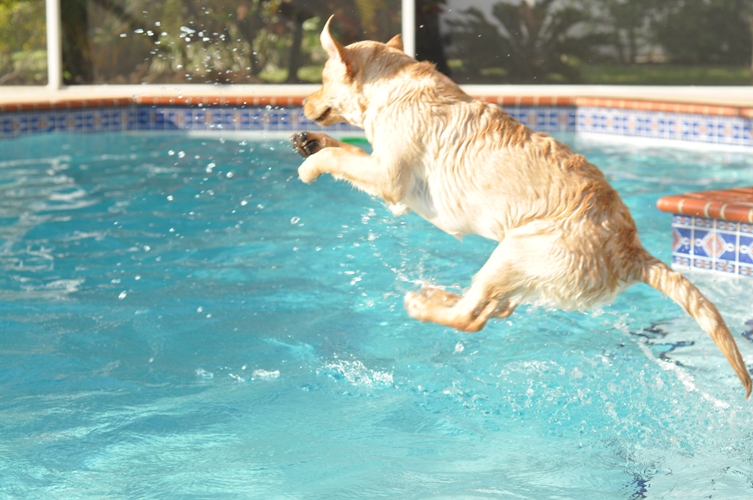
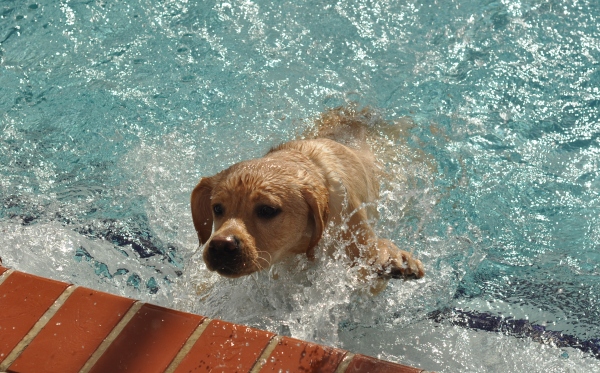
Day two and our pup is taking to the water like most labs do ~ he’s all in!
Florida’s Perfectly Preserved Lemons
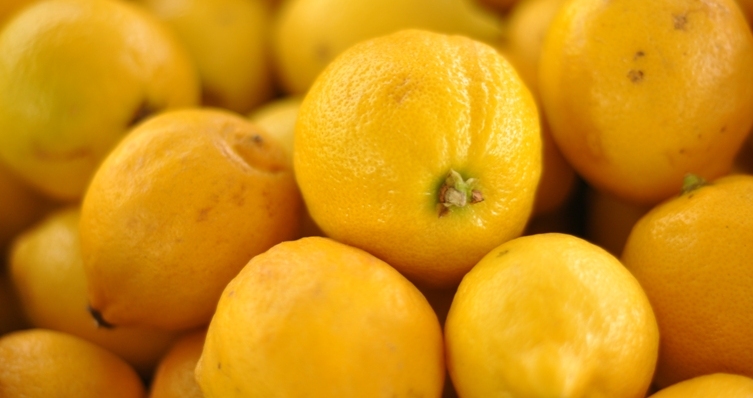
Matt and I (plus our 3 pups) arrived safely in the sunshine state late Sunday night. Despite only a few hours of sleep, the next day we headed to the nearby fruit and veggie market, The Farmer’s Daughter, to scope out the bins and bins of citrus. The mission was to make “something simple, something easy, something that will leave us time to swim, play with our pups, visit with family, and rest after the long drive.” Preserved lemons were just the answer. We make a jar of them every year using fresh “off the grove” Florida lemons. They are a rather unusual tasting treat and add extra flavour to homemade stews, salads, Moroccan dishes like tagines, or eat as a side.
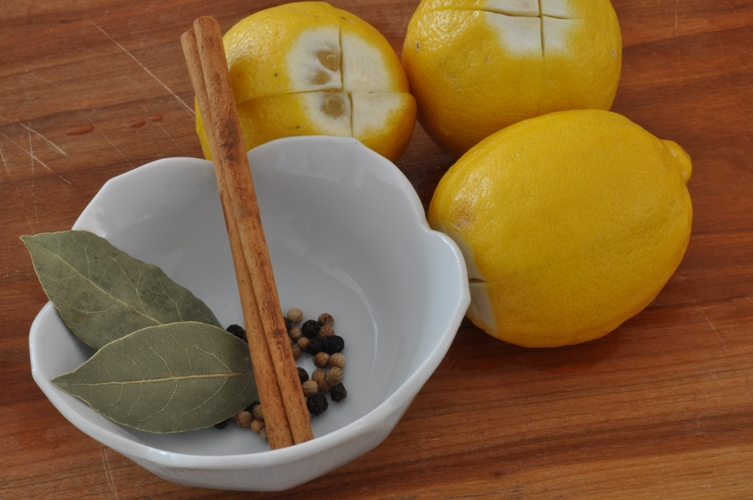
RECIPE FOR PRESERVED LEMONS:
- 18 small lemons; divided 10 for preserving and 8 for additional juice
- 10 tbsp kosher or pickling salt
- 2 small bay leaves
- 1 cinnamon stick
- 1/2 tsp peppercorns
- 1/2 tsp coriander
- Wash and place 1 x 1 litre jar in oven at 250F for 30 minutes to sterilize. This process is probably unneccessary but we always clean and sterilize the jars we use ~ it’s a habit.
- Wash and scrub the lemons well. Cut of the blossom end of 10 lemons (or however many you can fit in your jar). Then slice the lemons in quarters to within 3/4 inch of the base so they open but remain as one.
- Pack 1 tablespoon of salt into the slits of each lemon and then pack them tightly into your sterilized jar. This should encourage the natural juices of the lemon to release.
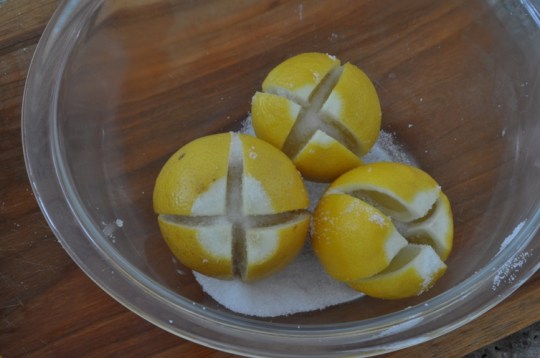
- Add the spices to the packed lemons, distributing them evenly throughout.
- Squeeze the juice of the remaining lemons and add to the jar. Note: We’ve always added additional lemon juice; however, this is a process of fermentation which should cause the lemons to release their own juice naturally creating a lemony brine that will cover them (similar to the making sauerkraut).
- Over the course of the next 2-3 days, press the lemons down more so they continue to release their juice. The lemons should be completely submerged in juice. Add more fresh lemon juice if necessary.
- Seal the jar and leave on the counter to ferment over the next month. Shake the contents daily to redistribute the salt and spices.
- In a months time move the jar into the refrigerator where it will keep for about 1 year. Note: we have always left our jars to continue fermenting in a kitchen cupboard. As long as you always use clean utensils to remove the lemons and make sure they stay covered in juice (adding juice when needed) they seem to keep. The choice is yours.
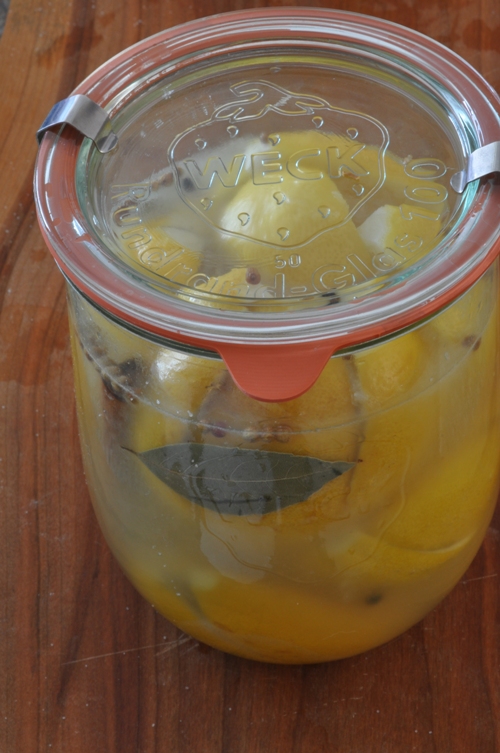
Put up Total:
- 1 x 1L tulip weck jar
Over the course of the next few weeks we’ll share some of our vacation with you. Here is a picture of our youngest pup, he’s just 6 months old taking his first swim in the pool!
Heading South
Matt and I are almost finished packing for our trip south to the sunny state of Florida. We are happy to be leaving the Canadian snow behind (even if it is melting and spring is on the horizon). Hopefully, when we return in 3 weeks it will ALL be gone! It’s no easy task to get 5 cats, 3 labrador retrievers and one husband packed for this kind of road trip. Yeah, you read correctly, we are hitting the roads and driving to Florida. Thankfully, our 5 kitties get their own vacation and will be staying with our neighbours in a dog free home. We used to take them but admittedly it’s a bit much. Our neighbours are like family and our cats will be showered with tons of love and affection. The dogs on the other hand go with us and that’s part of the reason we drive. We just wouldn’t have it any other way!
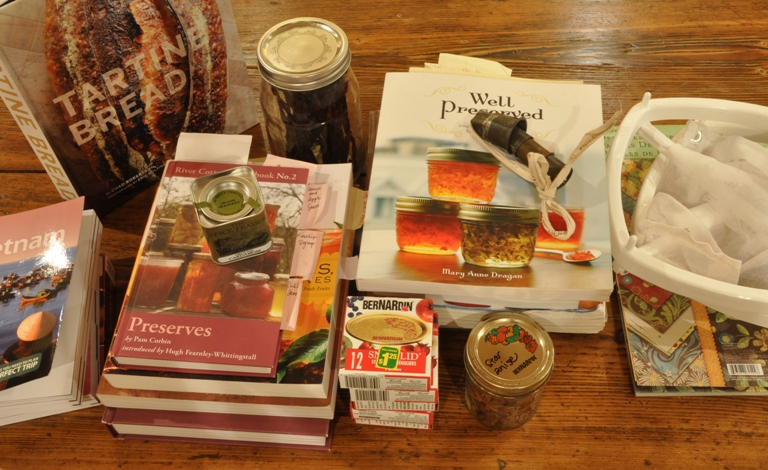
While in Florida, we will be staying with my mom (she lives there) and visiting my sister and brother-in-law; plus, all the many friends we’ve made over the years. It’s a journey we make almost every year and it is a great break from winter and a really relaxing stay. Matt and I (plus our 3 lab boys) quickly take over my mom’s home. We cook, can, read, swim, visit, and rest. It is a great time!
This year we plan to tour a sugar cane factory (thanks to my mom), pick strawberries, make an assortment of citrus preserves, try out our new dehydrator, and read up on our next destination ~ Vietnam. We will be posting regularly while away so check back to see what we get up to. Only two more sleeps and our road trip begins!! By this time next week we should be down south sunning our buns and drinking some freshly squeezed OJ!
Cool Labels to Compliment Tasty Contents
After we’ve poured out our heart ‘n soul into each and every jar and they’ve blessed us with their pop, pop, pop sound ~ proof of a good seal, we can go ahead and create cool labels for them.
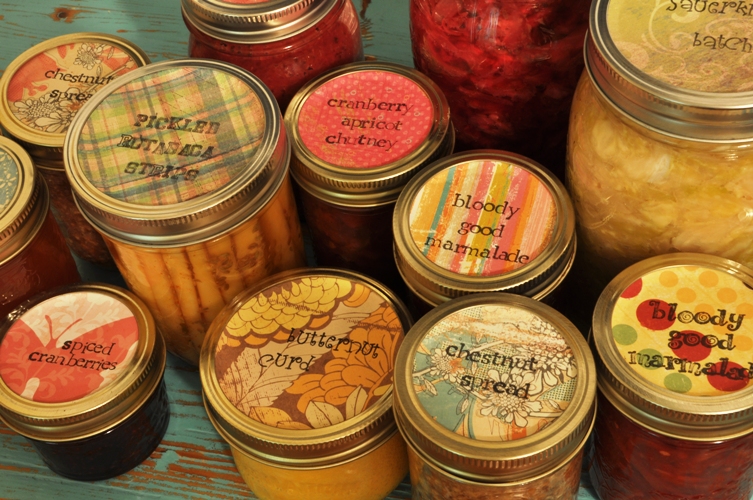
Over the years, our labels have progressed from tea stained hand stamped tags, to tags with ribbons and now my favorite…hand punched circles out of patterned papers which are glued onto the lid, and embellished with hand stamped lettering. Yes, it would probably be much easier for me to figure out how to do something crafty on the computer and purchase a working printer but that is just not my style. I’m an artist and I like the hands on approach. And besides, it only takes a few extra minutes to design a unique label to match the tasty contents we’ve poured into each jar.
My belief is that everyone who is out there canning is creative! You are all coming up with your own unique recipes or putting your flare on existing ones so why not take a few moments to put your stamp on what you’ve put up!?!
Here’s what we do and a few ideas to get your creative juices flowing.
- Keep on hand a collection of scrapbook paper, interesting newspaper articles, photographs, Christmas and Birthday cards, old and new maps, and whatever other paper pieces interest you. Reusing paper products like cards and newsprint is a great way to make cool labels and help the environment too.
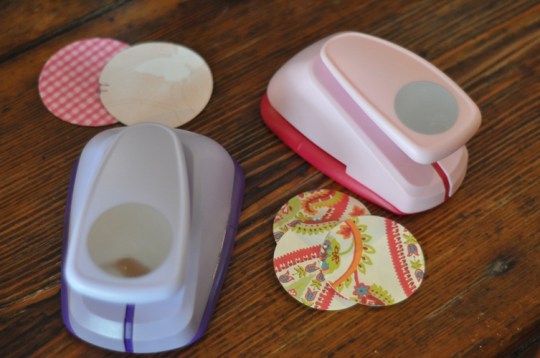
- Purchase a 2 1/2″ and 3″ circle punch to fit the lids of your regular and wide mouth mason lids. You can use these punches to make your lid circles quickly and easily. They will set you back about $20-$30 each but it’s an investment that is well worth it in the long run. You can use these punches on your collection of papers or even on sticker paper (if you want to avoid the glue step). Large circle punches can be found at most craft stores.
- Purchase glue that will work with both paper and metal. Michaels has all sorts to choose from…we are using US Art Quest PPA (Perfect Paper Adhesive) in a matte finish. You only need a thin layer of glue, it doesn’t have an odor, and it dries clear.
- Lettering. This can be done using individual rubber stamps. Over the years, I’ve picked up several different alphabet stamps sets with unique fonts that I enjoy using to give our labels that personal touch. A great place to look for inexpensive hand stamp sets is at a dollar store. Here in Ontario, the Dollarama has a variety of sets all under $2-. But, for those of you who have a working printer and some computer savvy you may want to design a template for the 2 1/2″ and 3″ circle and print the lettering directly on your decorative or sticker paper. Then just use your large circle punches afterwards.
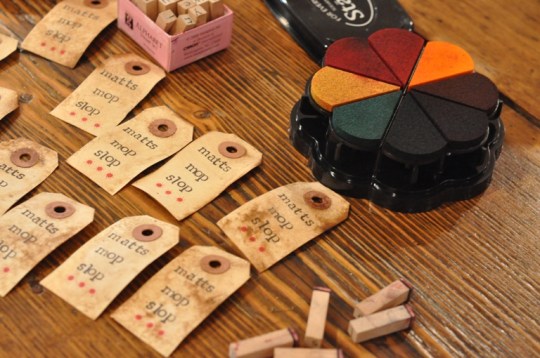


We had lots of fun dressing up the beer jelly with the beer labels. You could probably do something similiar with your farmers’ market preserves using fruit labels or cool old packaging. Just keep on the lookout for interesting papers that will co-ordinate with your contents.

There are tons of cool canners out there who are creating beautiful labels using all sorts of different methods. Check out Lindsay’s labels at Uncanny Preserves , or Kaela’s detailed post about creating cool labels on the computer at Local Kitchen, or these neat hand embroidered jar tops from ha!ha!ha! flickr photos. And, if you don’t want to make your own consider purchasing some of these sweet labels from Mud & Twig. However you decide to dress up your jars remember the options are as limitless as the concotions you seal inside.
We’d love to hear from you about how you dress up your jars. Or, where you get your labelling inspiration from…other sites, art supply stores, photographs? Do you make them or buy them?
I “Heart” Cinnamon Heart Marmalade
Happy Valentines Day!
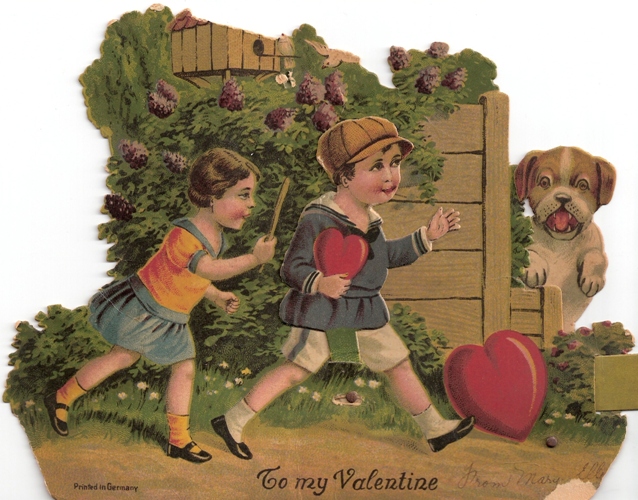
Have you ever wondered what your favorite candy would taste like all done up in a jar of delicious marmalade or jam? Well, in the spirit of loving and sharing special moments together, Matt and I thought we’d give it a whirl.
Matt “hearts” cinnamon hearts and we figured there was no better way to show his love for these red little delights than to make them the focus of a marmalade fit for gifting to the one you love on Valentine’s Day. This was truly an experiment, something that came to us in one of those crazy states of trying to reinvent the wheel. But, believe it or not it worked…and worked well. The only thing we would have done differently was to add MORE cinnamon hearts.
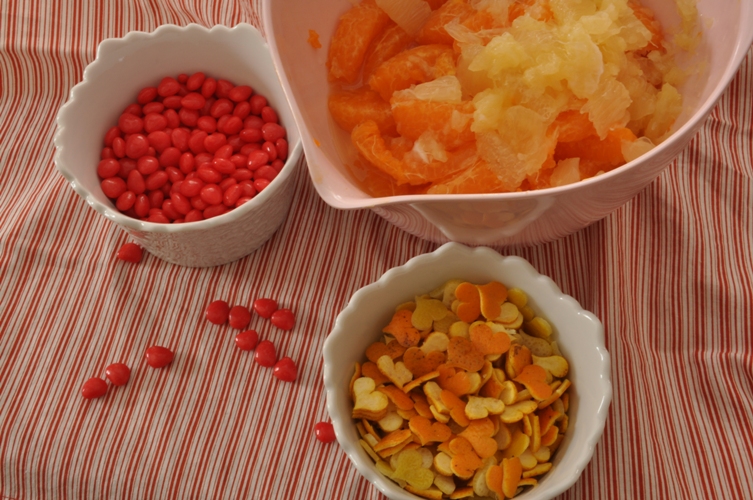
RECIPE FOR CINNAMON HEART MARMALADE:
- 5 honey tangerines ~ fruit and peel
- 3 honey tangerines for juice equaling 1 cup
- 2 lemons ~ fruit and peel
- 2 cups water
- 1 pound 4 oz granulated white sugar or 3 cups of granulated white sugar
- 1 tbsp cinnamon hearts or 48 individual hearts selected with a loving touch ~ we only used 2 tsp or 24 hearts and wish we’d added more!
- Put 5 spoons and a plate in the freezer to test for doneness later on. Prepare for water bath canning.
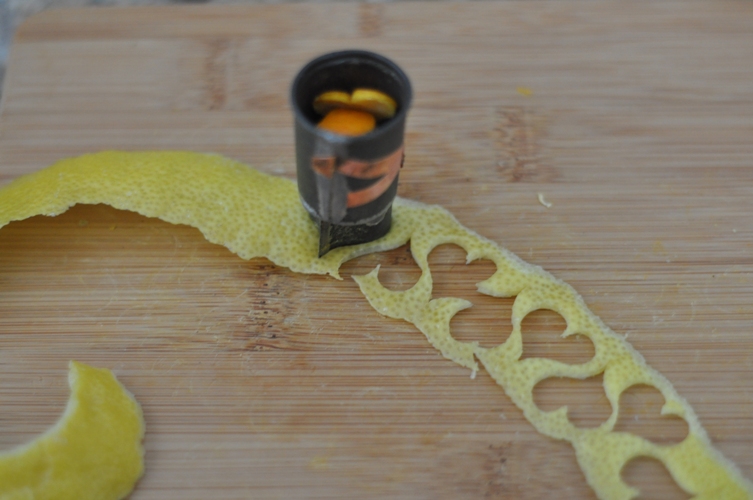
- Peel oranges and lemons. Cut the peel into thin strips or how you wish the finished product/peel to appear. Driven by passion, we used a small antique heart-shaped punch to make all of the peeled rinds into hearts. It takes time and blisters may form on soft tender hands but it’s worth it. First, the oranges…
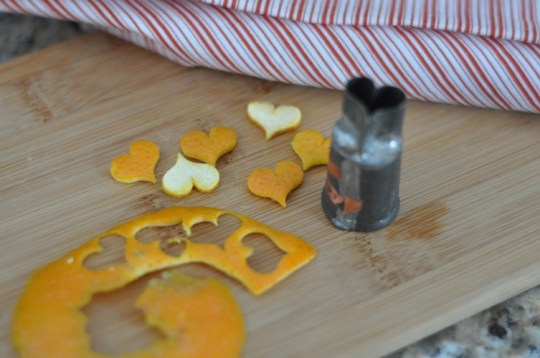 And, the lemons…hence the blisters.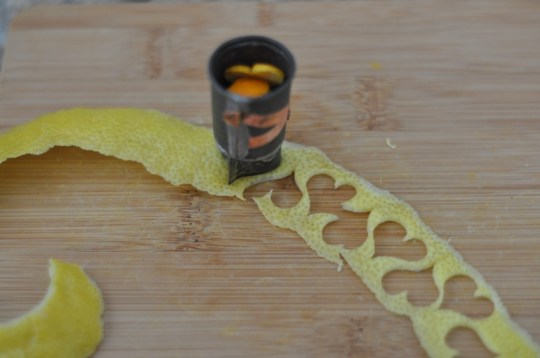
- Bring orange juice, orange and lemon HEARTS or peel strips, and water to a boil. Simmer over medium-high heat for approximately 20 minutes or until rinds become semi-translucent.
- Meanwhile, segment oranges and lemons removing as much of the rind and membrane as possible leaving you with just pulp.
- Add segmented oranges, lemons, sugar and cinnamon hearts to the HEART shaped peels. Bring to a lively simmer and boil for approximately 30 minutes or until the marmalade has set. Use frozen spoons and/or plate to check for doneness.
- Skim if necessary and ladle hot marmalade into sterilized jars (we sterilize our jars in the oven at 250F for 30 minutes). Leave a 1/4″ headspace, remove bubbles, add more marmalade if necessary, wipe rims, and put sterilized rings and lids (or in this case we used 1 piece lids) on to finger tip tight and process for 10 minutes.
- Turn off element, remove lid and let jars stand in the hot water bath for 5 minutes. Remove jars, let cool, check seals, label, and store.
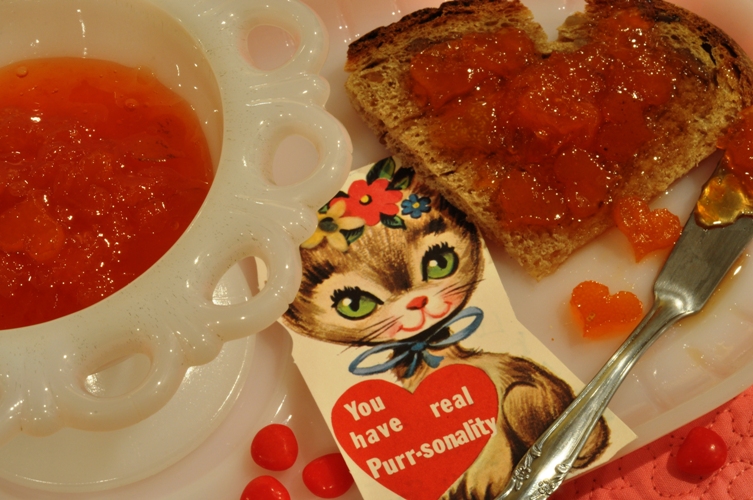
Put up Total:
- 3 x 270mL jars with one piece lids
Crock Free Counters ~ Kraut in Jars
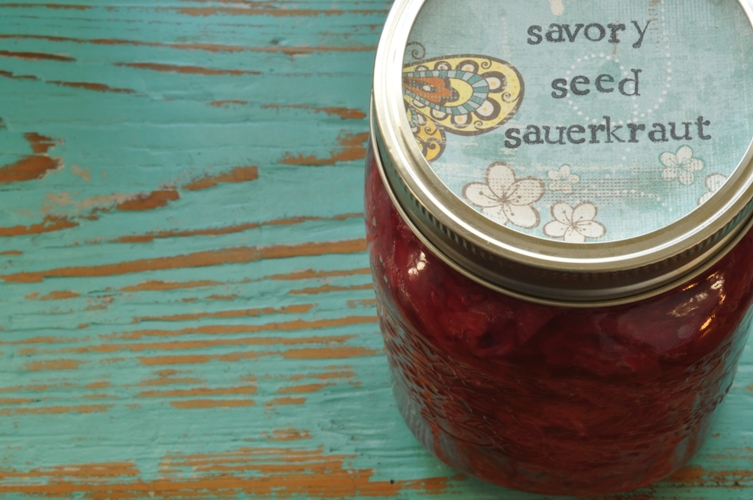
Our counters are crock free for the first time since August. And, although we could have left this last batch to ferment and do its’ thing for a few more weeks we decided it was time to switch gears and start getting things sorted for our departure. In two weeks, we will be heading south to the sunny state of Florida where we will visit my mom and continue the canning craze with all of that citrus.
The savory seed sauerkraut was the last crock standing and it now resides happily in 6 ~ 1 litre jars. At first, I wasn’t completely crazy about this kraut. It isn’t as crunchy as the traditional plain salted cabbage/sauerkraut that we normally have brewing and it took a lot longer for it to start doing its thing. The bubbling and bloom that developes indicates that it is fermenting and turning into a tasty, tangy concoction. But, this batch sat covered in bloomless brine for about 3 1/2 weeks. Then, the bloom began and the tangy taste started to develop and convert this green and purple cabbage into a piquant coloured kraut.
As the tanginess developed the taste grew on me. The combination of dill, caraway, and celery seeds gave this kraut additional flavours that are really nice for a change and the added purple cabbage gives it a rich colour that somehow adds to the flavour. You know what they say, “you eat with your eyes first!”
In a way it’s sad to see the counters crock free but I guarantee when we return from the south, the process of fermentation ~ experimentation will start right back up again! I’m anxious to try fermenting rutabaga and make a lighter purple ~ more pink sauerkraut with just caraway seeds.
Put up Total:
-
6 x 1L wide mouth mason jars
-
1 x 1L regular mouth mason jar (2/3 full and unprocessed)


 Putting Up With The Turnbulls