Bread Making ~ Challah
This, being the introductory bread post we’ll start off with a Direct Dough bread meaning bread with a single mixing cycle and one that will be done in a few hours from start to finish. Challahs versatility(from sandwiches to french toast) and its distinct look has quickly made this our everyday bread. So let’s get started.
The recipe that follows is taken from Peter Reinharts, The Bread Baker’s Apprentice. If you only get one bread book this would be my pick. It’s comprehensive, but will have you baking amazing bread in no time. So here’s the recipe.
CHALLAH
- 4 cups (18 oz) Unbleached Bread Flour
- 2 tbsp (1 oz) Granulated Sugar
- 1 tsp (.25 oz) Salt
- 1 1/3 tsp (.15 oz) Instant Yeast
- 2 tbsp (1 oz) Vegetable Oil
- 4 Eggs
- 3/4 cup Water
Stir together flour, sugar, salt, and yeast in a large mixing bowl. For this recipe I prefer to substitute the sugar for chestnut honey. If doing so combine the honey with the other wet ingredients. In a small saucepan combine the oil, (I use olive oil) two eggs plus two yolks reserving the whites for later, water and 2 tbsp honey if using. Whisk over medium heat until luke warm(90-100 degrees F). This will help kickstart the yeast. Pour the egg mixture into the flour mixture. Mix to form a ball. Add a small amount of extra water if needed.
Transfer dough to a lightly floured surface and knead for about 10 mins(or 6 minutes in a mixer, but that’s cheating). You want the dough to be soft and slightly tacky but not sticking to your hands. That’s why it says 10 minutes damnit!
Lightly oil a large bowl(spray oil works great for this). Form your dough into a ball using the edges of your hands to pinch the dough together on the underside of the ball, creating surface tension on the top(hope that made sense). Place the dough in the bowl,rolling it to coat with oil. Cover the bowl with plastic wrap and ferment at room temperature for 1 hour.
Remove the dough from the bowl and knead for 2 minutes(Ahh that’s more like it!) Re-form the dough into a ball and return to the bowl, cover with plastic wrap and ferment for another hour. The dough should be at least 1 1/2 times its original size.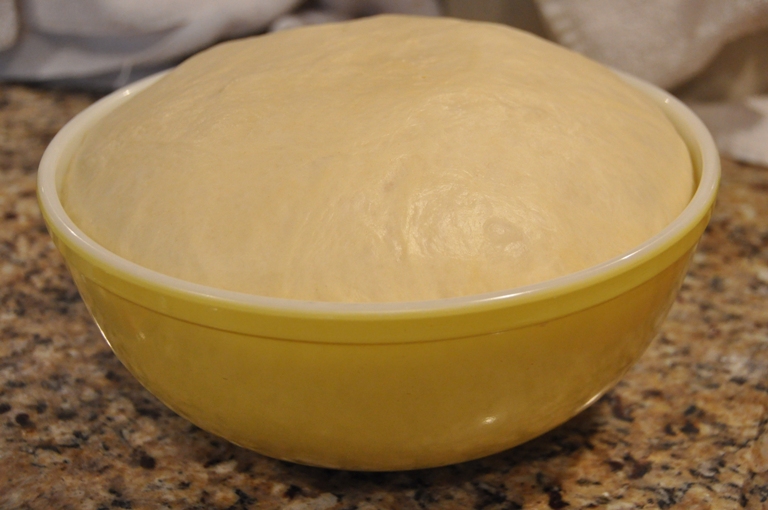
Remove the dough and divide into 3 equal pieces(this is where a scale comes in handy). Form each piece into a ball and leave to rest on the counter for 10 mins covering with a towel.
Roll out the pieces into strands about 14 inches long, thicker in the middle and slightly tapered towards the ends. Braid the strands(guys get a woman to help). I like to work from the middle towards myself and then in reverse to complete the other half(shaping methods are described in detail in the book). Transfer the braided loaf to a baking sheet lined with parchment paper. Whisk together the two egg whites until frothy. Brush the loaf with the egg whites then mist with spray oil. Cover with plastic wrap and proof at room temperature for 60-75 minutes(baking bread aint for short attention spans). 
Preheat oven to 350 F. Brush loaf again with egg wash then sprinkle with sesame or poppy seeds(I use both).
Bake on the pan for 30-45 minutes. The bread should be a rich golden brown and register 190F in the centre.
When done, trnsfer the loaf to a rack to cool for an hour before slicing (good luck!).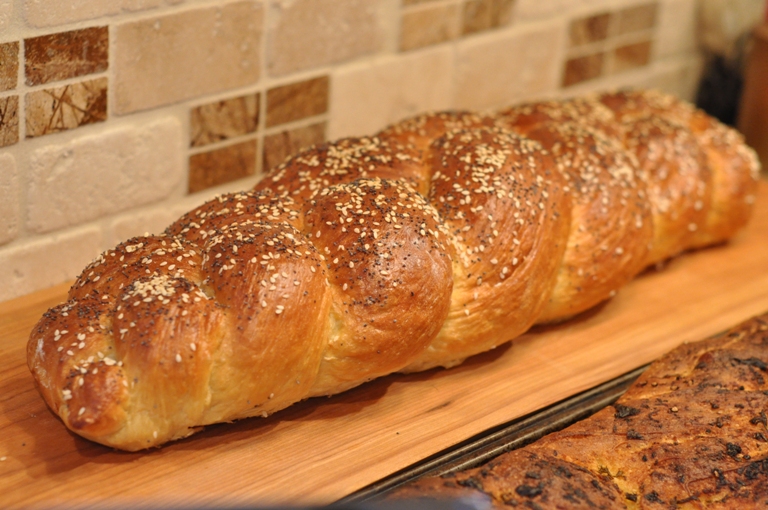
Butternut Squash and Apple Soup
I hope you all don’t get too bored as we continue our project to put up an endless amount of soup. Matt eats soup most days and with 6+ months of cold weather and working outdoors…a good warm thermos of soup really hits the spot.

Today, we’ve made 3 different double batches of soup. Butternut Squash and two different types of puréed carrot soups. The stove has been going since early this morning with every large pot in our home enlisted into service. It is quite a sight and a wonderful smell. I am actually stuffed from sampling, tweaking, and re-sampling all of this soup. No dinner necessary.
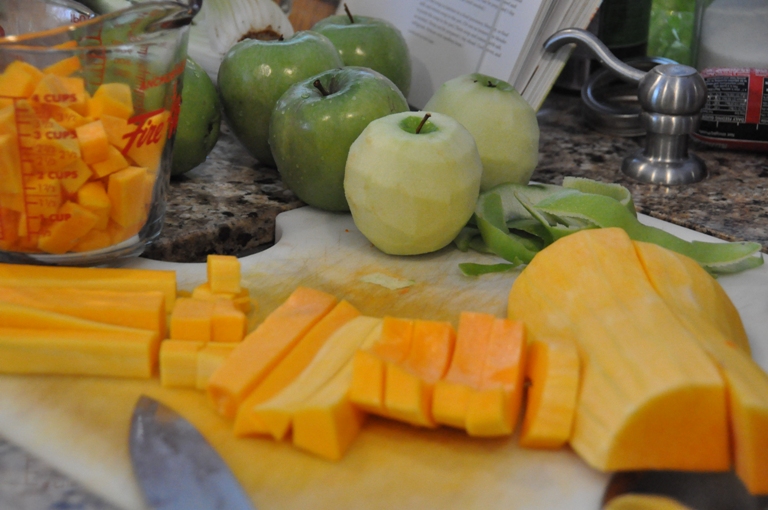
RECIPE FOR BUTTERNUT AND APPLE SOUP (from Sunday Soup):
- 5 tablespoons unsalted butter
- 6 cups peeled, seeded, and cubed butternut squash (from 2- to 2 1/2 pound squash; cut into 1/2″ cubes
- 2 cups chopped leeks, white and light green parts only (about 3 medium leeks)
- 1/2 cup coarsely chopped carrots
- 1/2 cup coarsely chopped celery
- 2 small Granny Smith apples, peeled, cored, and chopped, plus an extra apple for garnish
- 1 1/2 teaspoons dried thyme (NOTE: I would cut this back as our soup tastes a lot like Thanksgiving dinner)
- 1/2 teaspoon crumbled dried sage
- 5 cups chicken stock
- 1 1/2 cups apple cider, divided
- Kosher salt
- 2/3 cup sour cream (NOTE: do not add to the soup that will be pressure canned)
- 5 bacon slices, sautéed until crisp, drained, and crumbled ~ as a garnish
- In a large, stainless steel stockpot over medium-high heat, melt the butter. To the hot stockpot add squash, leeks, carrots, and celery and saute, stirring frequently, until vegetables are just tender, 10 to 12 minutes.
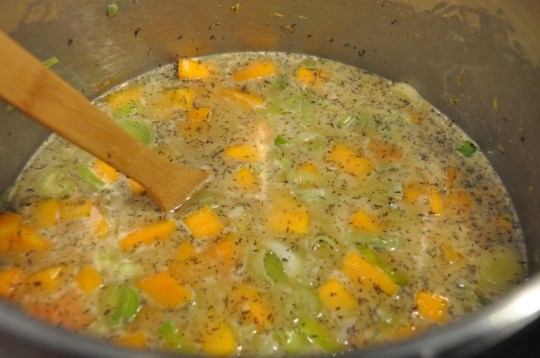
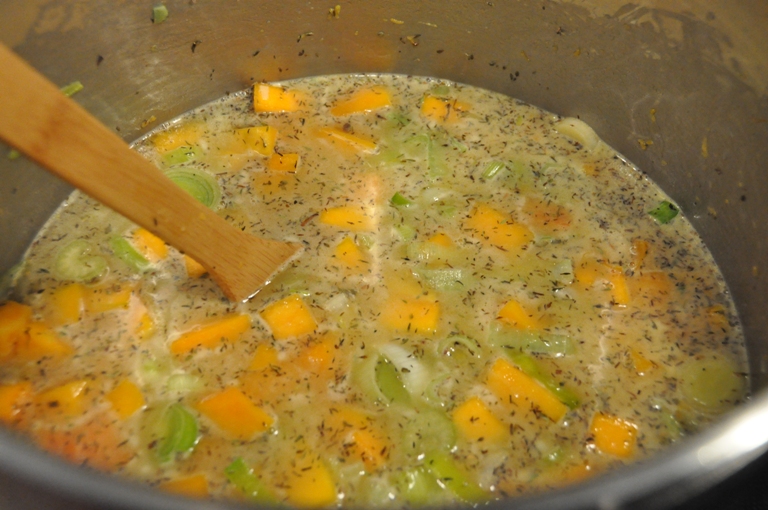
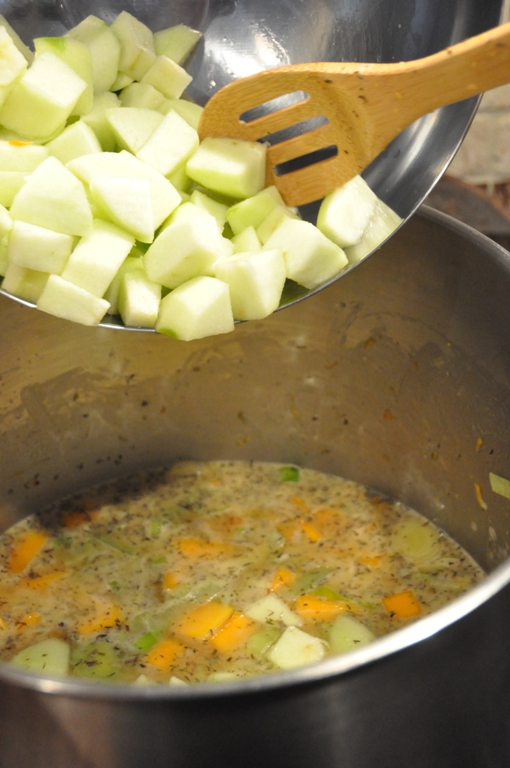
- Add apples, sage, and thyme (add 1/2 the amount and then taste to determine if you want to add the remaining thyme ~ personally, I find too much thyme makes the soup taste a lot like thanksgiving dinner but that’s just me). Add stock and 1 cup of the cider. Bring mixture to a simmer. Reduce heat, cover, and simmer gently until vegetables and apples are tender, stirring occasionally, for about 30 minutes.
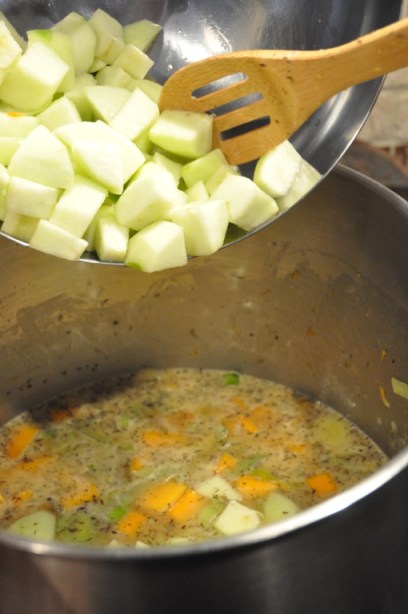
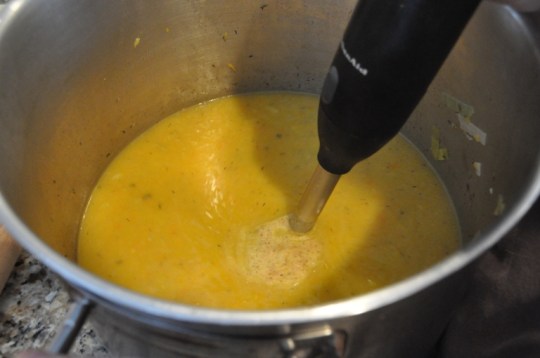
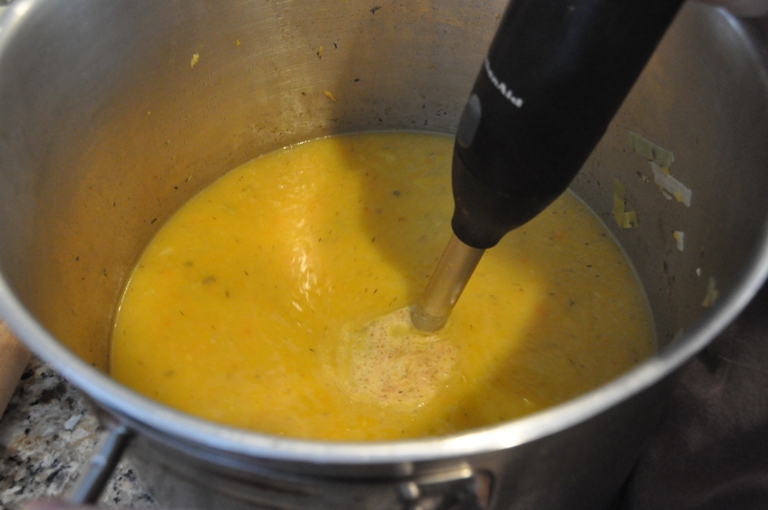
- In the pot, purée the soup using an immersion blender until smooth and creamy. Or, working in batches using the food processor. We creamed our soups using both methods but we just purchased an immersion blender from Kitchen Aid…and, I’m in love. It makes the job fun and easy with a lot less clean up. SOLD!! Season the soup to taste with salt and/or pepper.
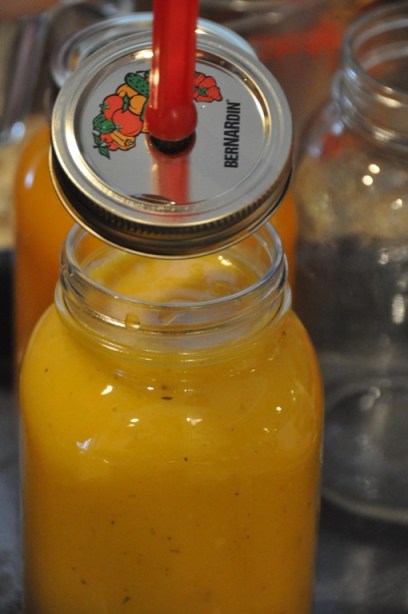
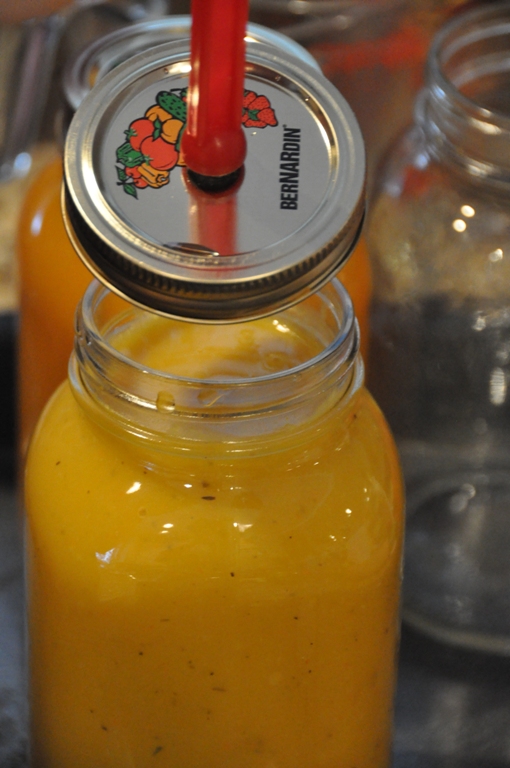
- Remove from the heat and ladle into hot sterilized jars. Use a damp paper towel to wipe the rims of the jars, then put a flat lid and ring on each jar, adjusting the ring so that it’s just finger-tight.
- Process in a pressure canner following directions carefully. We pressure canned this soup at 10lbs of pressure for 75 minutes. Please follow the instructions and guidelines outlined in your pressure canning manual. This soup can also be served fresh or jarred and refrigerated to be eaten over the next couple of days.
WHEN YOU ARE READY TO SERVE THE SOUP:
- Make the cider cream. In a small saucepan, bring 1/2 cup cider to a boil and reduce by half, approximately 5 minutes. Let it cool. In a small bowl, add 2/3 cup of sour cream and whisk in reduced cider. Note: you can prepare this the day before and refrigerate.
- With the remaining apples create a garnish. Wash and cut apples into paper-thin slices or interesting curly strips.
- Serve hot soup with a splash of cider cream, crumbled bacon, and a couple of apple slices or strips.
Put up Total:
- 6 x 1L regular mouth mason jars
Spicy Chickpea and Buttenut Squash Soup

I am sure you would agree that there is nothing quite like enjoying a warm bowl of soup on a cold snowy day. Well, my friends, those days have arrived for us here in Northern Ontario. The first accumulated snow fall of the winter. Our ground and trees are completely covered in a dusting of at least 8 inches of snow after a blizzard that lasted all day long.

The only ones really happy about all this “white stuff” are our dogs, who love snow. Even our new little puppy is playfully curious about this cold white fluffy stuff that comes all the way up to his chubby belly.

So, the snow is here and operation soup is well under way! Once we get started, The Turnbulls, are a pretty determined bunch. We’ve figured out how to successfully use our pressure canner and now all of our jars are properly sealing. The next couple of days are going to be spent indoors in front of a warm stove and a couple of huge pots making and canning delicious soups. We are using mostly local and organically grown vegetables with the odd exception made here and there.
Today, we are snowed in…a perfect day for making several batches of soup for the even colder days ahead. This next recipe hails from New England Soup Factory Cookbook by Marjorie Druker and Clara Silverstein and we highly recommend picking up a copy. Every recipe in this book is a sure hit!
RECIPE FOR SPICY CHICKPEA AND BUTTERNUT SQUASH SOUP:
- 3 tablespoons olive oil
- 1 large Spanish onion, peeled and diced
- 4 carrots, peeled and sliced
- 1/2 cup diced celery
- 4 cloves garlic, minced
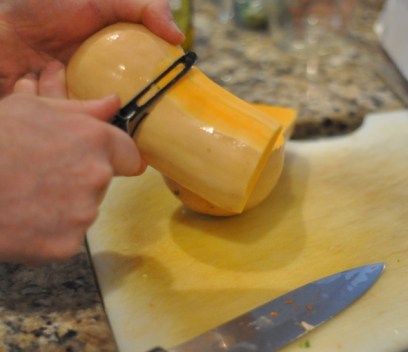
- 1 pound butternut squash, peeled and diced into cubes
- 2 cups (16 ounces) canned diced tomatoes
- 2 cups (16 ounces) canned chickpeas. rinsed and drained
- 12 cups vegetable stock
- 2 cups tomato juice
- 1/2 cup soy sauce
- 1/4 cup freshly squeezed lime juice
- 1 tablespoon ground ginger
- 1 tablespoon ground coriander
- 1 cup flaked coconut
- 1/2 cup brown sugar
- 1 can (14 ounces) coconut milk ~ note: add the coconut milk when serving…do NOT add to the soup prior to pressure canning
- 1 teaspoon minced Scotch bonnet chile pepper
- 1/2 bunch fresh cilantro leaves, chopped
- Kosher salt and freshly ground black pepper, to taste
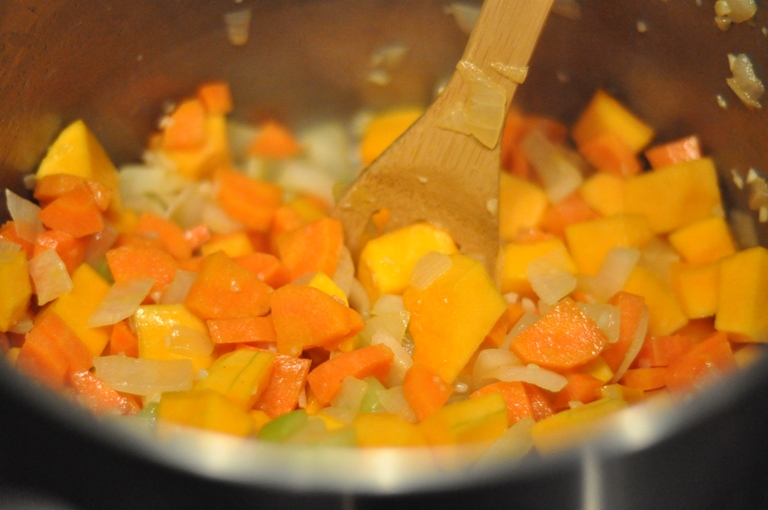
- Heat a large stainless steel stockpot over medium-high heat. Add the olive oil, onion, celery, and garlic and sauté for 10 minutes. Add the butternut squash and sauté an additional 5 minutes.
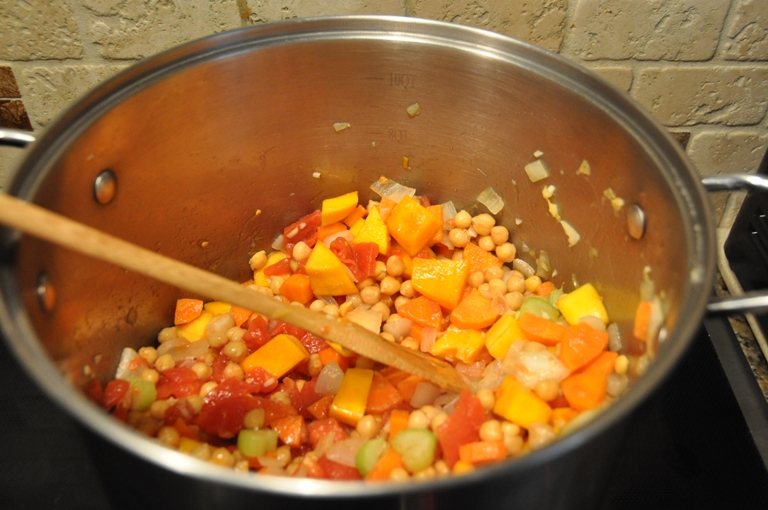
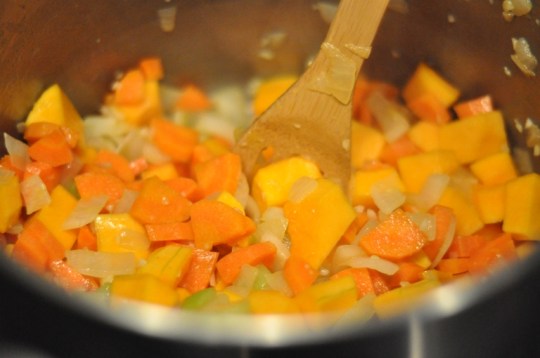 Next to the pot, add the tomatoes, chickpeas, stock, tomato juice, soy sauce, lime juice, ginger, coriander, coconut, and brown sugar.
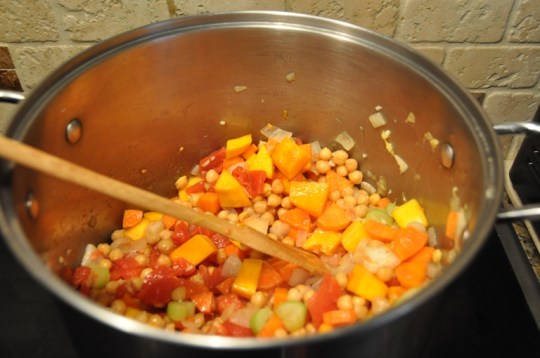 Bring the mixture to a boil. Reduce the heat to medium and simmer until the squash is tender, 35 to 45 minutes.
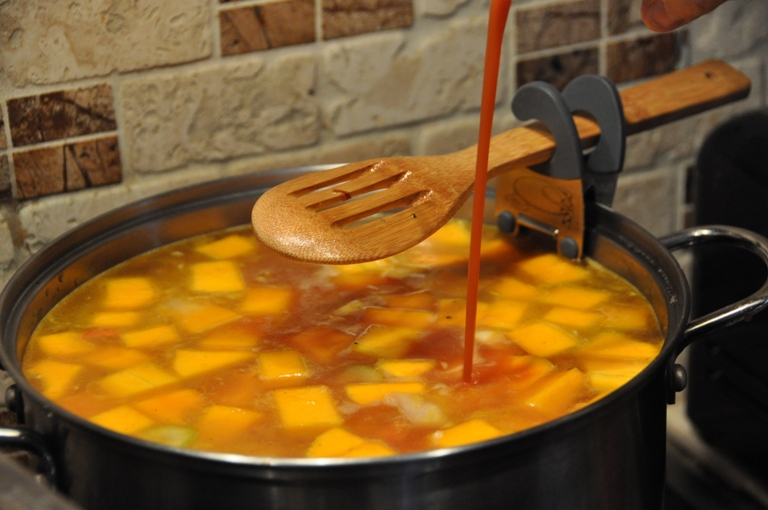
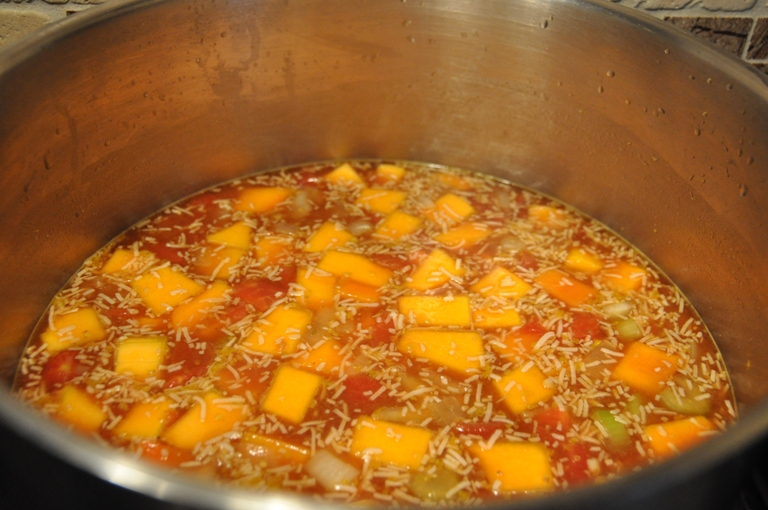
 As you can see our 10 quart pot was not big enough for this DOUBLE batch. Luckily, we have the greatest neighbours…one call to our friend up the road, a walk through the snow, and within minutes we were back in business with a bigger pot! This is what happens when you are busy making two different double batches of soup at one time. Into the bigger pot you go!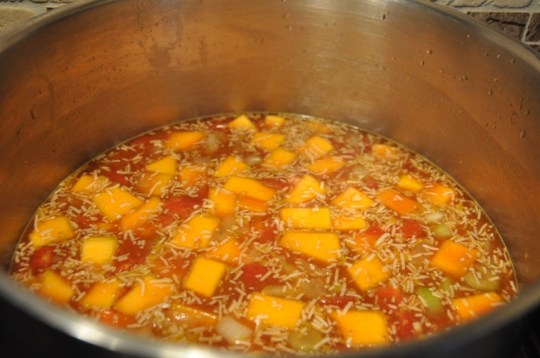
- Stir in the chile pepper, cilantro, salt, and pepper to taste. We doubled this recipe but only added 1/2 teaspoon of Habanero pepper…because I can’t take the heat. Best to add these last few ingredients and adjust to your taste.
- Remove from the heat and ladle into hot sterilized jars. To sterilize the jars place in the oven at 250F for 20-30 minutes.
- Process in a pressure canner following directions. We pressure canned this soup at 10lbs of pressure for 75 minutes. Please follow the instructions and guidelines outlined in your pressure canning manual. This soup can also be served fresh or jarred and refrigerated to be eaten over the next couple of days. We did all of the above.
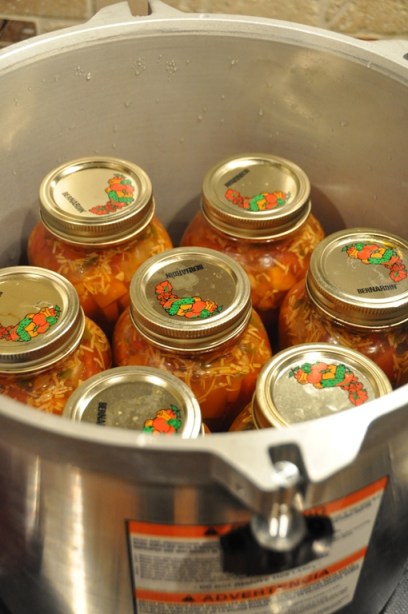
- Reheat to serve, adding the coconut milk after it has been heated through and removed from the stove. Note: most of the time, this step is skipped and we just eat the hot soup as is. It’s delicious and will be included in next years soup making roster.
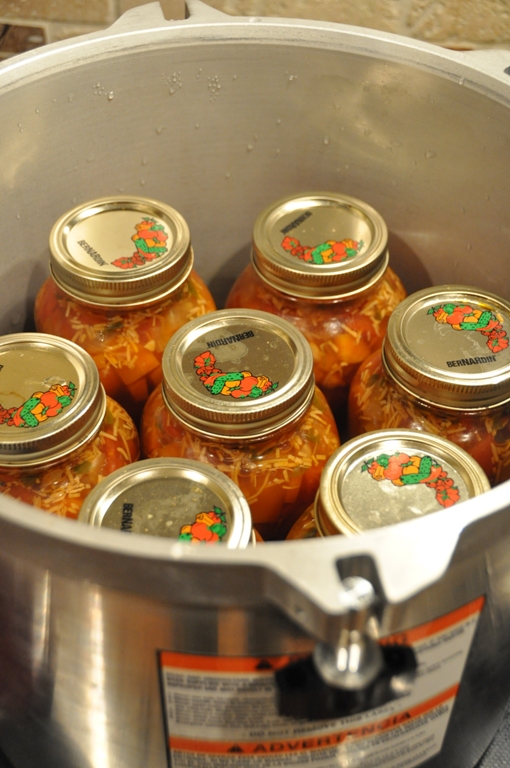
Put up Total Spicy Chickpea and Butternut Squash Soup:
- 7 x 1L regular mouth mason jars
Put up Total Tuscan Minestrone:
- 7 x 1L regular mouth mason jars
Pressure Canning ~ 100% Soup Success
We’ve done it!! And, it didn’t take us too long to figure it out. Sometimes 2 brains are better than one. Our 3rd batch of soup ~ carrot soup ~ sealed completely…all seven jars.
I decided to read (again) the pressure canning manual that came with our pressure canner from start to finish to see if I could figure out what we were doing wrong. Surely, we’re missing something…afterall, lots of people pressure can soup, veggies, and fruit so why were we having such difficulty!?! Well, as you may or may not know all pressure canners are a little bit different and you must make sure that you follow the instructions/guidelines for your model of canner. Here is what we decided…We were not leaving our jars in the canner long enough after the gauge went back to zero. The instructions in our manual indicate that once the gauge registers zero the Pressure Regulator Weight can be removed and then the cooker may be opened safely. This is what we did the first time and there was a massive surge of liquid that came out of the jars. Clearly, the jars had not cooled down sufficiently. So, we decided to wait a little bit longer with the second batch of soup. In fact, it took almost 30 minutes for the gauge to resister zero and then we waited a bit longer before removing the Regulator Weight. The guidelines expressed by the National Center for Home Food Preservation are also helpful in explaining the reasoning behind many of the instructions and guidelines necessary to practice safe home food preservation. Their guide also states, “after the canner is completely depressurized, remove the weight from the vent port or open the petcock. Wait 10 minutes; then unfasten the lid and remove it carefully. Lift the lid with the underside away from you so that the steam coming out of the canner does not burn your face.” Ten more minutes can make all the difference from half of your jars sealing to all of them sealing. Okay, so I need to work on patience…who doesn’t?
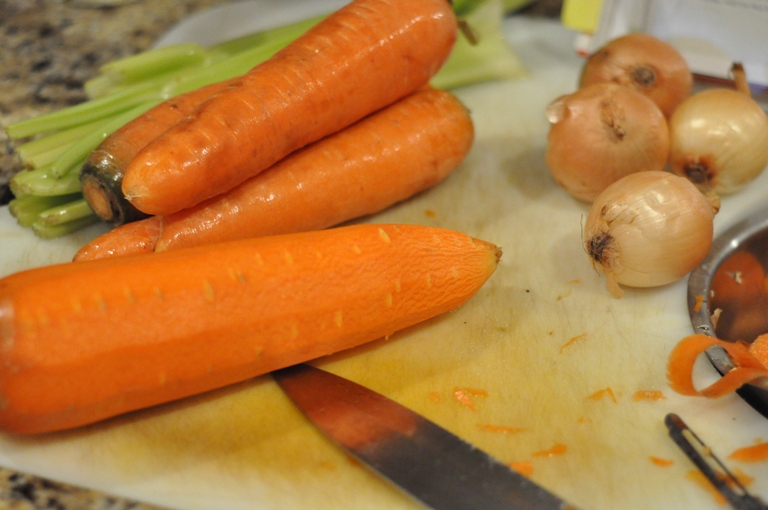
On with “operation soup”. We picked up a 50lb bag of the largest carrots ever for $18.50 from our local veggie shop. Carrot soup is the soup of the day maybe even the soup of the week. This recipe comes from New England Soup Factory Cookbook by Marjorie Druker and Clara Silverstein. If you are looking for a great Christmas gift, for that special cook in your life, then this soup making book is it…look no further. All of the recipes we’ve tried in this book are GRRReat!!!
RECIPE FOR CARROT AND GINGER SOUP:
- 3 tablespoons butter
- 2 whole cloves garlic, peeled
- 1 large Spanish onion, peeled and diced
- 2 ribs celery, sliced
- 3 pounds carrots, peeled and sliced
- 3 tablespoons peeled and chopped fresh ginger
- 8 cups chicken or vegetable stock
- 1 teaspoon ground coriander
- 1 teaspoon ground ginger
- 1/2 cup honey
- Kosher salt and freshly ground black pepper, to taste
- less than 1/2 cup of heavy cream per 1 litre (1 quart) jar. Note: this is to be added when reheating to serve. DO NOT add the cream to the soup that will be pressure canned.
- In a large, stainless steel stockpot over medium-high heat, melt the butter. Place the garlic, onion, celery, carrots, and ginger root in the pot and sauté for 10 minutes, stirring frequently. Add the stock to the vegetables and bring to a boil. Reduce heat to a lively simmer and cook until the carrots are tender, approximately 30 to 35 minutes.
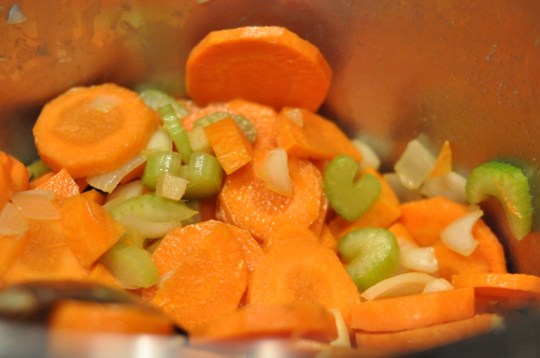
- Remove from the heat. Add the coriander, ground ginger, and honey.
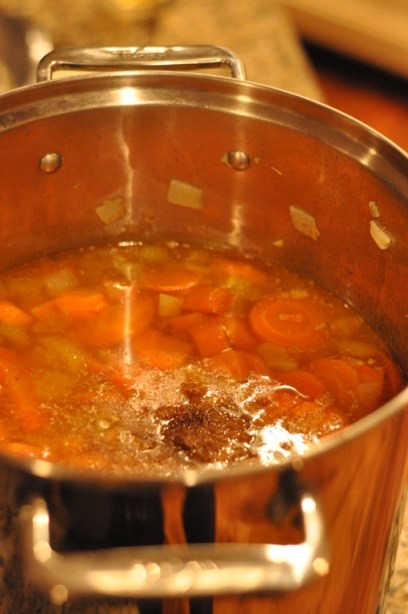 Purée the soup in the pot using an immersion blender or working in batches with a regular blender until smooth.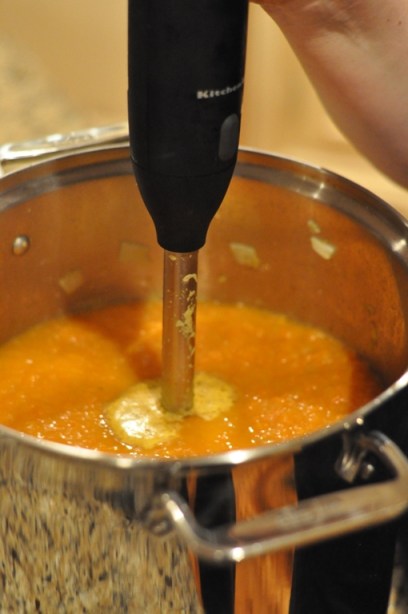
- Ladle the hot soup into the sterilized jars, leaving 1″ headspace at the top. Note: sterilizing the jars is not necessary but we’ve gotten into the habit of doing it and this way your jars are extra clean and nice and hot too.)
 Use a damp paper towel to wipe the rims of the jars, then put a flat lid and ring on each jar, adjusting the ring so that it’s just finger-tight. Place the jars in the pressure canner and follow the pressure canning directions for your area. Our pressure canning guide indicates that 1 litre or quart jars of vegetable soup should be processed for 85 minutes but the National Centre for Home Food Preservation says 75 minutes. Please use your own judgement.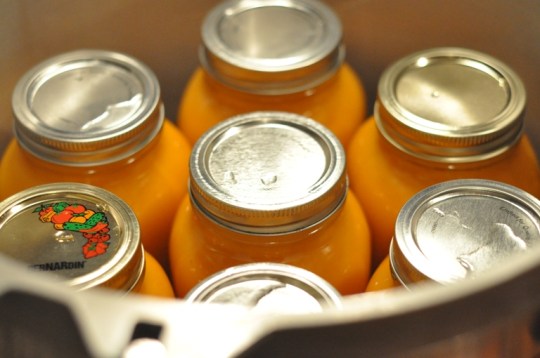
- Leave the jars in the pressure canner to cool to zero pounds of pressure. This may take 30-40 minutes maybe longer. Remove the Regulator Weight or petcock and wait 10 more minutes. The jars can be safely removed at this point. Wait 12-24 hours check seals, label and store. If you have jars that do not seal be sure to put them in the refrigerator and eat the contents within a couple of days.
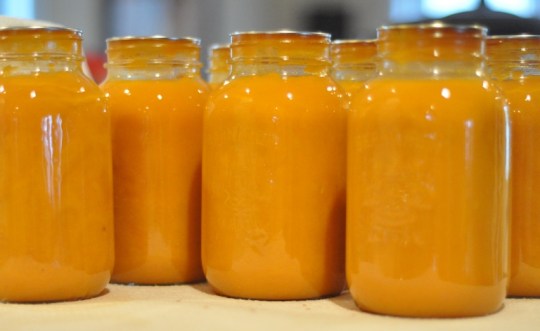
- When reheating a jar to serve add a little bit less that 1/2 a cup of heavy cream to each 1 litre jar. Stir until the ingredients are well combined, season to taste, and serve.
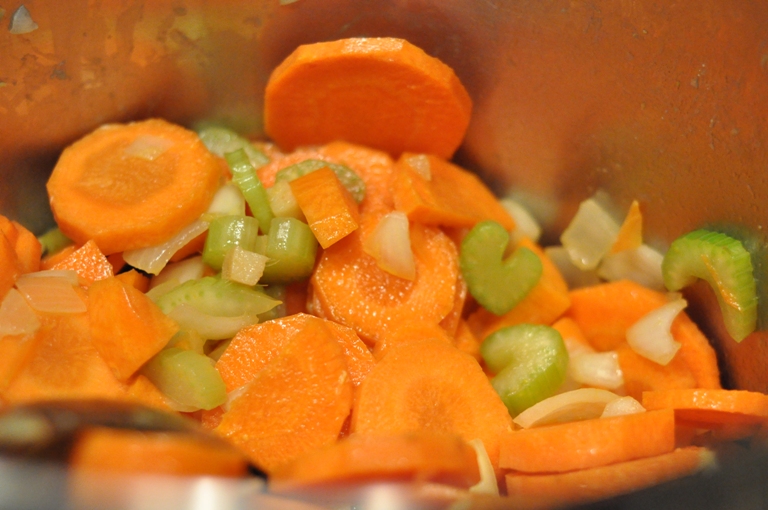
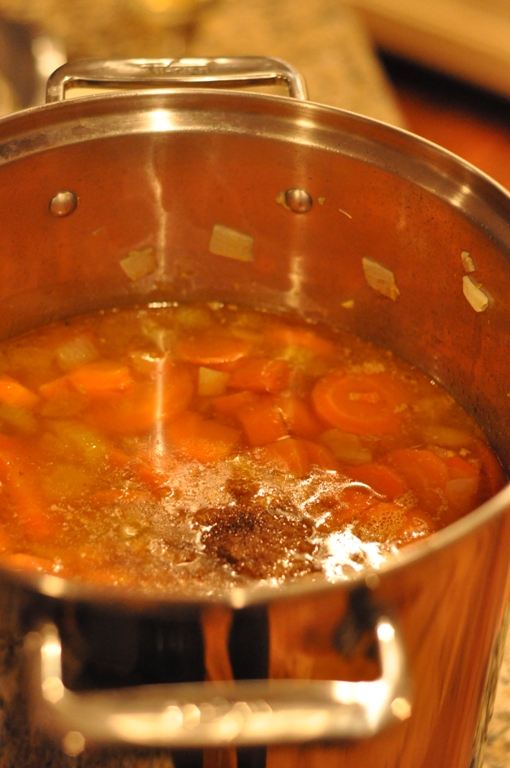

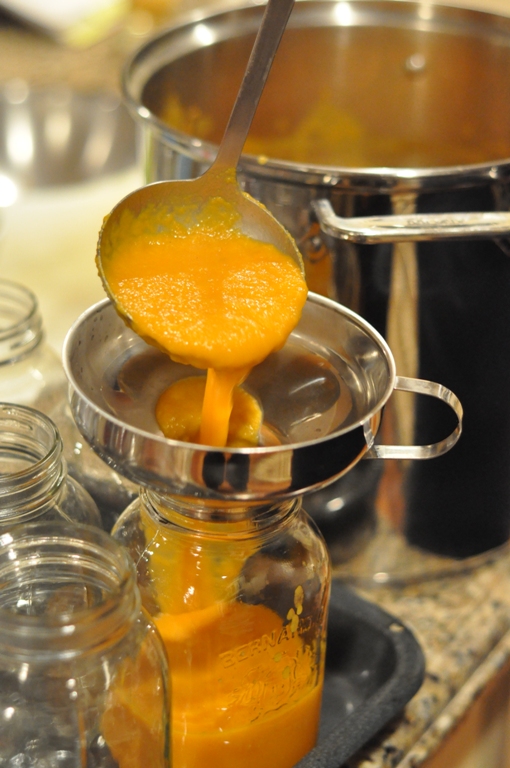

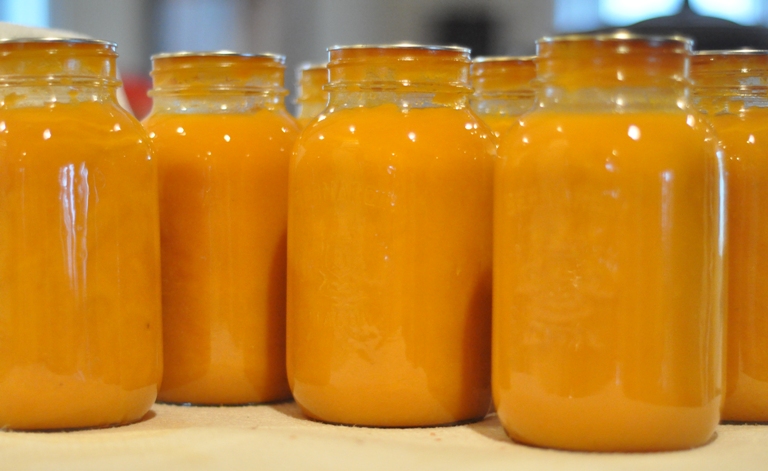
It’s as simple as that! This soup does not take long to prepare or cook. It has a great flavour and I think could be served without the added cream…maybe cut back on the ginger (just a little). For those newbie pressure canners (like me) I think this is a great soup recipe to start with. The ingredients are simple and the prep and cooking time relatively short but you would never know how easy it was after just one tasty spoonful. It’s delicious and a beautiful glowing orange. Enjoy!!
Please note that we doubled the above recipe to make just a little bit more than 7 x 1 litre jars which is the perfect amount to fit in our pressure canner.
Put up Total:
- 7 x 1 L regular mouth mason jars
Pressure Canning ~ Some Soup Success…Tuscan Minestrone
Okay, after weighing the pros and cons and taking in all of your helpful suggestions, we decided to press on with “operation soup“. It simply is too important to give up at this stage in the game. We read all of your comments and took your advice and altered our pressuring canning methods (slightly) and we’ve had better success. YEAH!!! “Operation Soup” here we come!
RECIPE FOR RIBOLLITA ~ THE TUSCAN MINESTRONE from Sunday Soup
- 8 ounces (1 cup) dried great Northern or cannellini beans (white kidney beans)
- 3 tablespoons olive oil, plus extra for garnish
- 1 cup chopped onion
- 1/2 cup chopped leek, white and light green parts only ( about 1 medium leek)
- 1/2 cup diced carrot (1/2″ diced)
- 1/2 cup diced celery (1/2″ diced)
- 1 tablespoon minced garlic
- 1 teaspoon crushed dried rosemary
- One 14 1/2 ounce can diced tomatoes and their juices
- 8 to 10 ounces Savoy cabbage (from 1 head), halved, cored and cut into 1/4″ wide strips to make 2 1/2 to 3 cups
- 1 1/2 tablespoons kosher salt, plus more if needed
- 8 ounces russet or Yukon gold potato (1 medium), peeled and cut into 1/2″ dice
- 8 ounces zucchini (1 medium), halved length-wise and cut into 1/2″ thick slices
- 6 ounces Swiss chard, stems removed and leaves cut into 1/2″ thick strips to make 2 cups
- 8 1/2″ thick slices day-old Italian bread, such as ciabatta 1 to 2 whole garlic cloves, peeled and halved (we use our crusty Country Loaf)
- 1 cup grated Parmesan cheese, preferable Parmigiano-Reggiano, for garnish
- Rinse the beans and place in a large bowl; cover with 3 cups of boiling water. Soak beans for 1 hour. Drain beans in a colander and reserve.
- Heat olive oil in a large stockpot (lid required) over medium-high heat. When hot, add the onion, leek, carrot, and celery and cook until tender approximately 3 to 4 minutes. Add minced garlic and rosemary and sauté for 1 -2 minutes.
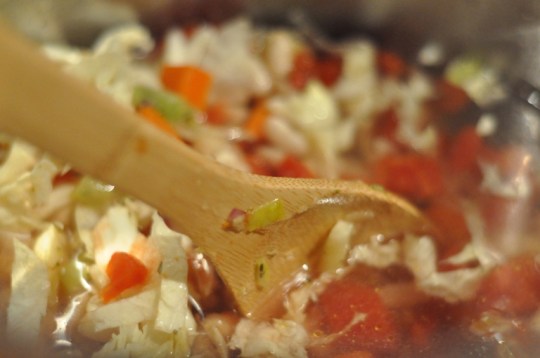
- Add 8 cups water, the reserved beans, tomatoes, cabbage, and 1 1/2 tablespoons salt. Bring the mixture to a boil. Reduce heat and simmer with the lid on for 1 hour.
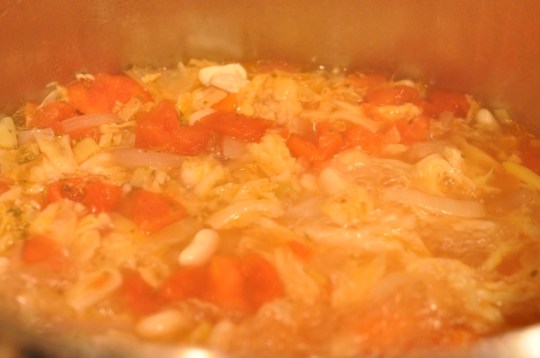
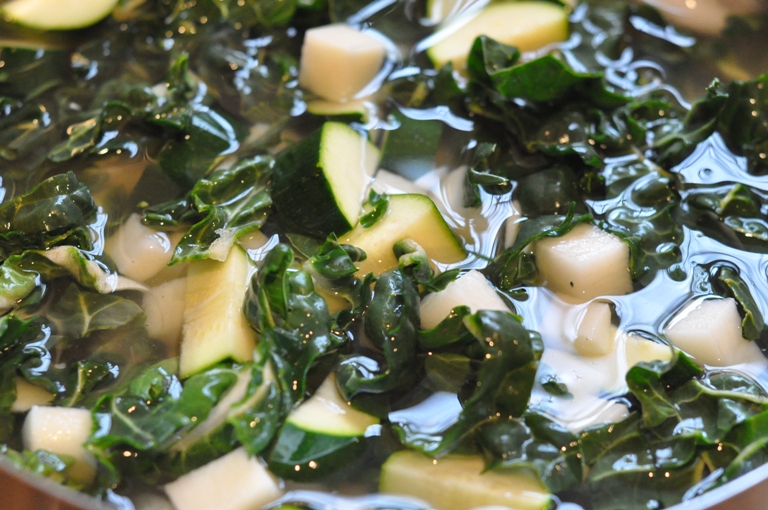
- Add potatoes, zucchini, and chard; simmer, covered, until the potatoes and zucchini are soft and the chard has wilted, for 20 to 25 minutes. Season the soup to taste with salt and/or freshly ground pepper.
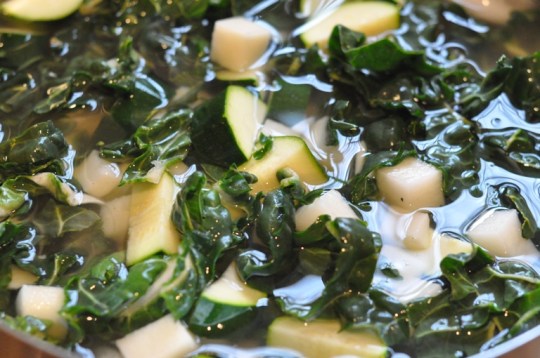
- Ladle the hot soup into the sterilized jars, leaving 1″ headspace at the top.
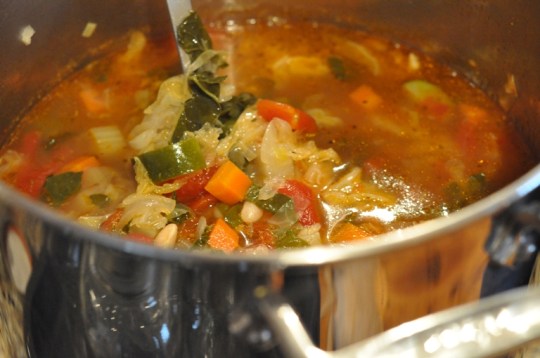 Note: sterilizing the jars is not necessary but we’ve gotten into the habit of doing it and this way your jars are also extra clean and nice and hot too.) Use a damp paper towel to wipe the rims of the jars, then put a flat lid and ring on each jar, adjusting the ring so that it’s just finger-tight.
 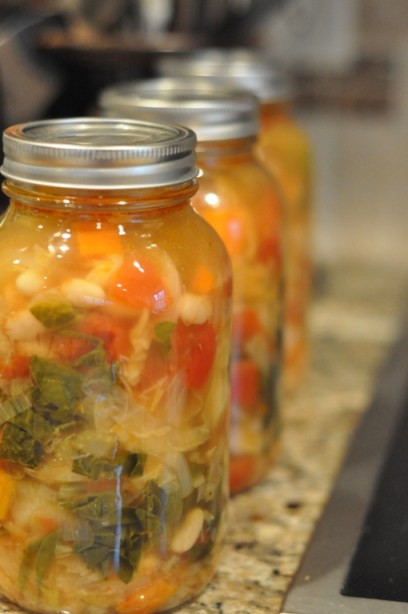 Place the jars in the pressure canner and follow the pressure canning directions for your area. We pressure canned the soup for 85 minutes. And, left it in the pressure canner to cool to zero pounds of pressure for over 30 minutes.
- Serve the soup with lightly toasted fresh bread slices rubbed with a piece of cut garlic. The bread can be placed on the bottom of the bowl or the top. Sprinkle each cup of soup with freshly grated Parmesan cheese and a swirl of good olive oil. Note: This is done when served…it is not meant to be pressure canned.



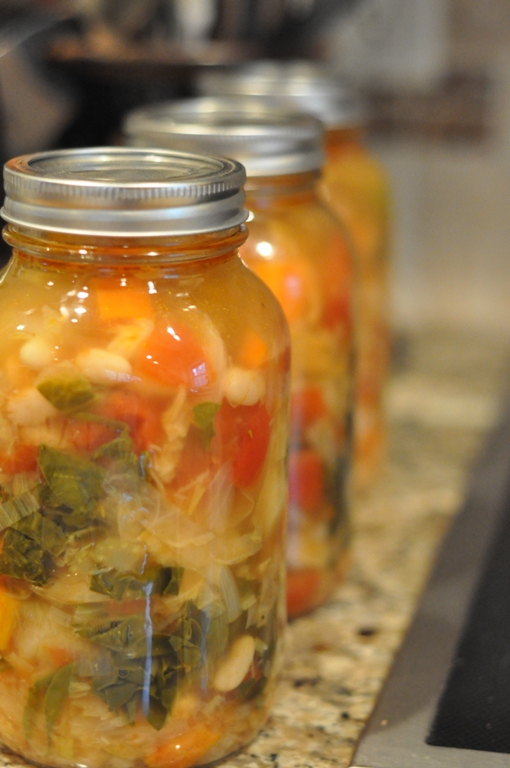

Success…or at least a whole lot better than last time. This time 6 out of our 7 jars sealed….and, I can live with that.
Here is what we did differently:
- After letting the pressure canner reach its’ 10 pounds of pressure (the amount of pressure required for a vegetable soup) we reduced the heat. The jiggling gage did not jiggle as much…about 1 to 4 times per minute but not more…and sometimes a little less. Note: This is in accordance to our pressure canners’ instructions…others should follow the instructions/guidelines on their pressure canner to be sure that the proper safety standards are met. We watched to be sure that the pressure was maintained at 10 pounds or slightly higher as it is plus or minus 2 pounds but did not worry too much if the gage didn’t jiggle once every minute…once every two minutes with a little hissing was just fine.
- When our time was up we let it cool to O pounds of pressure and then left it longer (as suggestion made by Gardening in the Borough of NYC). In fact, we did not open the pressure canner for quite a while. It took over 30 minutes for it to cool to zero pounds of pressure and then we probably left it undisturbed (lid on) for another 30 minutes or more. When we opened the pressure canner all but 1 of the 7 jars had sealed and that 7th jar never sealed.
I will record this as a success and enjoy the unsealed jar tomorrow for lunch!
Please note that we double the above recipe to make just a little over 7 x 1 litre jars which is the correct amount for our pressure canner.
Put up Total:
- 7 x 1L regular mouth mason jar ( 1 did not seal and was refrigerated)
Pressure Canning ~ Delight or Disaster?
Yeah, we’ve started making our homemade soup…finally. This has been a plan of ours since we started canning again full-time this summer in July…and, we are just getting around to it now. I guess better late than never. Our original plan was to make enough soup to be able to enjoy a bowl each every day for a year. Now, that is a lot of soup. My mom kindly purchased all the jars for what we will call “operation soup” and gave them to us as a birthday gifts…The making and canning of the soup is up to us!

All soups must be pressure canned in order for them to be safely preserved. And, well I am very confident using the hot water bath method for our pickles, jams, chutneys, fruit, etc…I am a little uneasy around the pressure canner. No, I’m not afraid that the lid will blow off or that there will be an explosion…I just simply have not used it enough to feel the same level of confidence that Matt does. You have to remember until last year I didn’t even know how to turn on the stove let alone follow a recipe from start to finish. I am still a work in progress. So, I’ve been waiting until Matt has a few spare moments, more like hours, to help me put up some soup. Okay we’re ready…he’s going to take a day off work. We have a great brand new pressure canner, all of the jars we need to make about 300-400 litres of soup and lots of access to root vegetables and other delicious soup making ingredients. Sounds delightful…doesn’t it!?! And, better still, we all know there is nothing like the taste of a hot bowl of homemade soup on a cold winters day…right!?! This plan of our almost sounds too good to be true.
Let’s make soup! Soup is one of those things that you can really experiment  with and there are tons of tried, tested and true recipes out there. Matt has been making homemade soup for years and we’ve always enjoyed it. But, having several kinds of homemade soup ready-made and jarred is an extra bonus and something we really thought would work well with our lifestyle. If you don’t want to wing it, there are lots of great soup making recipe books out there and we’ve enjoyed all of the soups we’ve made from Sunday Soup by Betty Rosbottom and New England Soup Factory Cookbook by Marjorie Druker and Clara Silverstein.
Our first soup of the season recipe comes from Sunday Soup and is Betty’s Russian Vegetable Soup. This recipe was selected because it called for cabbage, one of the veggies that is readily available in Ontario right now and we just happened to have 3 huge heads of savoy cabbage from our friend Suzann. Perfect.
RECIPE FOR RUSSIAN VEGETABLE SOUP :
- one 2-pound cabbage, halved lengthwise, cored, and cut into 1-inch thick
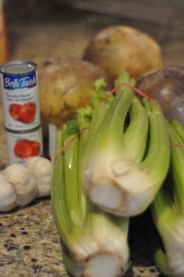 wedges
 - 2 medium carrots, peeled and cut into 1/4″ slices
- 2 ribs celery, cut into 1/2″ thick slices
- 3 medium turnips (12 ounces), peeled and cut into 1″ cubes
- 8 cups beef stock, divided (we used chicken stock because that’s what we made)
- One 6 ounce can tomato paste
- 1 teaspoon kosher salt, plus more if needed
- freshly ground black pepper
- 3 tablespoons vegetable oil
- 2 medium onions, peeled, halved lengthwise, and cut into 1/4″ thick slices
- 1 large garlic clove, finely chopped
- 1 large russet potato (12 ounces), peeled and cut into 1″ cubes
- 1 cup sour cream
- 1/3 cup chopped fresh dill

- In a large stainless steel stockpot add cabbage, carrots, celery, turnips, and 6 cups of the stock.
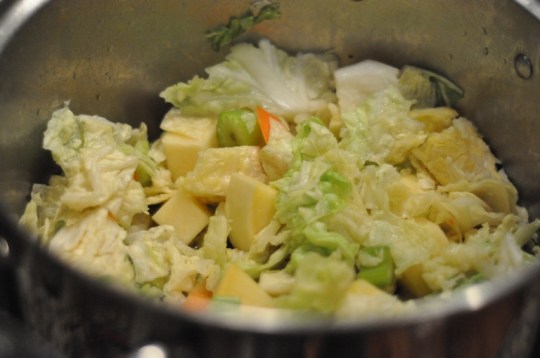 Bring to a simmer, then mix in the tomato paste, 1 teaspoon salt, and some freshly ground pepper.
 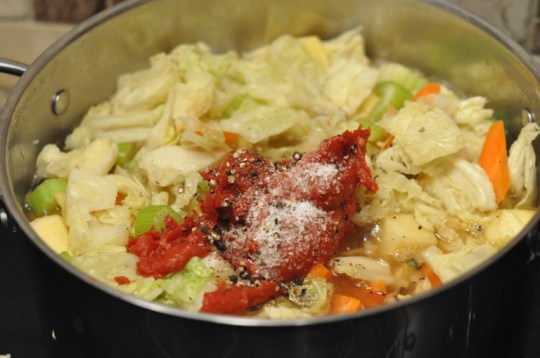 Let it cook, uncovered, until the vegetables are very tender, for about 1 1/2 hours.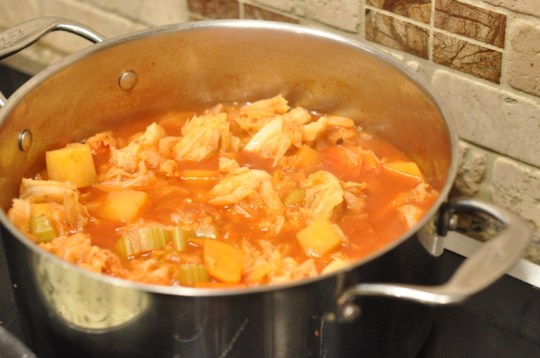
- Meanwhile, heat the oil in a saucepan. Once it’s hot, add the onions and sauté until tender approximately 3 to 4 minutes. Add the garlic and sauté for an additional minute or two. Remove from heat and set aside.
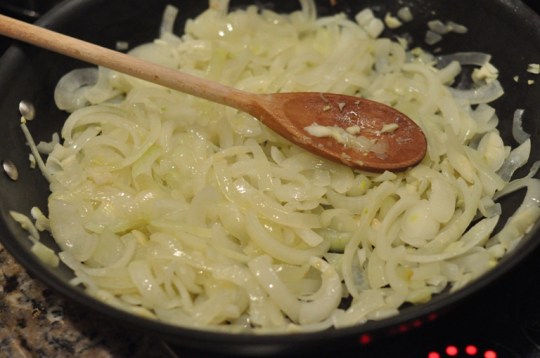
- After the vegetables have gurgled away in the stockpot for 11/2 hours, add the onion mixture and the cubed potatoes. Pour in the remaining 2 cups stock. The vegetables should be submerged. Note: if there isn’t enough liquid to cover the vegetables, add 1 to 2 cups water to cover them. Cook until the potatoes are just tender but not breaking up, about 30 minutes. Season soup to taste with additional salt and pepper.
- Ladle the hot soup into the sterilized jars, leaving 1″ headspace at the top. Note: sterilizing the jars is not necessary but we’ve gotten into the habit of doing it and this way your jars are also extra clean and nice and hot too.) Use a damp paper towel to wipe the rims of the jars, then put a flat lid and ring on each jar, adjusting the ring so that it’s just finger-tight.
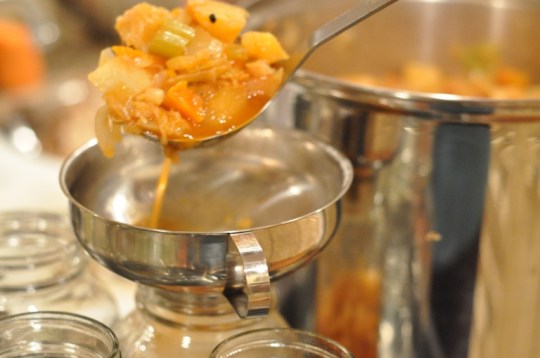 Place the jars in the pressure canner and follow the pressure canning directions for your area. We pressure canned the soup for 60 minutes.
- Serve the soup with a dollop of sour cream or freshly grated sharp cheese, and a spot of chopped dill.

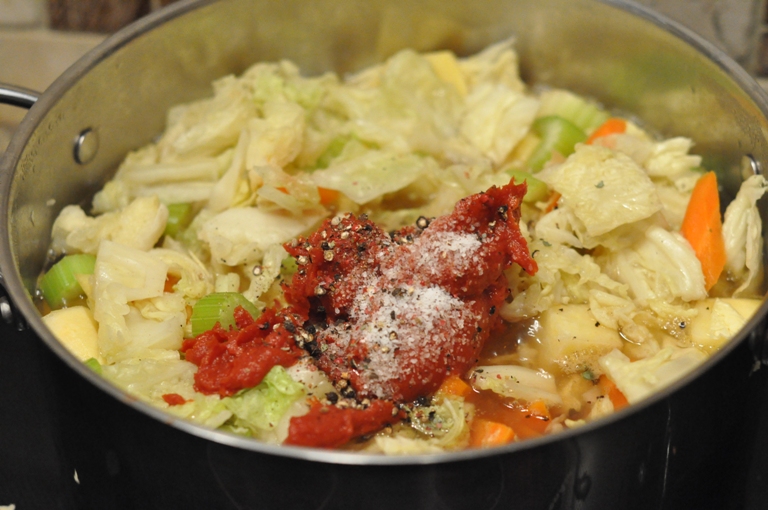


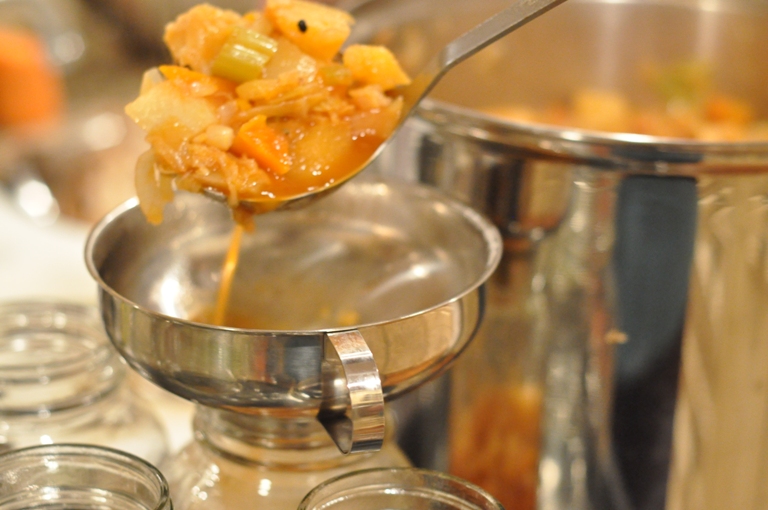

Now, the making of the soup was delightful. Matt and I spent a wonderful afternoon in the kitchen watching the fruits of our labour simmering on the stove…sneaking a sample spoon throughout the process and determining that once again Mrs. Rosbottom knows how to make a great bowl of soup. But, you can’t forget that after spending 2 1/2 to 3 hours making the soup your ventures in the kitchen are not over. It still has to be put in the pressure canner for another 6o minutes…and, we had more than one load of jars to process because we tripled the recipe (we had 1 double batch and 1 single batch simmering away). Making soup to jar is a labour of love and we do it because it is healthier and tastier than anything you’ll buy at the store. But, after spending most of the day in front of a hot stove all you want to hear once the jars are removed is that pop, pop, pop sound as they happily seal themselves and await the day when they will be opened and served. We waited and waited a little longer because pressure canned jars are hotter, and we waited some more for that popping sound. But, it didn’t come for all of the jars. And, the last thing you want after spending 4 plus hours working on 7 litres of soup is to have jars that DO NOT seal. Sadness and frustration instantly sets in and you wonder why are you doing this!?!
And, that my friends is the disaster. Matt and I spend so much of our time canning, making bread, and preparing deliciously healthy homemade meals that we cannot afford to spend extra time reprocessing our jars. Let alone re-pressure canning our jars (more time). And, that is what happened with our first batch of soup. Two-thirds of our jars did not seal ~ four jars from our first batch were reprocessed and two jars from our second and last batch did not seal…we’re just going to eat them. AGGGHHH, frustrating!!!
The worst part is we don’t really know why. We know that we’ve never had as much success pressure canning as we have had using the boiling water bath and the added and extra time involved in pressure canning leaves us scratching our heads. We also know that we have a siphoning problem and that the jars that did not seal had too many particles that had siphoned preventing any kind of seal. But, what do we do to fix this problem? and turn our soup making disaster into pure delight!?!
Solutions?…Anyone? We think that we are going to leave them in the pressure canner to cool for a bit longer and see if that helps. Afterall, this is why you wait the 5 minutes before removing your jars after boiling in the regular water bath to give them time to cool and prevent siphoning. Maybe this is the answer…but we still are not sure.
Our “operation soup” will continue and I will keep you updated…358 litres to go. Any suggestions would be appreciated.
Put up Total:
- 9 x 1 litre regular mouth mason jars (Note: 2 are unsealed and will be refrigerated)


 Putting Up With The Turnbulls