Candied-Pickled Apples
Matt and I are back in our home after a week for floor refinishing…which means we are back in the kitchen. YEAH!!! After a week away from my canning tongs and water bath boiler, I admit, I felt like I was suffering some kind of separation anxiety. I know that I should be sick of canning by now; after all, the season provided us with a daily bounty of fruit and veggies to jar up but I can’t get enough!
We still have honey crisp apples left over from our 250 pounds. Matt and I love honey crisp apples. They are a perfectly crunchy, sweet apple that is suited best for “an apple a day…” but they are also perfectly suited for Candied-Pickled Apples with Star Anise from Canning for a New Generation byLiana Krissoff.
RECIPE FOR CANDIED-PICKLED APPLES WITH STAR ANISE yield 4 x 250mL:
- 3 pieces star anise, broken up
- 2 cinnamon sticks, broken up
- 1/2 teaspoon whole black peppercorns
- 2 pounds crisp red apples, cored and diced (no need to peel)
- 2 cups cider vinegar (5% acidity)
- 1 1/4 cups sugar
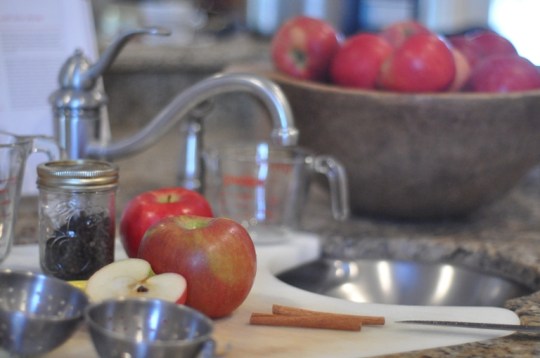
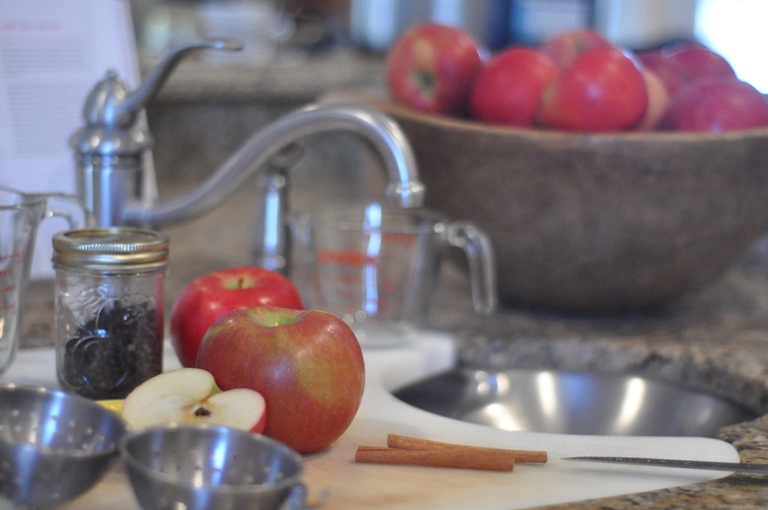
- Place spices in a spice ball or spice infuser or use a double layer of cheesecloth making sure it is well fastened. In a large stainless steel preserving pan add all ingredients including the spice ball.
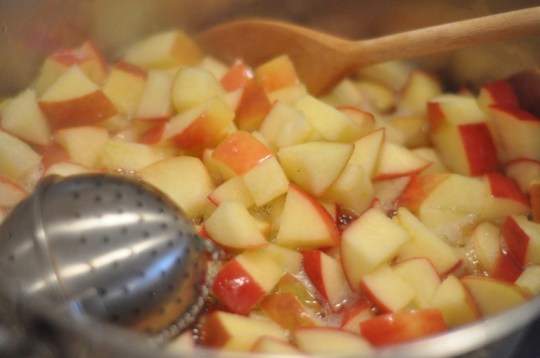
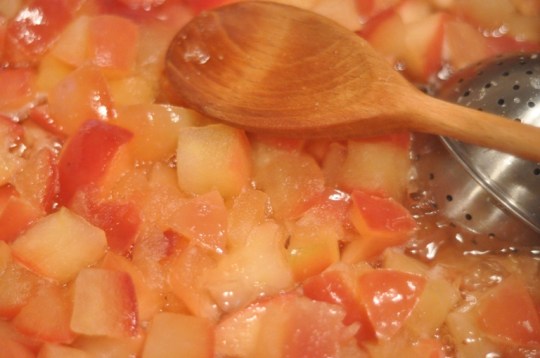
- Bring to a boil over high heat, then lower the heat and simmer. Stir gently to prevent apples from sticking and breaking apart. Cook until the apples become translucent and the syrup thick, about 45 minutes. Remove the spice ball and discard the its’ contents.
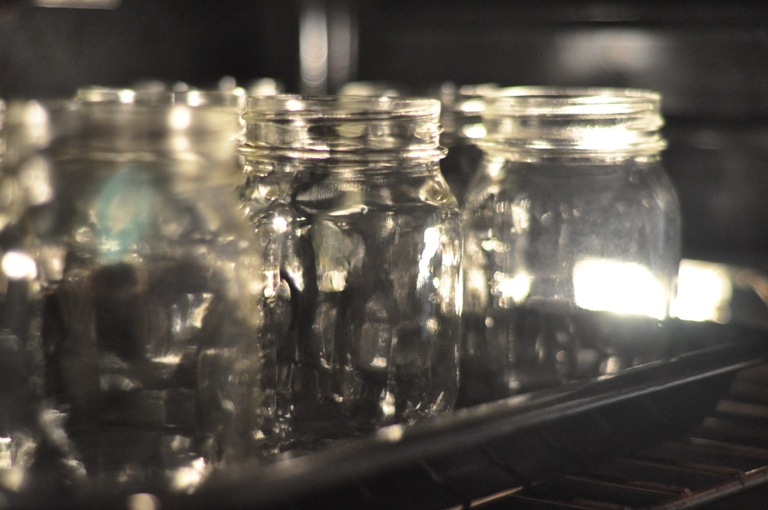
- In the meantime, prepare for water-bath canning. I sterilize my jars in the oven at 250 degrees for 30 minutes but the method is up to you.
- Ladle the hot apples into hot sterilized jars, leaving 1/4 inch headspace. Remove air bubbles, wipe rims using a damp paper towel, and add lids and rings adjusting so the ring is finger-tip tight.
- Place jars in water-bath canner, bring to a full rolling boil and process for 10 minutes. After 10 minutes, turn off the heat and remove the lid. Let the jars stand for 5 minutes before removing to a folded towel.
- Check seals, label, and store. Unsealed jars should be refrigerated.
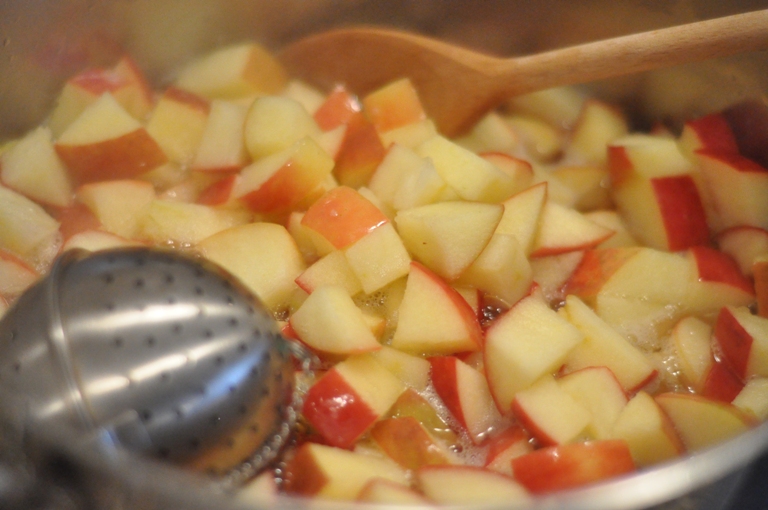
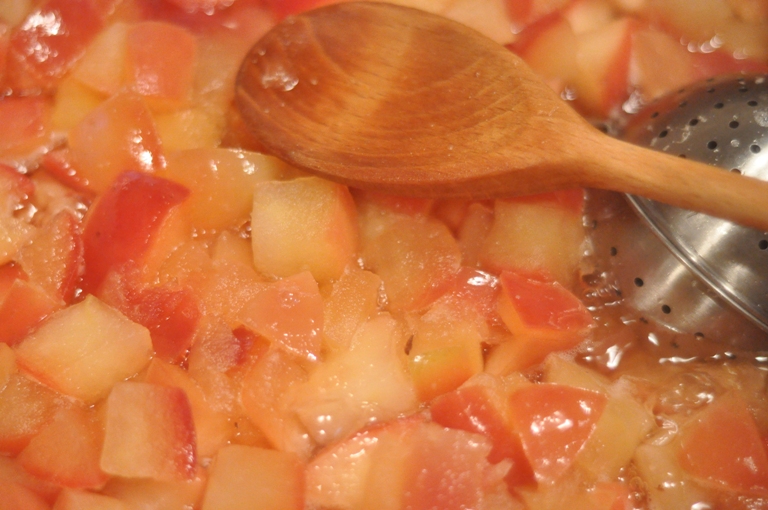
These candied-pickled apples taste wonderful. We plan to enjoy them with a nice stuffed pork tenderloin. I’ll post that when we do.
TIPS: It is important with this recipe to be sure that you remove all of the air bubbles from the jars before processing. I did 5 batches and had 3 jars that did not seal. I contribute this to the air bubbles that I missed and possibly because the apples contain some oxygen. I simply topped up the unsealed jars and reprocessed them. No problem. I think that certain types of apples have more oxygen than others. And, the only reason I’ve concluded this is because of the many, many batches of applesauce I did using 4 different types of apples. My favorite sauce apple in the end was the WEALTHY. The Spartan apples I think had more oxygen making it important to be sure to cook them well and remove all of the bubbles.
Put up Total:
- 2 x 500 mL regular mouth mason jars
- 6 x 750mL regular mouth mason jars
It was a great day spent in the kitchen. We are glad to be home and love  the fact that we can all work together putting up the fall harvest. Apples, cauliflower, cabbage, and cranberries all to come in the next week….but for now, my gang is tuckered out!
So, until tomorrow we are going to have to say good-night.
Canning 101: Sterilizing Jars
Is sterilizing your jars a necessary step when processing your jams, jellies, marmalades, pickles, and other assorted goodies in a hot water bath? The answer according to the National Center for Health is NO when processing time exceeds 10 minutes. However, most of us still do sterilize our jars to be sure that they are properly clean and very hot when we fill them. There are many recommended methods for sterilizing your canning jars and it is up to the individual to decide the method that works best for them but my new favorite is in the oven…and I will explain why!
Making sure that your jars are clean is an important step that must not be skipped as the cleanliness of the glass jars you are planning to store your preciously prepared food in is important. And, I still like to sterilize my jars just to be sure.
Methods for sterilizing:
- For a long time, I used our dishwasher which comes with a sterilization setting adding extra heat to the cycle. However, this is a long process that wastes both water, time, and lots of electricity. Plus, timing when my jams or jellies would be ready to go into the jars proved impossible and often the jars coming out of the dishwasher were clean and sterile but not HOT. So I gave this method up…
- For sterilizing the jars in the boiling hot water bath for 10 minutes. This method was great right up until I badly burnt myself. I was taking a 1.5 litre jar out of the boiling water only to have it slip out of my jar tongs. Not wanting it to smash through our glass top stove I tried to dump the water and jar onto the floor but instead spilled the entire contents onto my shirt. It was a disaster. I gave myself a 2 and partial 3 degree flash burn over a large area on my chest. It’s been extremely painful but is now healing well. So, I’ve become leery of using this method as accidents do happen even if you’ve done the same thing a million times.
- Now, I use the OVEN and it is by far my favorite method. I read about this method in Rachael Saunders new book The Blue Chair Jam Cookbook and thought “this is for me.” Preheat your oven to 250 F degrees and place your jars on a tray for 30 minutes. I like to use a deep cooking sheet so that the jars can’t tip over when I take them out but you can use a baking sheet or larger dish. I love this method because it doesn’t take as much energy to heat your stove to such a low setting, no water, and the jars are hot and ready when you need them. Perfect!
So, for the reasons outlined above I will be using the oven to sterilize my jars from now on. And, although it isn’t a necessary step I feel much more confident when I know my jars are sterilized.
Hard at Work…Hard at Play
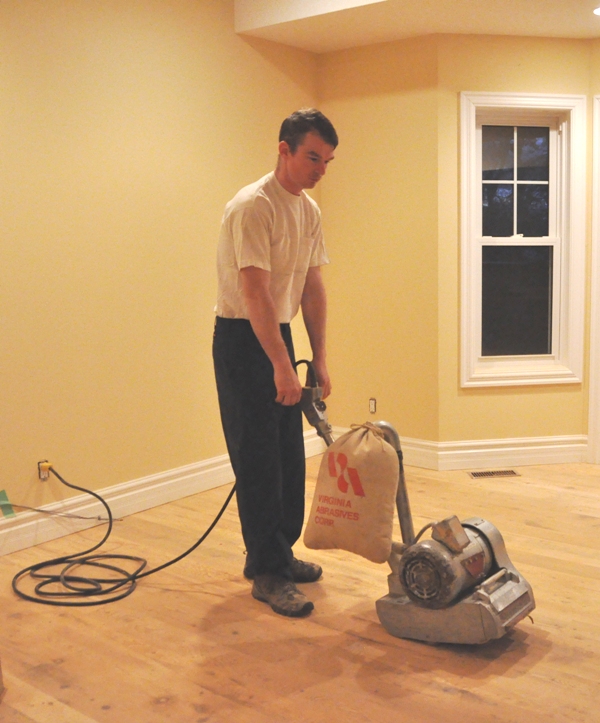 I wish I could say that I was in the kitchen canning my little heart out but I can’t. Matt and I decided to repaint the main floor of our home and then, while we were at it…why not refinish the hardwood floors!?! They were terribly scratched from the endless amounts of carry on we encourage our pups to perform and it was time to refinish them before another year passed. Needless to say, we’ve been too busy to CAN. Such a shame when there are Honey Crisp apples to pickle and cranberries to pick at the nearby marsh in Bala. It is hard to believe that we live only minutes away from the cranberry capital of the world. Now, the really shame would be if I didn’t get some of their tart fresh goodness into a few jars.
But, it hasn’t been all work and NO PLAY…as we are now the very proud 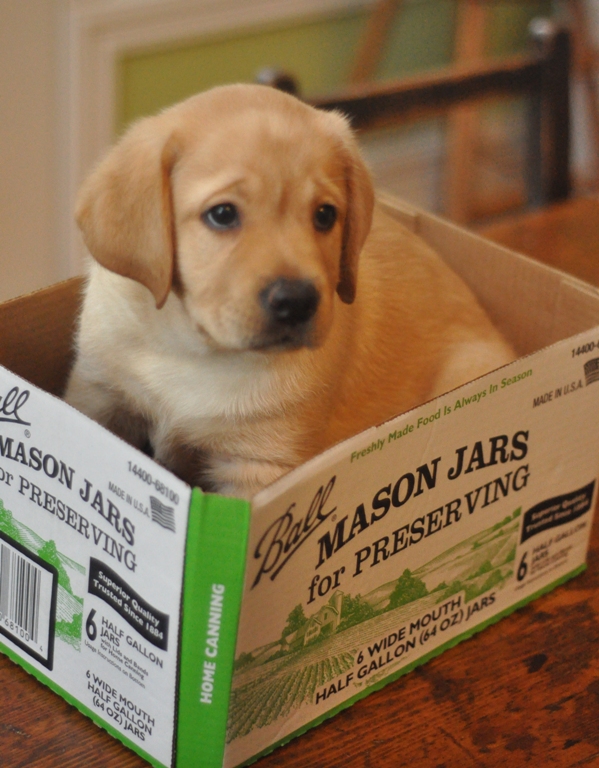 parents of a new baby boy. We picked him up yesterday and are enjoying his puppy play, breath, love, and then the calm that comes once he has completely worn himself out. At first, our two older dogs were not sure what to make of him but now they seem eager to show him the ropes, bringing him toys to play with and tolerating his biting games. His chubby tummy and loving nature makes him completely impossible to resist. In fact, it is making it difficult to concentrate on getting the floors finished as I would much rather snuggle him on the couch. He is the best little guy and very very loverish. We are so grateful he is ours.
He looks eager to get into the kitchen and help us get some food in jars. What do you think?
Vintage Canning and Food ‘Things’
Matt and I love antiques, vintage kitchen supplies, old canning jars, and basically anything that has a little bit of history that can leave you wondering “what is the story behind this piece?” It is kind of cool to wonder who used this little gadget and why was it discarded? Are the things we have today so much better? and What is our obsession with holding on to the past?
As we finish up the back wall of our cold room pantry/canning storage shelves we’ve enjoyed accessorizing the corner cabinets with some vintage jars, antique berry pickers, old kitchen scales, and a few other odds and sods. Each piece is unique in its’ own way. I really like this little pie crimper…different eh!?! 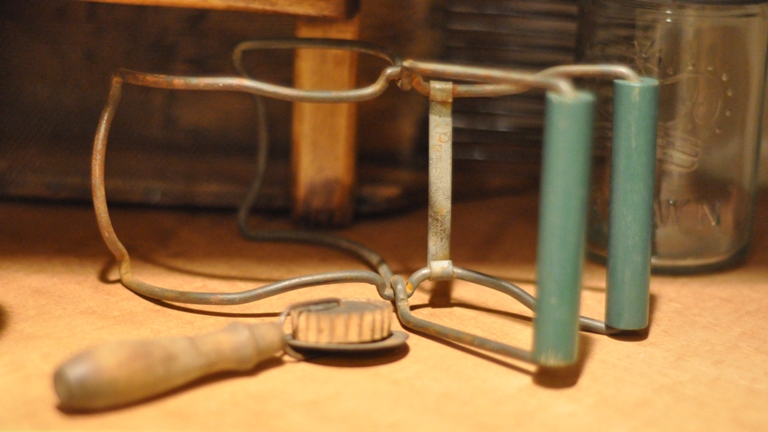
Some of our favorite pieces are the items which we will breathe new life into as 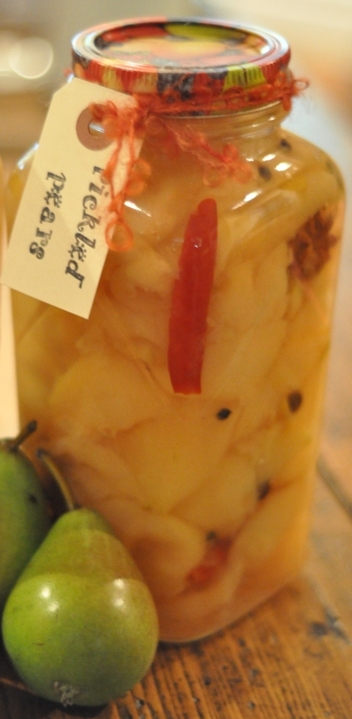 they will once again find their way back into our kitchen. There is nothing like filling a vintage jar with some bright fruit and placing it just right onto your shelf. All of the different sizes and styles of jars make your shelves that much more interesting. And, there is nothing like repurposing. A friend of mine kindly traded me some old jars this summer and after spending a pleasant afternoon with Matt and my mom washing them all we were thrilled to find that several of them would work with the new rings. The pickled pears look really beautiful in this old jar; the shape of it is so interesting and it sealed just fine. When filling these old jars it is best to make sure that they are really hot going into the water bath as I have had some break. This problem can be corrected by ensuring that the jars are really hot when they are filled and that the water bath was NOT at a full rolling boil when they enter. This way it is not such a shock to the older glass.
When searching for old glass jars we try to buy ones that the regular and wide 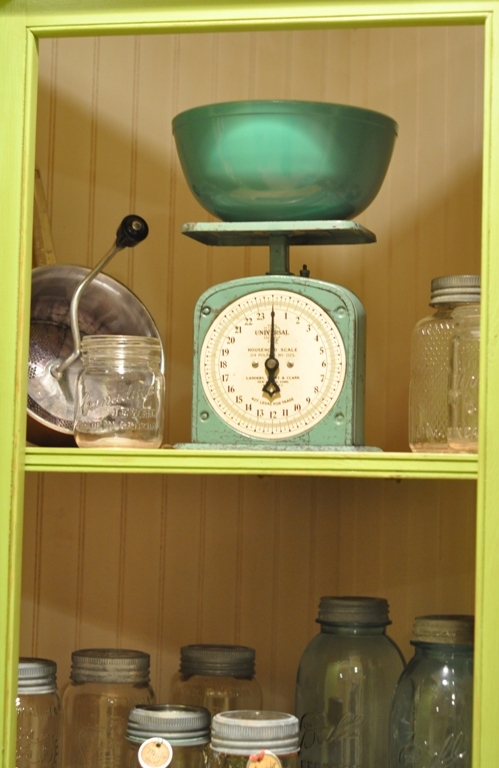 mouth rings fit on. In fact, I always carry a couple of the rings in my handbag just to so we can check them before purchasing. It is also important to make sure that there are no cracks or chips on the top of the glass rim as the jars will not seal properly if the glass is damaged in any way. Look for heavy scratches and signs of too much wear but don’t worry about the dirt…it usually washes off.
We also have glass jars that the new rings do not fit on and unfortunately, despite my efforts, I have never successfully gotten the glass lids with the rubber rings to seal properly. But, we still use them for dried herbs, seeds, sugar, flour, grains, and dehydrated items. They look so pretty and there is such a wide range of sizes, shapes, and colours to make collecting them very appealing.
Canning Books I’m Jamming On
Boy, are there some great new canning recipe books out there. It seems that everyone is on a similar wave length and the time to get back to doing some of the simpler and more rewarding things in life are taking their seat in the forefront of our consciousness. Okay, that is a big thought…but you know what I mean? Right!? Not only are there a lot more canners out there dipping their toes into the water bath; but there are also a lot of NEW and fabulous canning books out there to inspire us!
Very recently, I purchased Rachel Saunders new book on-line, The Blue Chair Jam Cookbook. I watched her one night on YouTube discussing her love for making great jams and jellies and her passion and love for this craft inspired me to purchase her book. I tried to wait patiently for it to arrive but must admit I made a daily trip to the post-office hoping there would be a slip in the slot letting me know it had arrived. It didn’t take long before it was here. Phew.
I was surprised to see that it was a rather large and comprehensive novel. The  pictures are beautiful and Rachel’s explanations of both the preparation and process of making tasty jams, jellies and marmalades are wonderful. It’s jamming!! Unable to put this book down, I’ve basically read it cover to cover and again. I’m anxious to try some of her recipes but I think they’ll have to wait until Matt and I head down to Florida for a month of intense marmalade making in March. MMMmmm…doesn’t that sound like fun!?!
Rachel’s book is sure to become a staple in every canners arsenal as it is a comprehensive guide to making some beautiful looking and sweet tasting things. Check out her video…I am sure she will inspire you to. YouTube – The Blue Chair Jam Cookbook.
Canning 101: Siphoning
When Matt and I first started canning last August we really didn’t have a clue…a clue about a lot of things. Through lots of trial and error, reading, and canning we’ve figured out a thing or two. Afterall, practice does make perfect.
But, some things still do occur from time to time and you are left wondering why? SIPHONING. Siphoning is when liquid is drawn out of the jar by a rapid change in temperature and air pressure. It seems to occur more frequently in canning fruits like apple sauce and peaches in syrup but we’ve also experienced siphoning in soups and stewed tomatoes done in the pressure canner.
Remedy: Some of the ways to solve this problem include…
- Make sure that the jar and liquid is as hot as it can be when filling. I think that this is a good habit to get into. The hotter the jars are when they enter the boiling hot water processor the better. It prevents liquid from seaping and jars from breaking.
- When using the boiling water canner be sure to remove the lid and turn off the heat when the time is up. Do NOT remove the jars. Let them rest for 5 minutes so that they can cool down slightly before removing. Often this is enough to prevent siphoning.
- Remove air bubbles and adjust headspace accordingly. This is an important step and can also help to prevent siphoning. If you’ve left pockets of air in your jars it may result in liquid being incorrectly dispersed. Today, while doing the spiced apple pie filling I didn’t pack the jars tight enough…leaving unwanted pockets of air and room for the liquid to boil out of the jar. This prevented them from sealing.
Jars may seal despite unwanted siphoning and when they do they are perfectly safe to label and store. Last year, every can of 30 jars of peaches siphoned. At the time, we weren’t sure why? Now we know. We labelled and stored each jar of peaches and 12 months later we finished the last one. They all tasted just fine. However, liquid loss does spoil the overall appearance of what should be a beautiful jar of fruit. Try your best with the above suggestions and you may eliminate siphoning in most cases but don’t panick if you have a bit of liquid lost. Just be sure to remove your rings and clean the jars before storing them on the shelf.
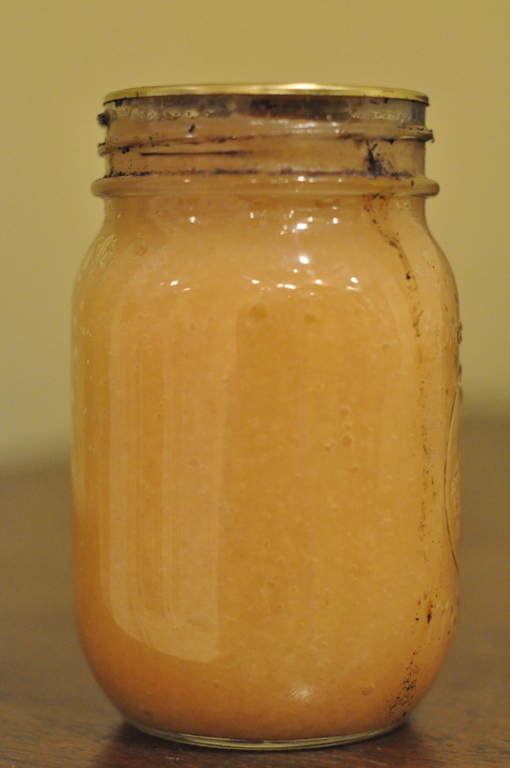
Jars that are not cleaned before labelling and storing can look like this after a few months on the shelf…YUCK!


 Putting Up With The Turnbulls