Eat’n Up ~ Elderberry Cheesecake
A basic recipe can be transformed into something special by adding some of your homemade preserves. Here we take a simple cheesecake recipe and subtly flavour it by adding a splash of homemade elderberry maple syrup, toss on a few elderberries to dress up the final plate and voilà! It’s as easy as 1, 2, 3 but looks and tastes like you slaved on it for hours. The hardest part is waiting for it to cool.

RECIPE FOR ELDERBERRY CHEESECAKE:
- 1 3/4 cups graham cracker crumbs
- 1/3 cup butter; melted
- 750 grams of cream cheese; softened (3 packages of Philly Cream Cheese)
- 3/4 cup of sugar
- 1 tsp vanilla extract
- 3 eggs
- 1/4 cup elderberry maple syrup
- 1/2 cup fresh elderberries; about a month ago we stemmed and froze about 9 cups of elderberries
- Preheat oven to 350F.
- Combine graham cracker crumbs and melted butter in a mixing bowl. Place in the bottom of a springform pan. Press to flatten.
- Place cream cheese in a microwave proof bowl and heat for approximately 20 seconds until soft (time may vary so watch carefully as you do not want to melt the cheese).
- Add sugar and vanilla to softened cheese and stir well to combine.
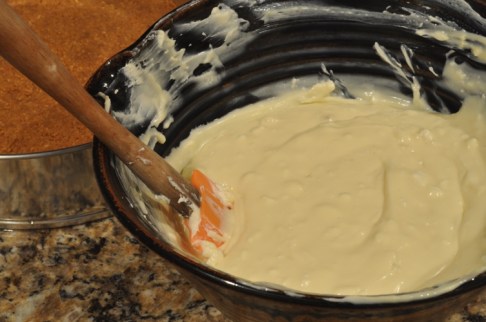
- Add eggs to cream cheese mixture one at a time and mix until well combined.
- Pour in elderberry maple syrup and gently fold until syrup streaks the white mixture.
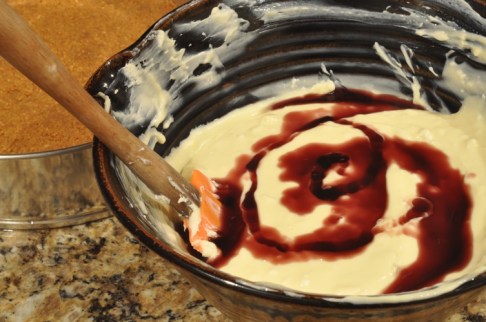
- Pour cream cheese mixture over graham cracker crust and place in the oven to bake for 40-50 minutes or until almost set. Test with knife by inserting it in the center.

- Allow to cool and set up for 3-4 hours before serving.
- Slice and serve. Sprinkle with fresh elderberries and drizzle with additional syrup.
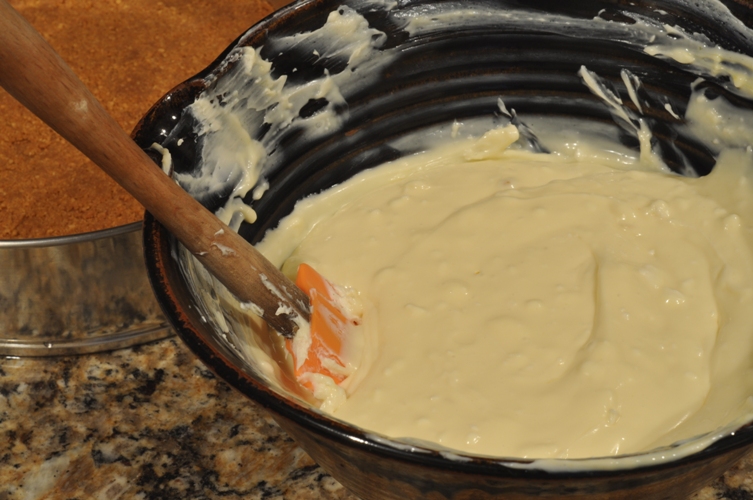
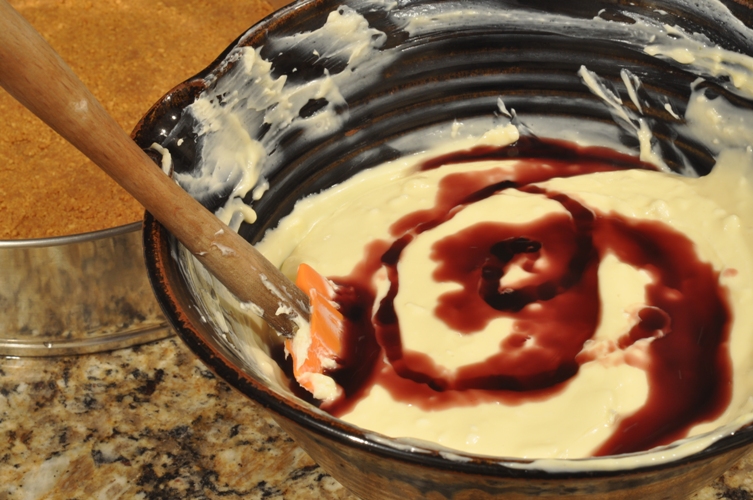

Consider experimenting with your next cheese cake by stirring in some maple syrup or adding some of your homemade preserves like strawberry jam or spiced blackberry jam. How do you alter simple recipes with your homemade preserves?
Eat’n Up ~ Lasagna
While the wind howls and blows bringing what feels like winter with every breath, Matt gets busy in the kitchen preparing my favorite “comfort” food, lasagna. The wood stove is packed full of logs and finally cranking out some much needed heat to warm cold toes. I pour us both a cold pint of our favorite beer, Flying Monkeys’ Hoptical Illusion, pull up a stool at the island bar, and settle in to watch Matt whip up this cheesy mouth-watering meal. He relaxes into a rhythm which is just plain fun to follow. He slips and slides in sock feet across the hardwood floor methodically washing, chopping, stirring, cooking, and even breaking to take the photos. He always makes it look so easy.
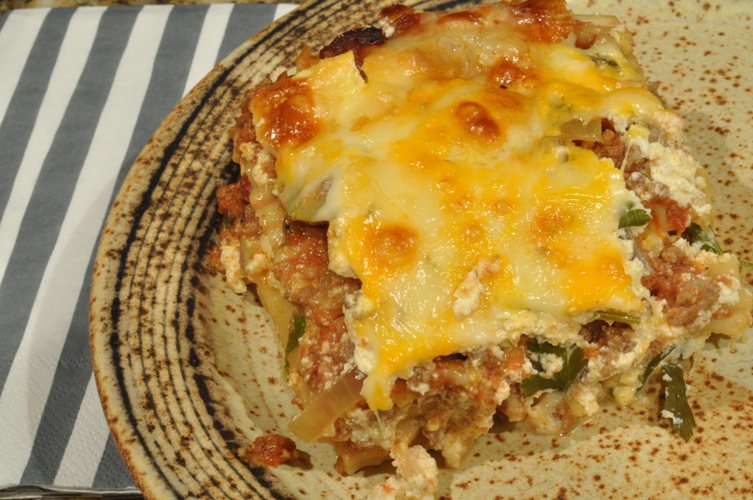
Lasagna is one of those meals that instantly brings memories of childhood flooding back to me. My mom was the queen of the layered, cheesy, runny “homemade” sauce lasagna that would leave you smacking your lips and licking your plate when backs were turned. And, until Matt began making lasagna with our homemade tomato sauce, I never thought I would ever taste one as good as my mamma used to make. But, she’s now met her match, forced to throw in her apron because Matt’s lasagna is just as good…maybe better but don’t tell her that. I swear the secret to great tasting lasagna isn’t all the extras you add to make it your own but the fresh home canned tomato sauce. Okay, I’ll concede better ingredients help too, but without the sauce you’ll never compete with mama.
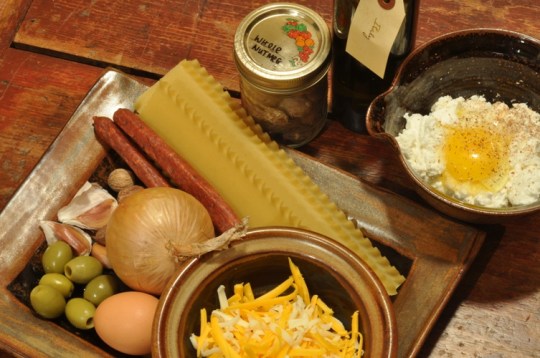
RECIPE FOR LASAGNA (6-8 servings):
- 1 pound ground beef
- 1 pepperoni
- 750 mL homemade tomato sauce
- 1 cooking onion; chopped
- 8-10 stuffed olives; thinly sliced – if you can find the Tassos olives for a reasonable price get them…they’re yummy!
- 4 cloves garlic; minced
- 1/4 cup olive oil; divided
- 4-5 sprigs fresh oregano
- salt and pepper to taste
- 475 grams ricotta cheese; 1 container
- 1 egg
- 1/4 tsp nutmeg
- 4-5 sprigs fresh parsley
- 1 1/2 cups old cheddar; grated
- 1 1/2 cups mozzarella; grated
- 1 package oven ready lasagna noodles (homemade noodles if you’re ambitious)
- Preheat oven to 350F.
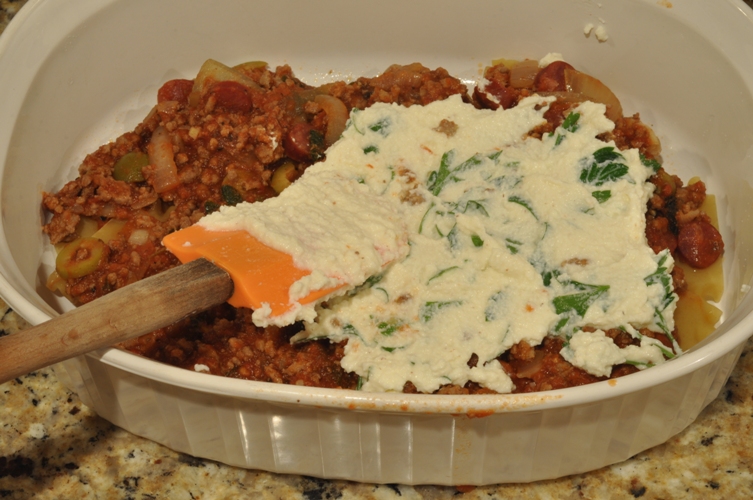
- In a bowl, mix together ricotta cheese, egg, nutmeg, and fresh parsley. Stir to combine.
- In a skillet set to medium-high heat add 1 tsp olive oil and ground beef. Cook until the beef is brown.
- Then add onions, pepperoni and remaining olive oil. Cook until onions are softened about 10 minutes.
- Mix in garlic and continue to cook for 2-3 minutes.
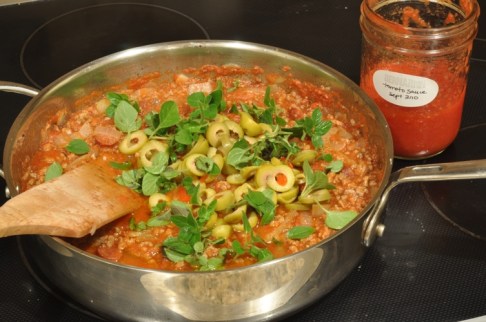
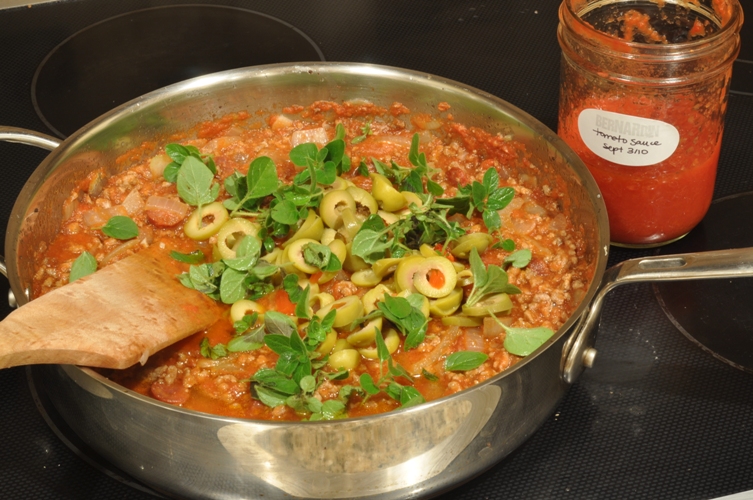
- Pour in tomato sauce, stir to combine all ingredients and simmer for 15-20 minutes.
- Turn off heat, add olives, oregano, and salt and pepper to taste.
- On the bottom of a baking dish (approximately 9″x12″) place a layer of lasagna noodles. Smooth in thin layers over the noodles, the meat sauce mixture, the ricotta mixture, and the grated cheese. Repeat layers until ingredients are used up.
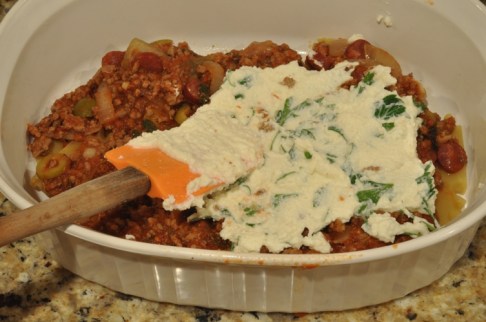
- Finish with a layer of grated cheese on top.
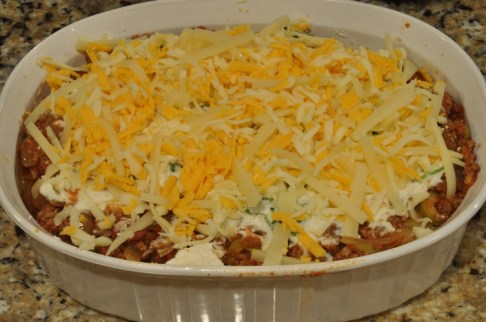
- Cover loosely with aluminum foil and place in preheated oven to bake for 40 minutes.
- Remove cover and continue to bake for an additional 20 minutes or until the cheese is browning in spots.
- Remove from the oven and let cool for 20-30 minutes.
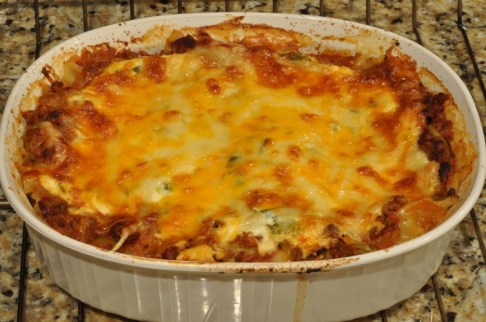
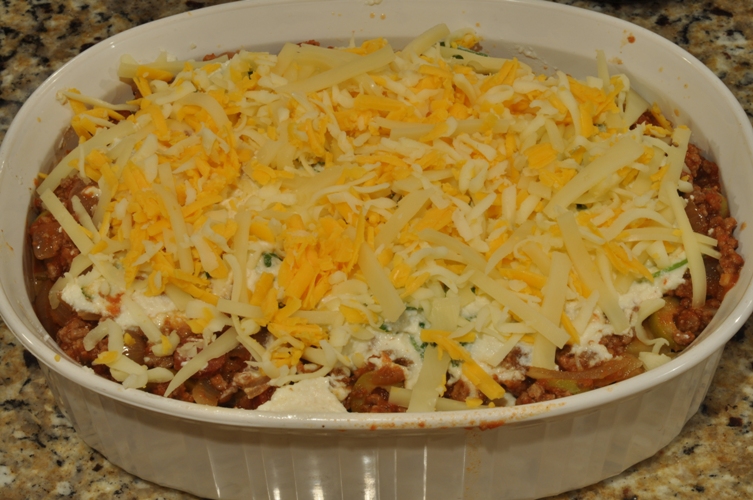
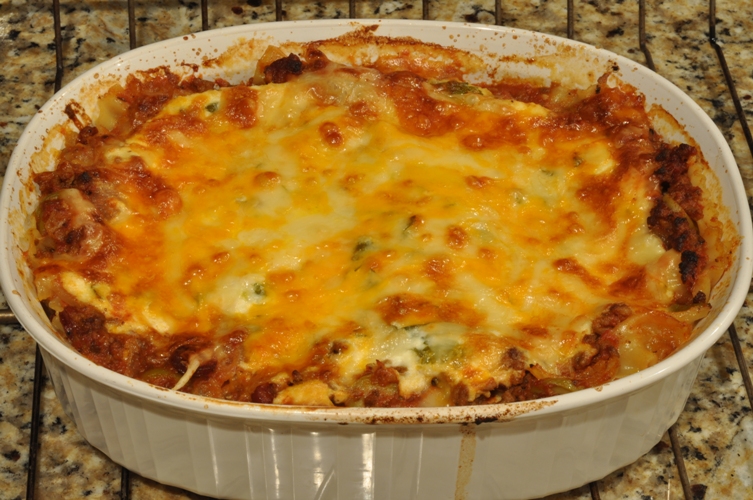
Matt swears the cooling time is very important in order to let the lasagna set up properly so it can be served in those picture perfect pieces (as seen in photo at the top of the page). But, I could care less about waiting 20 long minutes to sink my teeth into one forkful. I really don’t mind a saucy, liquidy mess on my plate because it reminds me of my mom’s lasagna. Back in the day, there was simply no way she was making four hungry kids wait 20 minutes for their favorite meal. So, a plate of runny cheesy sauce with noodles sounds right up my alley and the sauce part is easily swept up with a few passes of garlic bread. At least that’s what I think.
Note: We purchase our stuffed Tassos olives with red peppers and onions from Costco. They usually stock them in the fall and winter months and they are about a third of the price of retail value.
Planting Garlic ~ A Fall Job, A Summer Harvest
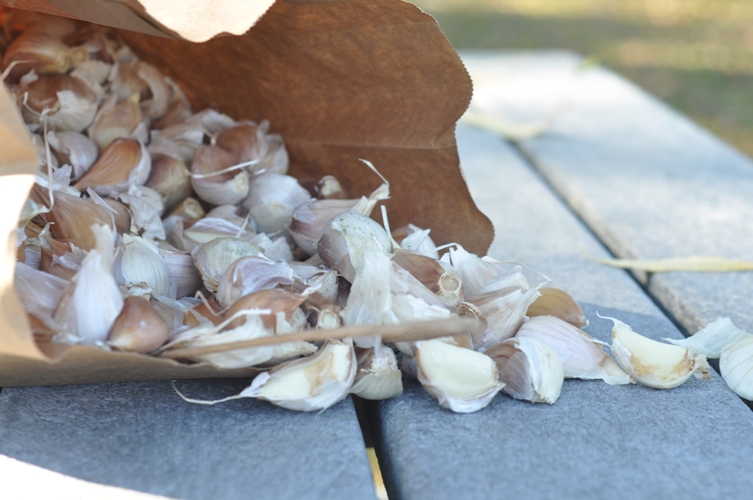
Garlic is a fun and easy crop to grow and now is the time to plant it for any of you who are wanting to harvest your own next summer. A few months ago, we purchased 50 big beautiful heads of garlic at the Gravenhurst Farmers’ Market from Hewitt’s Maple Ridge Tree Farm. These heads were gigantic, healthy, and perfect specimens to plant for next year’s crop. In fact, I wish we purchased more. This is our second year growing garlic and we saved the biggest heads from this years crop to add to those purchased. We go through a lot of garlic between every day cooking and canning.
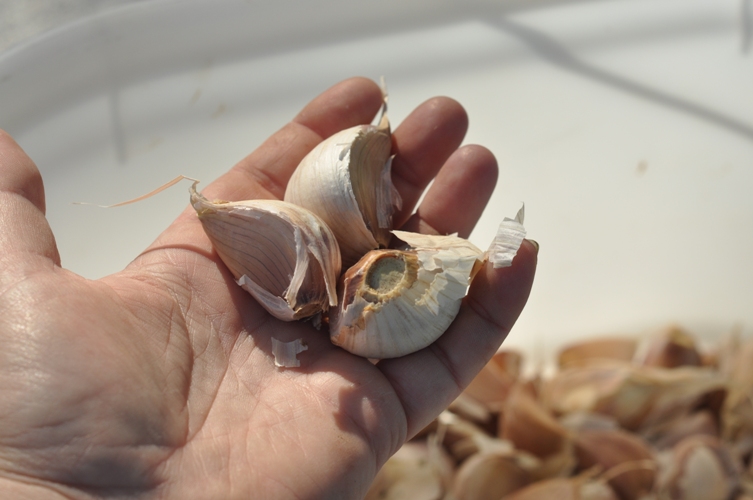
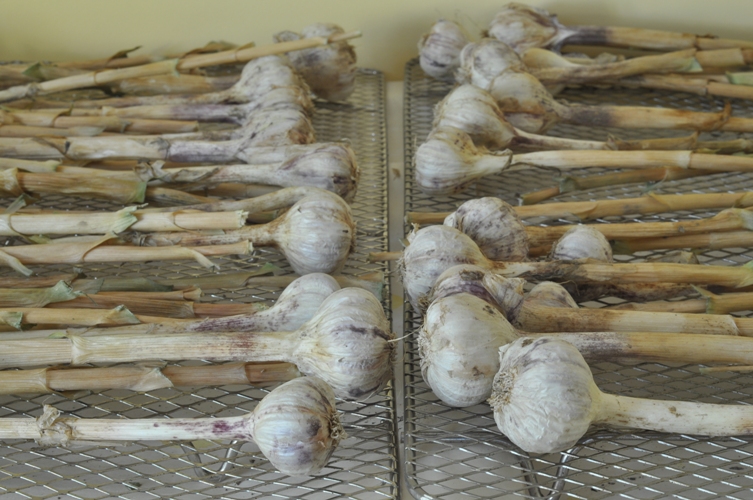
In order to preserve the garlic for both consumption and planting you will need to dry it. We bundled 5-6 whole heads of garlic with butcher’s twine and hung them outdoors in our screened in porch. Drying them is easy as long as you remember to keep them out of direct sunlight and make sure there is an ample amount of air flowing around each one. A garage, shed, or screened in porch are perfect spots to hang the heads. Alternatively, if you don’t have access to an exterior spot, you can lay them out on drying racks in the basement with a fan to continually circulate the air. But, be warned your house will smell like garlic for about a month. So finding the right place to dry your garlic is something to consider. We used both methods; drying our purchased bulbs on the porch and our harvest inside on racks (yes, the place really did smell like garlic and I thought it would never go away but it did).
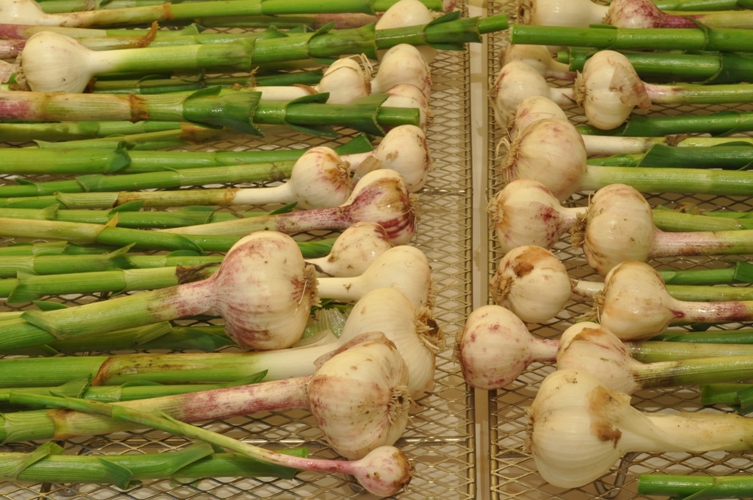
It takes about a month and a half to dry the garlic depending upon your climate. Check the heads occasionally to be sure they are properly drying and that no mold is forming. Once they’re finished drying it will probably be time to plant them.
Planting garlic is typically done in the fall about three weeks before the ground freezes. This will allow the roots a chance to develop and the tops should not break ground before the winter snow flies. It’s an easy task and with a few friends doesn’t take long. Break apart the whole heads of garlic separating each individual clove. Select well-developed bulbs with a nice shape and the plumpest cloves from each bulb. It is the clove size that will determine the size of the new bulbs.
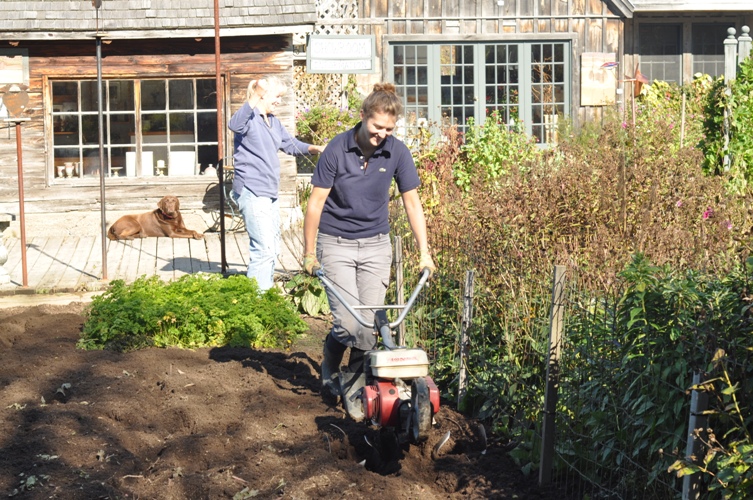
We started by rototilling the soil. It’s important to loosen the dirt to allow the roots a place to grow. So, turn the soil and don’t be afraid to get dirty. We also alternate where the garlic is grown from one year to the next and choose a sunny spot. Create rows approximately 4 inches apart and plant each clove 4 inches from one another about 3 inches deep or the depth of you finger (root side down). Then cover with loose soil mounding over your planted rows about 4″ high. Water and wait for them to do their thing.

In the winter, when the ground is covered in a thick blanket of snow and there is no sign of anything green anywhere you may spot the garlic shoots poking out through the snow. Proof they are growing. As the snow retreats and warmer weather takes hold your garlic will develop green shoots known as scapes.
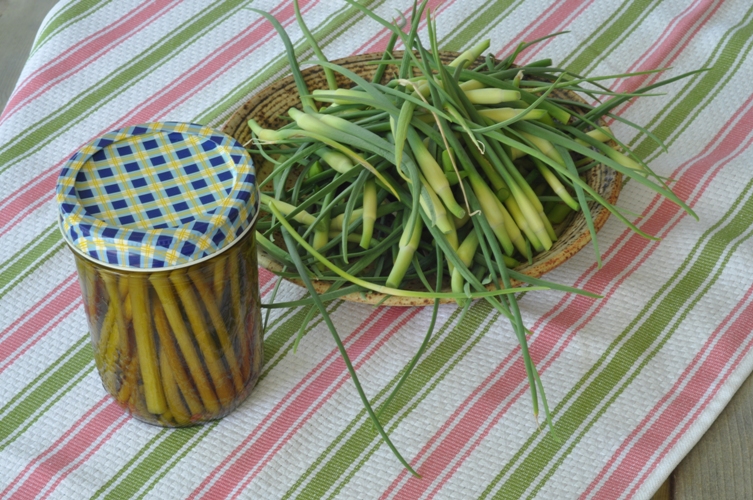
At the end of June, these flower heads or garlic scapes were cut in order to divert all of the plant’s energy to growing a larger bulb. Besides, the scapes are a tasty treat delicious to cook with and/or pickle. We did some this year and find they’re an interesting addition to the pantry. Definitely not to be wasted.
By the third week in July the heads should be fully formed and the leaves will start to turn a bit yellow or brown. It’s time to harvest your crop. Reach beneath the soil to investigate whether or not they’re large enough (it’s better to check before harvesting ~ you can always leave them a little longer). If they are about the size of a child’s fist or the size of the whole bulbs from which you started then they are ready. Pull them out and using a pair of sharp scissors cut off the roots on the bottom of the bulbs and cut the stock leaving about 12+ inches. Then it starts all over again.
Planted:
-
Side garden 20 rows with 8 cloves each row ~ 160 cloves
-
Front garden 22 rows with 9 cloves each row ~ 198 cloves
The Country Loaf

Bread is an integral part of everyday life around this home. This bread used for toast is enough to get me started in the morning but you can’t forget all of its’ other important uses; sandwiches, topping a casserole, seasoned bread crutons, crumbs to thicken sauces, for dipping, the list goes on. It’s been some time since we actually purchased a loaf of bread from the grocery store and unfortunately when we do it often goes to waste. We are spoiled by the amazing homemade loaves Matt churns out every few days and it has made it impossible to go back to even the best baked bread you find at the grocery store. While, Matt is extremely modest about his bread making abilities, I am here to confess that despite it keeps him up far too late on work nights, I can not live without it. He makes the process look effortless, patting and kneading the dough with ease and assures me it becomes second nature with practice. Below outlines his method. Left out are the countless hours spent waiting and folding and getting the correct rhythm but I assure you if you are at all motived to give it a whirl (more than one attempt) you will not be disappointed with the results. In fact, I’m fairly confident (like us) you will never want to go back to buying bread.
RECIPE FOR THE COUNTRY LOAF:
- 1 tablespoon sourdough starter
- 900 grams filtered water at room temperature; divided
- 1000 grams white bread flour; divided
- 200 grams whole wheat flour; divided
- 200 grams leaven
- 20 grams salt
- 3/4 cup sunflower seeds, half salted and half unsalted
Day One:
- The directions will depend on your time schedule. Ideally, the night before you plan to bake the bread you will make the leaven by combining 200g room temperature water (preferably filtered), 100g white bread flour, 100g whole wheat flour and 1 tablespoon of the sourdough starter…find recipe for starter here. Stir until all ingredients are hydrated, then ferment overnight in a medium size bowl.
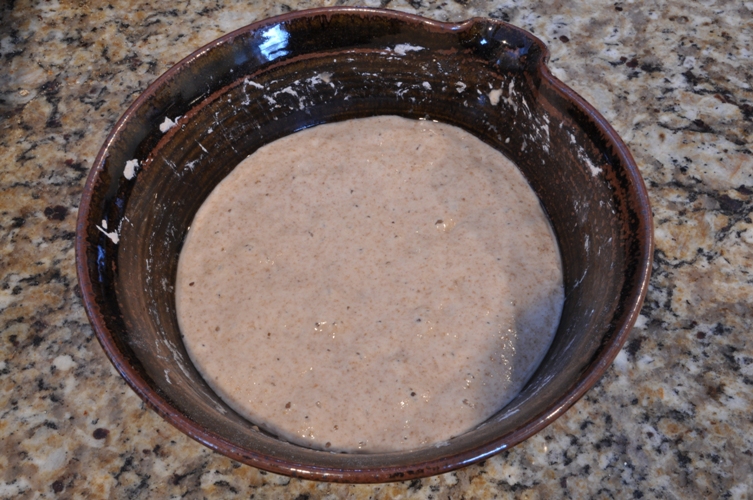
Day Two:
- In the morning, mix your dough. Combine 700g room temperature water with 200g of leaven, stir until hydrated.
- To this mixture add 100g whole wheat flour and 900g white bread flour. Mix until all the flour is well hydrated.
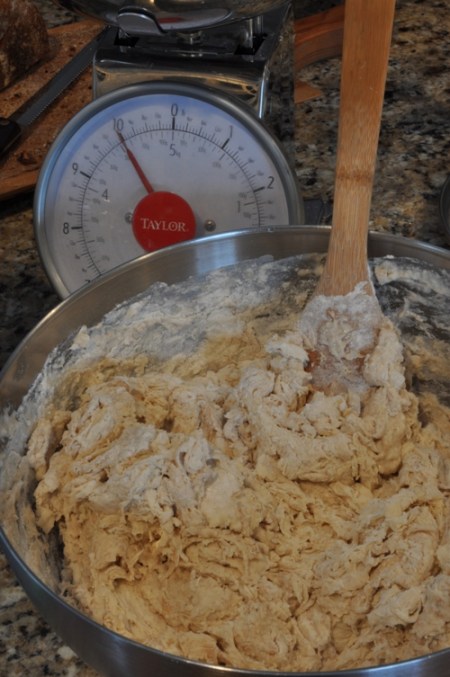
- Turn this mixture out onto the counter. Let rest for 20 minutes.

- After the time is up add 20g of salt, this is also the time to add 3/4 cup of sunflower seeds (optional). Combine ingredients well using your hands.
- Turn the dough into a round shape and cover with a large bowl. You can also leave the dough in the mixing bowl.
- For the next 4 hours stretch and fold the dough at 30 minute intervals. To do this on the counter pull the dough towards you and then fold back to the middle, next to the right side, then left, and finally the side furthest from you. As you bring that last fold in pull it right over the dough to create a ball with surface tension. After the 4 hour time period you will shape the loaves.
- Divide the dough in half using a bench knife, shape each half into a round, cover, and let rest for 20 minutes.
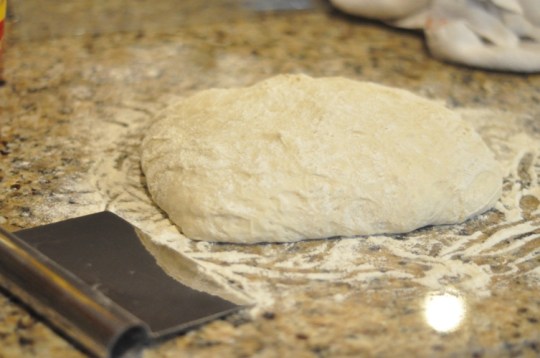
- Next shape the loaves using the stretch and fold method but this time finish be stretching the fold nearest you back over the remaining dough, then using your bench knife turn and tuck the dough to create a firm round with good surface tension.
- Line 2 large bowls with towels dusted with a 50/50 blend of wheat and rice flour. Place the loaves in the bowls seam side up, cover and let rise for 4 to 5 hours at room temperature (75 degrees farenheiht). Note: air temperature greatly affects the rate of rise. The cooler the temperature the slower the final rise. We use proofing baskets with liners from Brotform.
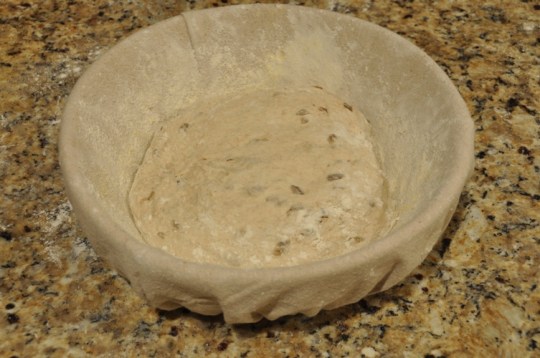
- Place a cast iron combo cooker in the oven and preheat to 500F half an hour before baking.
- Turn the loaves seam side down into the pan, score the loaves, place the lid on and place in the oven. Reduce the temperature to 450F and bake for 20 minutes. After the time is up, remove the lid and bake for an additional 20 to 30 minutes until the crust is burnished.
- Remove the loaves to a rack and let cool for at least an hour before slicing.
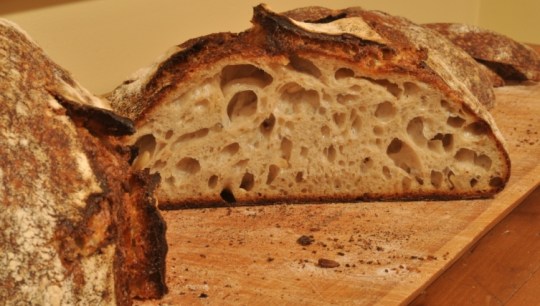


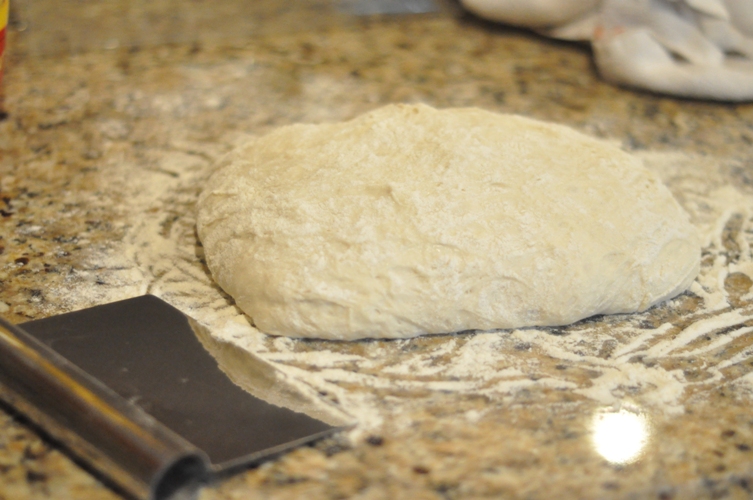
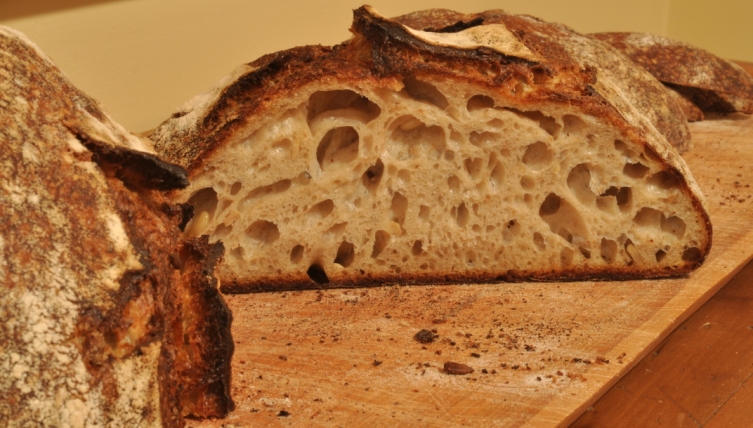
This bread is involved and takes practice. After a couple of times you will get a feel for the loaves and be able to churn out very good results every time. I recommend getting the book Tartine Bread by Chad Robertson as that is where this recipe hails from. The book also goes into more detail and has some great instructional photos as well as excellent recipes and variations on the regular country loaf. Also, I insist you get the cast iron combo cooker from Lodge . Baking in cast iron has been a revelation for me, allowing me to achieve professional results in my household oven.
Again, this recipe may seem daunting but you won’t be long getting a feel for it. For a little extra inspiration watch Chad make it all look so easy in this video.
Sourdough Starter
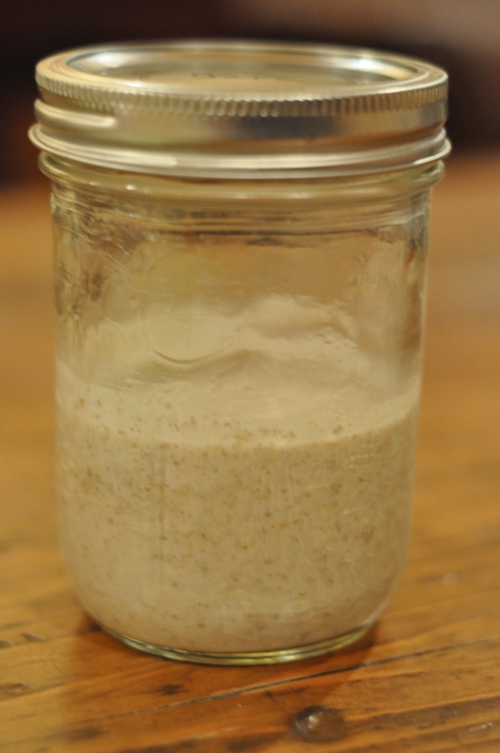
For naturally leavened bread this sourdough starter will replace commercial yeast in your bread recipes. It can be difficult to get going and we failed the first three times but patience and persistence along with a stubborn nature eventually granted us success. And, it is more than definitely worth it. Tartine Bread by Chad Robertson is an instrumental guide for those interested in naturally leavened breads. As well, The Fresh Loaf provides a wealth of information for the home baker.
RECIPE FOR SOURDOUGH STARTER (from Tartine Bread by Chad Robertson):
- white flour
- whole wheat flour
- water
- Mix well to combine 2 pounds white flour with 2 pounds whole wheat flour.
- Half fill a small clear glass bowl with lukewarm water.
- Add a handful of flour mixture to the water to achieve the consistency of thick batter, free of lumps.
- Scrape down the sides of the bowl with a spatula.
- Cover the dough with a towel and place in a cool spot (out of direct sunlight) for 2 to 3 days.
- After 2 to 3 days, check the culture to see if any bubbles have formed around the sides and on the surface. If the culture seems inactive, let it sit for another day or two. In this initial stage when the culture smells strong and tastes acidic it is ripe and ready for the first feeding.
FEEDING THE CULTURE:
- To feed the culture discard about 80% and replace the discarded portion with equal amounts of water and the flour blend. Mix to combine.
- Repeat this process every 24 hours at roughly the same time every day.
- After a few days of repeating this process successfully you will have a consistent starter that once fed will remain active for three days unrefrigerated. OR, keep in the refrigerator for weeks in between feeding.
Mango Chili Sauce
Tomatoes, tomatoes, tomatoes. Are you guys sick of reading all the things we canned with them? The end is in sight. We can almost see the finish line. For lots of you tomato season is nearing to an end if it hasn’t already. But, for the few who still have tomatoes growing in the garden and want to try something different this next recipe is sure to hit the spot. In fact, it’s new for us as well. With a few mangos left over from the Parrots Head Spicy Salsa and a lot of tomatoes we thought this little gem would be a nice addition.
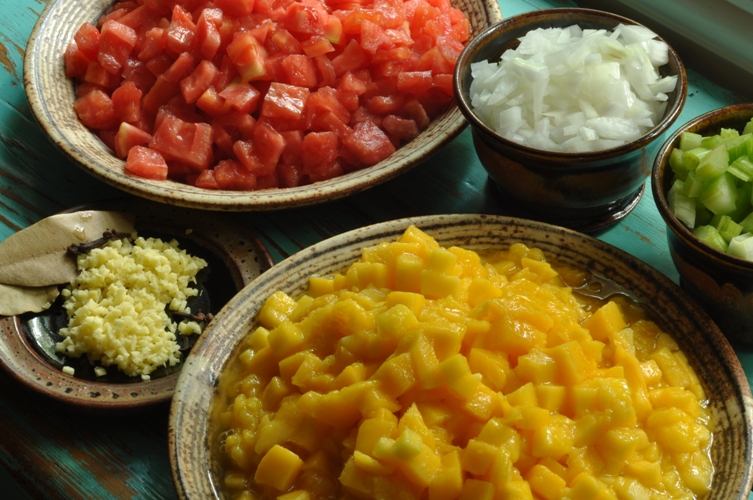
We’ve used the Complete Book of Small Batch Preserving, by authors Ellie Topp and Margaret Howard, a lot this season (a lot) because we love how each and everything we’ve tried turns out. The only thing we’d have to say is the recipes yield only a handful of jars at a time. For many, this works well because it allows you to try something new on a small-scale to determine if you really like it. While, for others (like us), they are too SMALL. We hate seeing a half full water bath canner. So, we often double, triple, and sometimes quadruple the recipes. While, you’ve probably heard warnings against double batching because it will compromise cooking times, throw off consistency, and leave you with a poor tasting product; we are here to assure you this is not the case for the salsa and chili sauces from this book. In fact, the cooking times were not increased and we can assure you the consistency and taste was spot on each time. Where you should be careful not to double batch recipes is when making jams and jellies. Food in Jars explains why in this post.
The recipe below is for a single batch but if you think your family is really going to enjoy it, go forward with confidence and double the batch. We did!
MANGO CHILI SAUCE (from Complete Book of Small-Batch Preserving):
- 3 cups Roma tomatoes; peeled, seeded and coarsely chopped
- 2 cups Mango (about 3 mangoes); chopped
- 1 small hot red chili OR 1 jalapeño pepper; seeded and finely chopped
- 3/4 cup rice vinegar
- 1/2 cup pineapple juice
- 1/2 cup onion; diced
- 1/2 cup celery; diced
- 1 tbsp gingerroot; minced
- 3 whole cloves
- 1 bay leaf
- 1/3 cup granulated sugar
- 1/2 tsp pickling salt
- Blanch tomatoes in boiling water for about 60 seconds or until skins start to crack. Place tomatoes in ice water to quickly cool. Remove skins, seeds, and dice. Note: scoring the bottom of each tomato prior to blanching will help to remove the skins more easily. Prepare remaining ingredients. Remove seeds from hot peppers and finely chop. It’s a good idea to wear gloves and use a separate cutting board.
- Prepare for water bath canning. Sterilize jars in oven at 250F for 30 minutes. Note: this can be done while the preparation is cooking for an hour.
- In a large stainless steel saucepan combine tomatoes, mango, chile or jalapeño pepper, vinegar, pineapple juice, onion, celery, gingerroot, cloves and bay leaf. Bring to a boil over high heat, reduce heat, and boil gently, uncovered for 1 hour or until thickened. Stir occasionally to prevent it from sticking to the bottom.

- Add sugar and salt. Return to a boil and boil gently for 10 minutes. Remove from heat and discard bay leaf.
- Ladle hot chili sauce into hot sterilized jars leaving 1/2″ headspace. Remove air bubbles, wipe rims, place lids and screw bands on adjusting so that they are just finger-tip tight. Process 250mL (half-pint) jars for 15 minutes and 500mL (pint) jars for 20 minutes in a hot water bath.
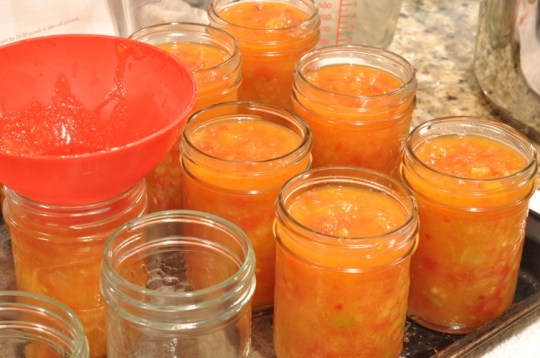
- When the time is up turn off the heat and remove lid, wait 5 minutes before removing the jars. Check seals, label, and store.

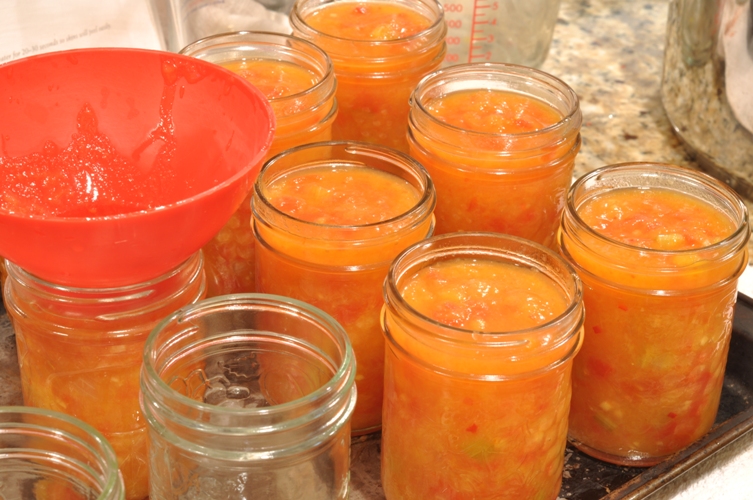
Put up Total (double batch):
- 8 x 250mL regular mouth mason jars


 Putting Up With The Turnbulls