Angie’s Dill Spears
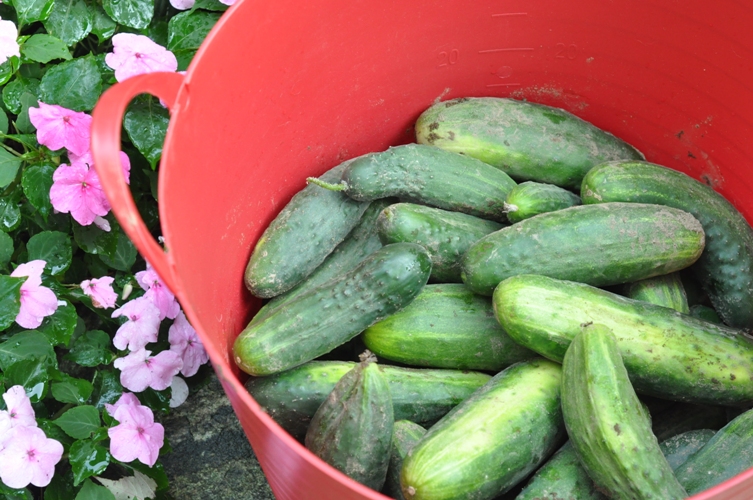
This recipe is essentially the same as my mom’s dill pickle recipe but we thought we’d throw it in for good measure. Anyone growing a successful patch of cucumbers this year is likely to have a glut of them. What are you to do will all those cucumbers? We imagine lots will find their way into salads, sandwiches, and/or be eaten out of hand but we imagine you will still have plenty that don’t make it to the table. Why not put them up by making dill spears?
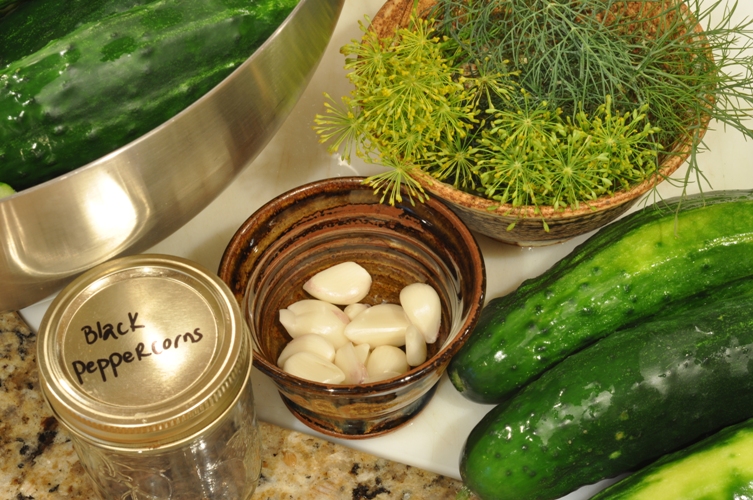
RECIPE FOR ANGIE’S DILL SPEARS:
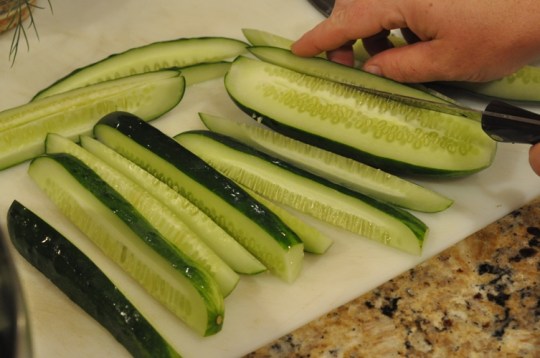
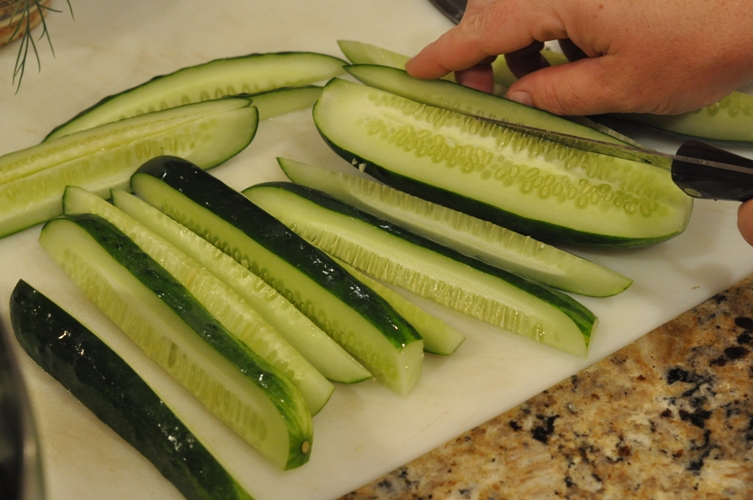
- 8lbs large cucumbers; sliced into 1″ wide wedges/strips 5 1/2″ long (to fit a 1L wide mouth mason jar)
- 6 cups white vinegar
- 6 cups water
- 1 cup pickling salt
- 14-20 garlic cloves; peeled and sliced (2 whole cloves or more per jar)
- 3-4 dill head sprigs per jar
- 1/2 tsp dill seeds per jar
- 1/2 tsp peppercorns per jar
- Prepare for water bath canning.
- It is best to pick the cucumbers and put them up on the same day. This will ensure they remain as crisp as possible. These larger cucumbers are not iced. Rinse cucumbers well.
- Remove blossom end and cut cucumbers into thin strips/wedges to fit the size of jar you are using. With mature cucumbers you may want to remove some of the larger seeds. Note: we use 1L wide mouth mason jars.
- In a large stainless steel saucepan combine water, vinegar, and salt. Bring to a boil.
- To each sterilized jar add black peppercorns, dill seed, fresh dill, and garlic.
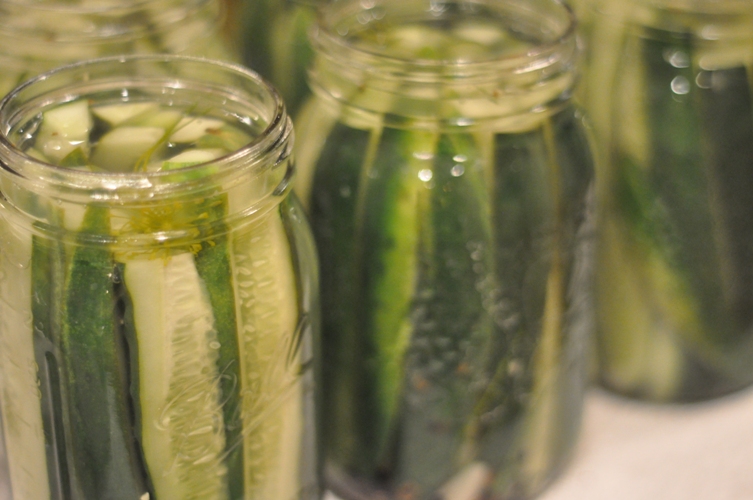
- Pack cucumbers into each jar.
- Add boiling brine leaving 1/2″ headspace. Remove air bubbles, wipe rims, place lids and screw bands on adjusting so that they are just finger-tip tight. Process in a hot water bath for 10 minutes.
- When the time is up turn off the heat and remove lid, wait 5 minutes before removing the jars. Check seals, label, and store.
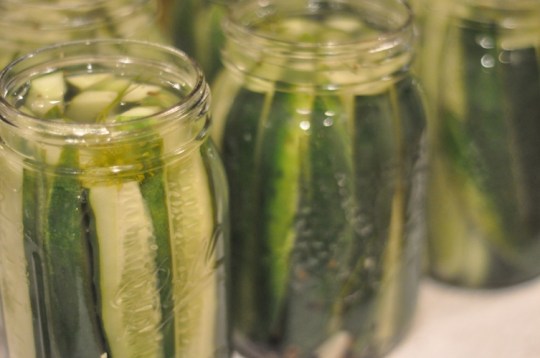
Put up Total:
- 14 x 1L wide mouth mason jar (Kirbyson Garden Cukes)
- 14 x 1L wide mouth mason jar (Suzie Garden Cukes)
- 8 x 1L wide mouth mason jar (dill pickle sandwich slices)
- 6 x 1L wide mouth mason jar (dill pickles ~ Suzie’s Garden)
Dill Pickles ~ Flavours of Childhood
I have the fondest memories of going to a farm in the Holland Marsh every summer and picking cucumbers and tomatoes to put up with my mom. My mom didn’t make a ton of different things but what she did make she made well and lots of it. Our cold room at the bottom of the stairs, with its one bulb light you turned on by pulling a string, was home to rows and rows of neatly lined jars of her hard work. Peaches, pears, stewed tomatoes, dill pickles, and corn relish filled the shelves and maybe the occasional jar of strawberry jam.
I think a lot of us can agree that certain flavours or foods will evoke special memories. And, that’s precisely how I feel about dill pickles and stewed tomatoes. I remember filling my little basket on those hot summer days with my mom and then trying to lend a helpful hand in the kitchen as she patiently went about making those little cukes into our favorite dill pickles.

MY MOM’S RECIPE FOR DILL PICKLES:
- 9lbs pickling cukes (there are about 47-48lbs of cukes per bushel)
- 6 cups white vinegar
- 6 cups water
- 1 cup pickling salt
- 14 cloves garlic, sliced in half (2 whole cloves or 4 sliced cloves per jar)
- 7 tsp dill seed (1 tsp per jar)
- 3 1/2 tsp black pepper corns (1/2 tsp per jar)
- 3-4 sprigs fresh dill head and/or dill weed per jar (use the large head or multiple seperate sprigs)
Day One:
- Wash cucumbers well and scrub to remove dirt using a soft scrub brush.
- Remove blossom end with a sharp knife (it’s the opposite end from the stem but you can remove both if you’re unsure)
- Roughly divide washed cucumbers in half and place in two coolers with lots of ice and water to cover. Note: we also add salt to the ice water to help draw out the moisture in the cucumbers which will make the end product more crisp. The ratio is 1 cup pickling salt to 8 cups water.
Day Two:
- Prepare for water bath canning.
- Rinse cucumbers well. If you are doing an entire bushel separate cucumbers into batches weighing 9lbs each.
- In a large stainless steel saucepan combine water, vinegar, and salt (above recipe will make the brine for 9lbs of cucumbers). Bring to a boil.
- To each sterilized jar add black peppercorns, dill seed, fresh dill, and garlic.
- Add boiling brine leaving 1/2″ headspace. Remove air bubbles, wipe rims, place lids and screw bands on adjusting so that they are just finger-tip tight. Process in a hot water bath for 10 minutes.
- When the time is up turn off the heat and remove lid, wait 5 minutes before removing the jars. Check seals, label, and store.
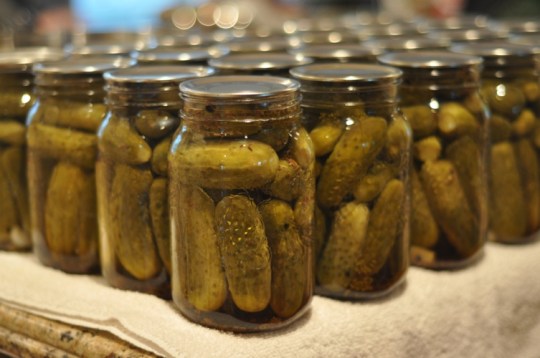

It’s always best to wait at least a couple of months before cracking open the first jar. The pickles need time to absorb the briny goodness you’ve created. It’s the same with all things pickled…they really will taste better in a couple of months and the longer you can wait the better tasting they become. This is part of the reason we will make such large batches of our favorite preserves; so, they overlap by about three months. Unfortunately, we are down to the last three jars of our favorite dill pickles.
Put up Total (one bushel):
- 35 x 1 L wide mouth mason jars ~ with 21/2lbs cukes left over
Note: a single batch (9lbs) will yield 7 x 1L wide mouth mason jars
Beans, Beans, Beans….Blanched
Another great and easy way to save the taste of summer with those abundantly growing beans is to blanch and freeze them in serving size packets. It really doesn’t get easier than this and we highly recommend giving it a try. You’ll be glad you did come February!
INSTRUCTIONS FOR BLANCHING BEANS:
- The fresher the better. So, whether you are buying them from a veggie stand or picking them from your garden you should plan to do them immediately.
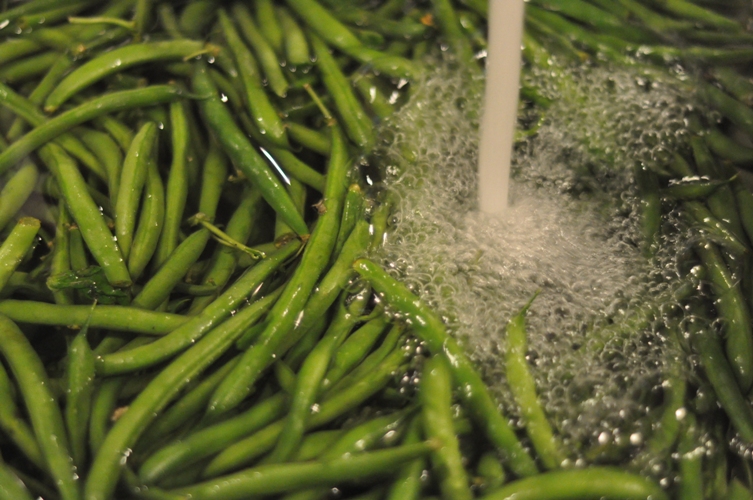
- Wash beans well and remove any blossoms, stems, and leaves.
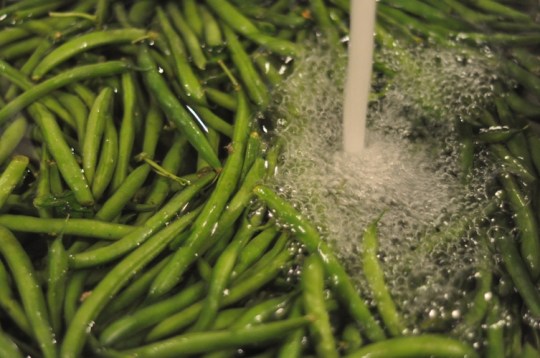
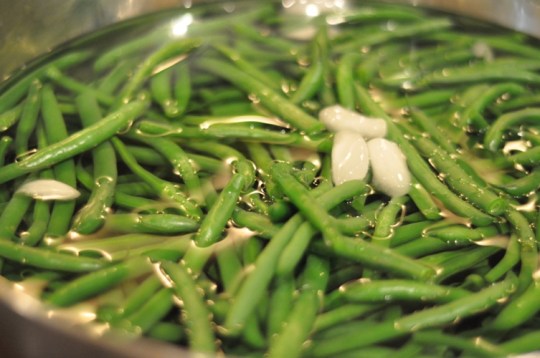
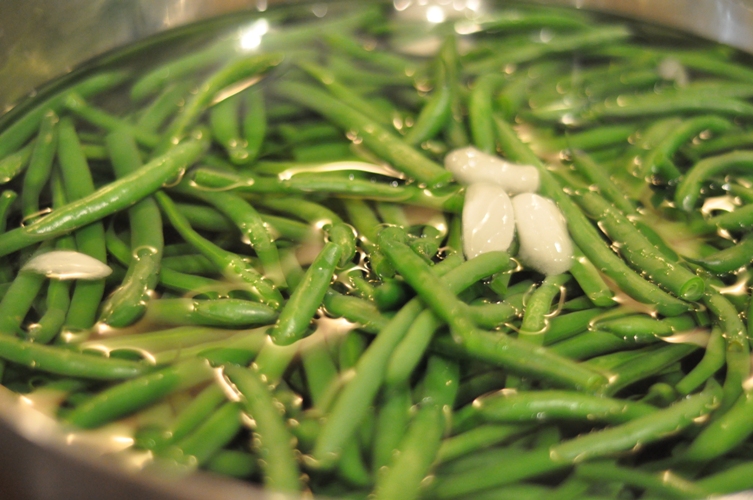
- Bring a large stainless steel pot of water to a boil.
- Prepare a large bowl or cooler with ice water to quickly cool off beans. This prevents them from continuing to cook.
- Working in batches place beans in rapidly boiling water for 3 minutes and cover. Remove using tongs and immediately place into ice water for about 5 minutes.
- Remove beans from ice water and drain in a colander.
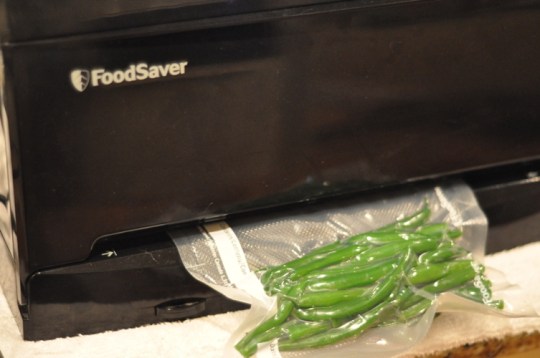
- Package using freezer bags or food saver bags in serving sizes according to amount required for your family. Seal, label, and place in freezer to preserve. Should last at least 1 year (if not longer).
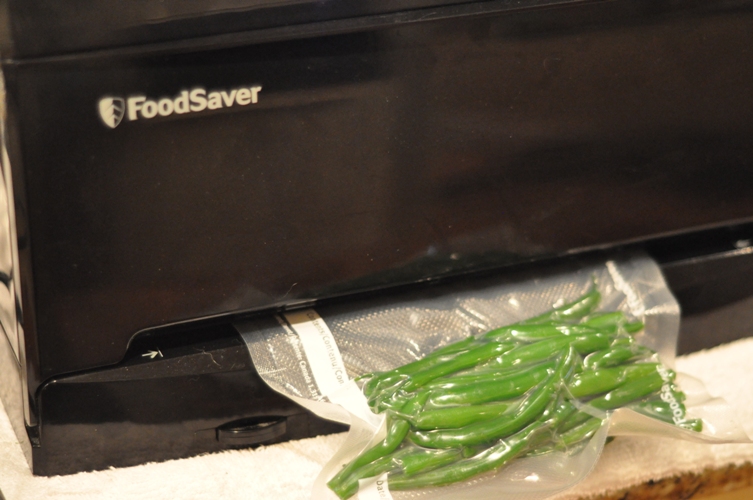
Put up Total for 10 pounds of beans:
Green
- 14 x 2p serving
- 7 x 3p serving
- 4 x 4p serving
- 3 x soup serving
- 4 x soup serving mixed cut
Yellow
- 5 x 2p serving
- 1 x 3p serving
- 1 x 4p serving
Purple
- 5 x 2p serving
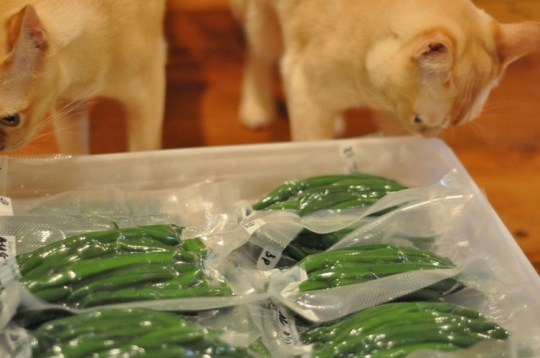
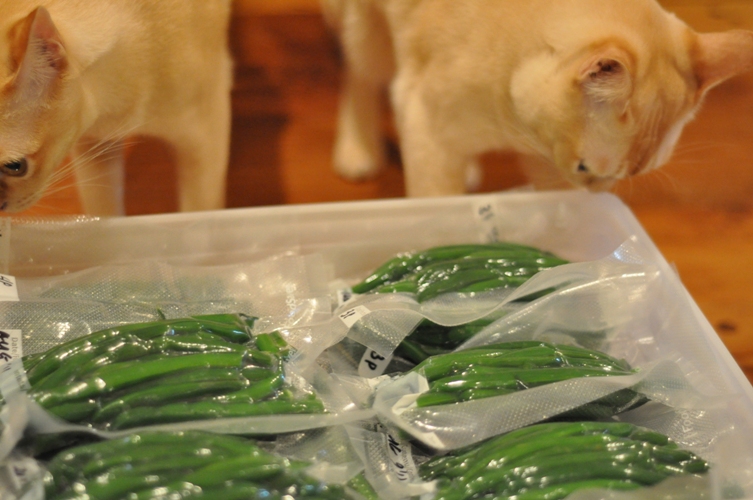
- Our Red boys inspect the finished product ~ it’s our quality control board
Pickled Basil Beans
As I mentioned in the previous post there a tons of great recipes floating around for pickling beans. Every year we try our hand at a new recipe and this year was no exception. While we can’t tell you whether or not this one will stack up to our regular dilly beans it’s always nice to have something different in the larder. Besides, the beans keep growing and the only way to find a new favorite is to give it a whirl.
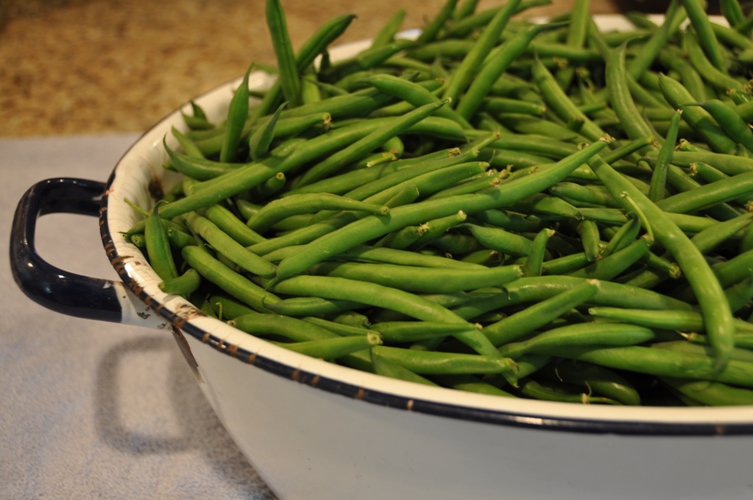
RECIPE FOR BASIL BEANS (from The Joy of Pickling by Linda Ziedrich):
- 3 pounds freshly picked snap beans (green and/or yellow), washed and trimmed to fit 500mL jar leaving 1/2″ headspace
- 3 1/2 cups white wine vinegar
- 3 1/2 cups water
- 2 tablespoons pickling or canning salt
- 6 garlic cloves, sliced (or 12 if you like garlic)
- 36 whole black peppercorns, crushed
- 12 basil leaves
- Prepare for water bath canning. Place 6-7 x 500mL jars in the oven at 250F to sterilize.
- In a large stainless steel saucepan, combine vinegar, water, and salt. Bring to a boil over medium-high heat, stirring to dissolve the salt.
- Divide the garlic slices and crushed black peppercorns evenly amongst the 6 – 500mL jars. Add more than 1 clove of sliced garlic per jar if you like. Place two basil leaves in each jar and tightly pack beans into jars to within 1/2″ of the top. Ladle boiling brine into each jar covering the beans and leaving 1/2″ headspace. Remove air bubbles and add more brine if necessary. Wipe rims with a damp paper towel, add lids and screw bands adjusting until they are finger tip tight.
- Process for 10 minutes in a boiling hot water bath. When time is up remove the lid and let jars stand in hot water bath for 5 minutes before removing. Remove jars from canner, let cool, check seals, label, and store in a cool place.
- Best served after a few months.
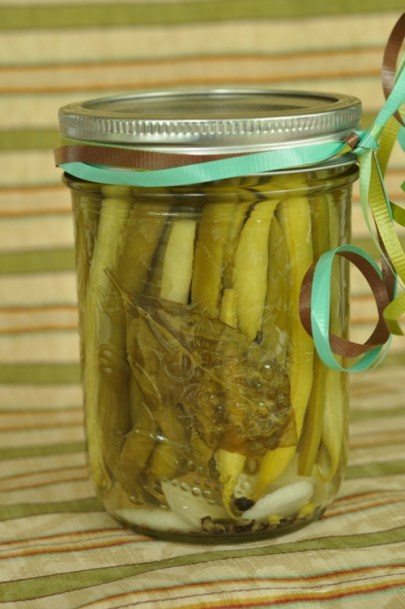
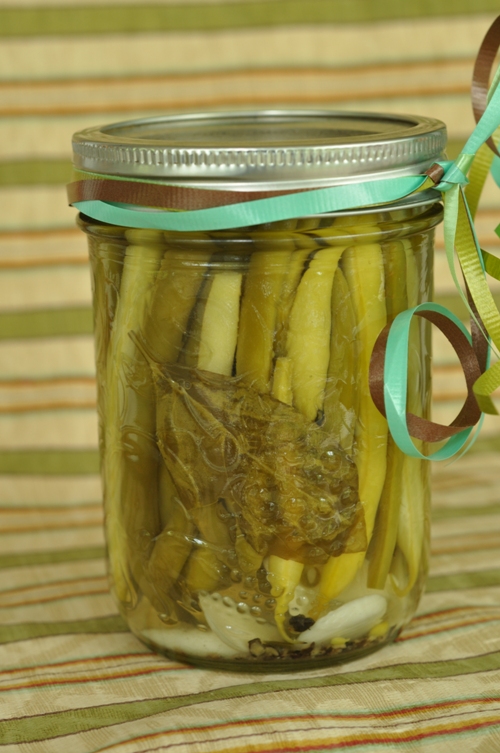
Put up Total:
- 6 x 500mL wide mouth mason jars
Dilly Beans
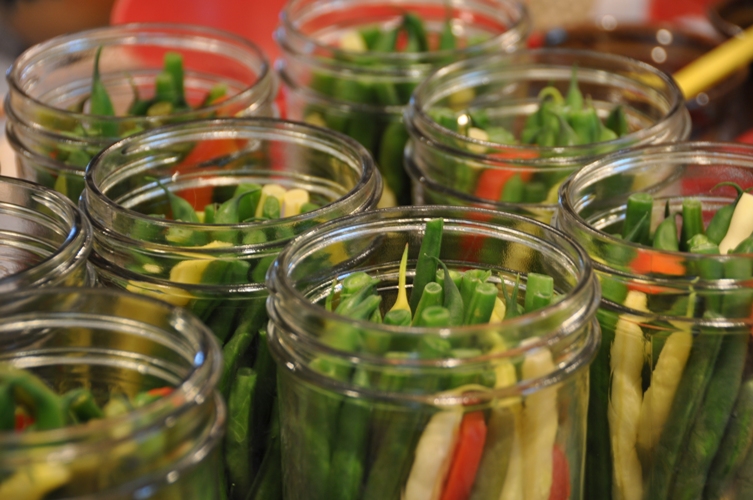
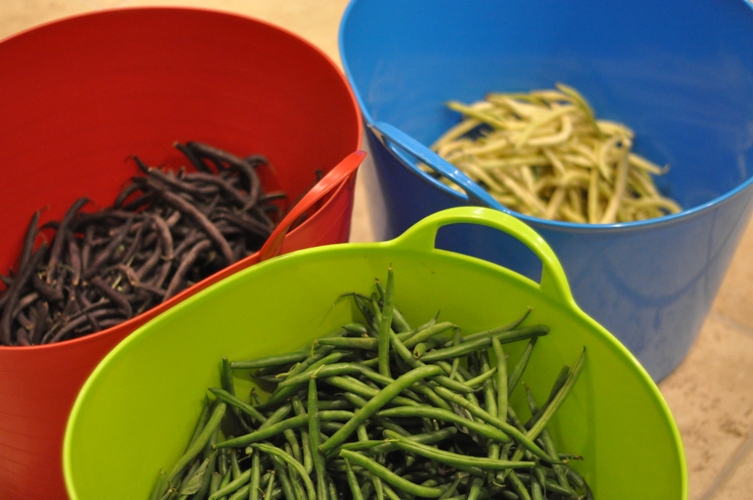
Dilly beans, dilly beans, and more dilly beans! They are a household favorite and there is not a year that goes by when we don’t make a batch or two…okay, more like 20 – 30 jars. This time of year there are always more beans growing then you can possibly eat fresh and the more you pick them, the more they continue to bloom and grow again.
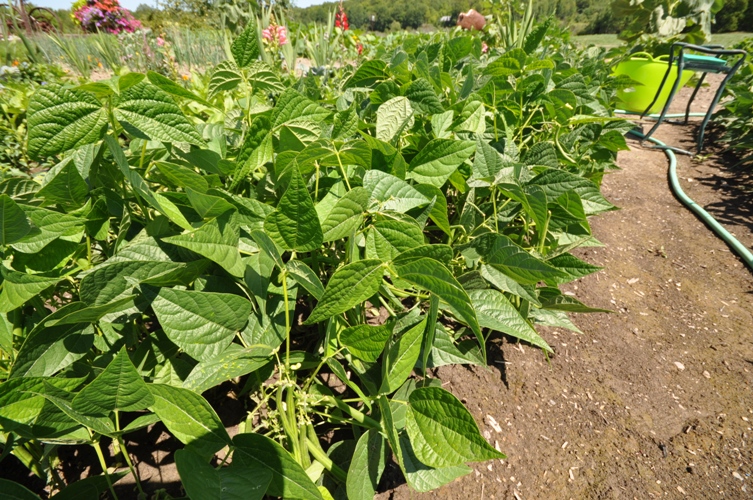
Pickling them is an excellent way to preserve the beans for later and they really do make a tasty snack served as a side, an appetizer, or in a caesar. There are lots of different recipes floating out there for making dilly beans and we recommend trying a few of them until you find your favorite.
RECIPE FOR DILLY BEANS:
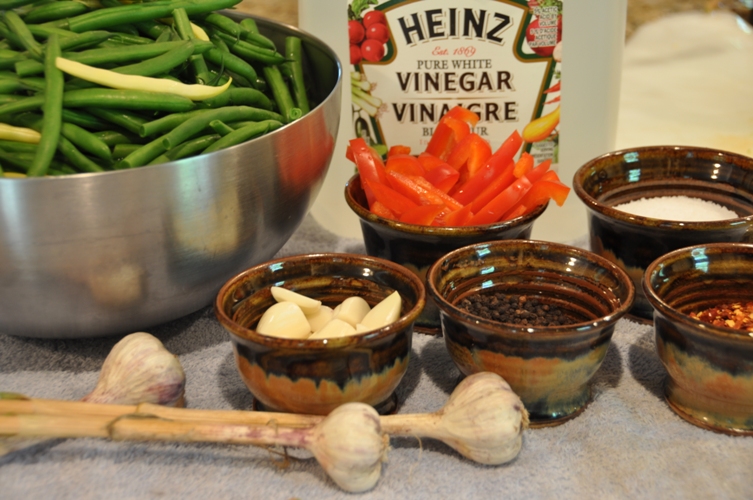
- 4 cups white vinegar (5% acidity)
- 3 cups water
- 3 tbsp canning or pickling salt
- 4 1/2 pounds of green and yellow beans, washed, trimmed, and cut into jar length pieces. Note: we use what is available but we like to mix the green and yellow in each jar. We also find it easier to pack beans into wide mouth jars…you can get more in!
- 1 large red bell pepper, washed, seeded and sliced into thin strips
- 1 1/2 tsp black peppercorns (1/4 tsp per jar)
- 3/4 tsp red chili flakes ~ optional (1/8 tsp per jar)
- 24 sprigs of fresh dill or 1/2 tsp of dill seed per jar
- 12 cloves garlic (two small cloves per jar)
- Prepare for water bath canning. Place 6-7 x 500mL jars in the oven at 250F to sterilize.
- In a large stainless steel saucepan, combine vinegar, water, and salt. bring to a boil over medium-high heat, stirring to dissolve the salt. Place beans and red peppers into the boiling brine and bring back to a boil (approximately 3 minutes). Using a skimmer remove beans from brine and place in a separate boil.
- Working quickly add to each sterilized jar 3-4 sprigs of fresh dill (or 1/2 tsp dill seed), 1-2 garlic cloves, 1/4 tsp black peppercorns, and 1/8 tsp red chili flakes (optional). Tightly pack beans and pepper into each jar to within 1/2″ of the top. Ladle boiling brine into each jar covering the beans and leaving 1/2″ headspace. Remove air bubbles and add more brine if necessary. Wipe rims with a damp paper towel, add lids and screwbands adjusting until they are finger tip tight.
- Process for 10 minutes in a boiling hot water bath. When time is up remove the lid and let jars stand in hot water bath for 5 minutes before removing. Remove jars from canner, let cool, check seals, label, and store in a cool place.
- Best served after a few months.
Put up Total:
- 8 x 500mL wide mouth mason jars ~ with chili flakes
- 10 x 500mL wide mouth mason jars
Presto it’s PESTO!
Making pesto is an excellent way to preserve some of summer’s freshness. The process of cutting and preparing basil creates such a delicious smell in both the garden and the kitchen that it’s hard not to want to make enough to last throughout the winter months. And, that’s just what we did!
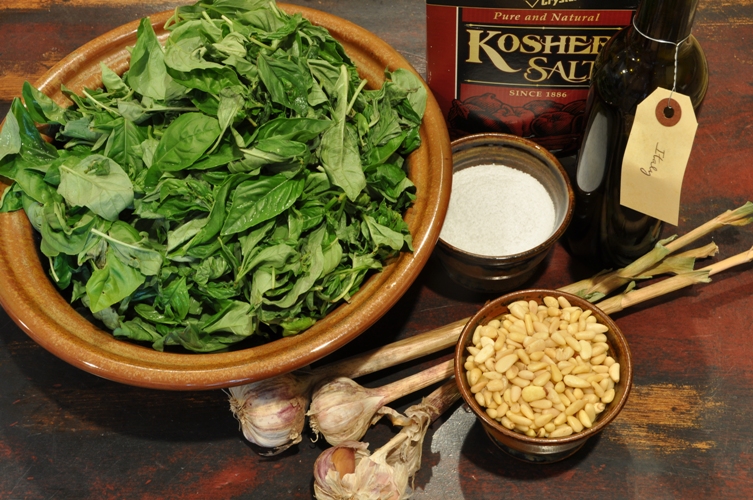
Using scissors Suzann and I cut the stocks of the basil plant to within 3″- 5″ of the base. This way the plant will continue to grow and produce more leaves. Next, you’ll need to remove the basil leaves from the stems which can seem like a daunting task (especially,when making large batches of pesto). However, this process can move along quite quickly if you have a couple of extra sets of hands helping out. So, get the kids involved or invite a couple of friends over for a drink around a large bowl of basil…you’re sure to get the job done in a hurry and have fun doing it!
RECIPE FOR PESTO:
- 4 cups fresh basil leaves
- 1/4 cup pine nuts
- 1/4 olive oil
- 2 cloves garlic, peeled
- 1 tsp kosher salt
- Remove basil leaves, wash well, and strain as much water as possible using either a Starfrit salad spinner or a tea towel.
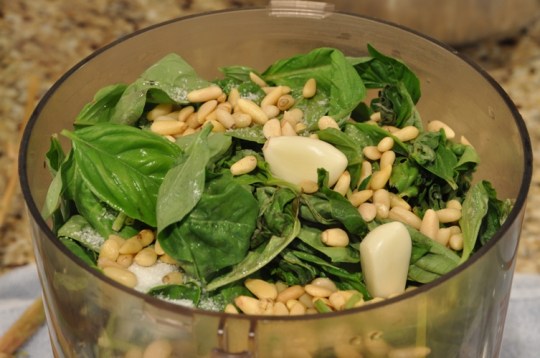
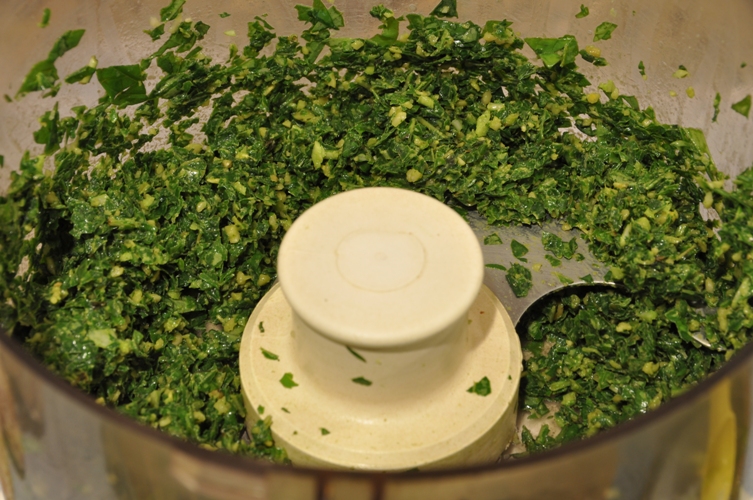
- Using a food processor place basil leaves, garlic cloves, salt, and pine nuts in the blender and pulse until ingredients are finely minced.
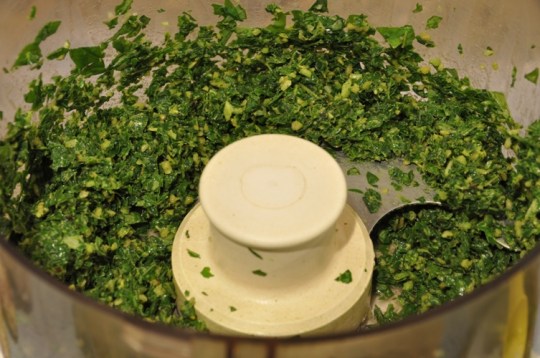 Add olive oil and pulse again to combine.
 - Place 2-3 large spoonfuls of the pesto into freezer bags or food saver bags and seal. Put in freezer to preserve. Should last at least 1 year (if not longer).
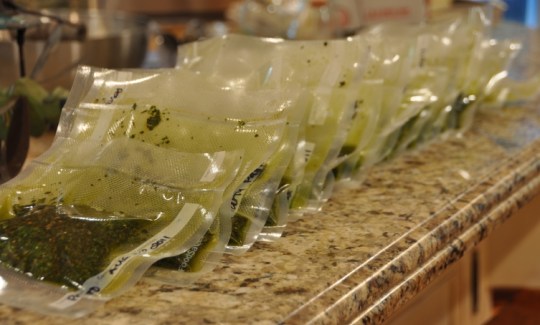
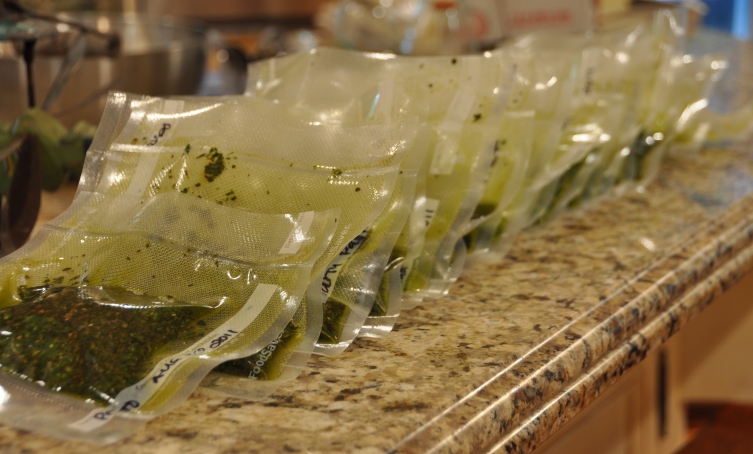
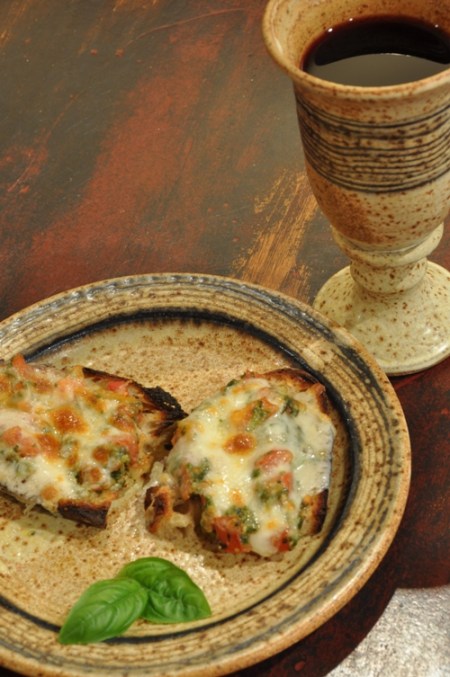
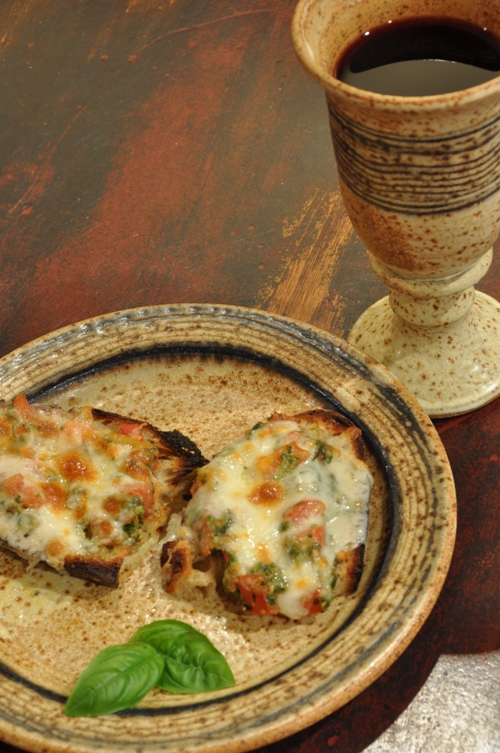
While making the pesto to preserve why not whip some Bruschetta. It’s easy and will give your helpful hands a welcome break from removing the leaves.
RECIPE FOR BRUSCHETTA:
- 6-8 slices of crusty bread
- 2 generous spoonfuls of pesto
- 1 large tomato, diced
- mozzarella or parmesan cheese
- Make pesto using recipe above.
- Wash and dice tomato. Mix pesto and tomato together in a small bowl.
- Slice crusty bread and place on a cookie sheet.
- Add a spoonful of pesto and tomato to each slice of bread.
- Top with grated mozzarella or parmesan cheese and broil in the oven for 5 minutes or until cheese is melted and edges are slightly brown.
- Serve and enjoy!
Put up Total:
- 15 regular packs
- 3 party packs


 Putting Up With The Turnbulls