Dehydrating Apricots
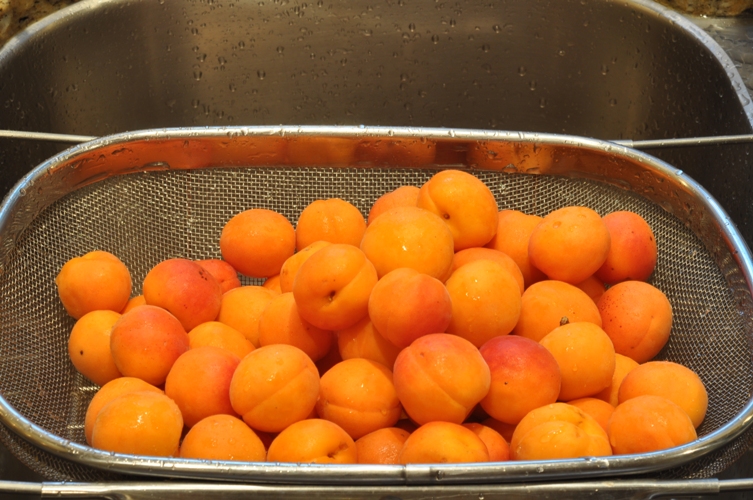
The process of dehydrating fruits and veggies couldn’t be simpler with the Excalibur 3926T. It’s an awesome dehydrator that makes quick work of even those extra-large batches of fruit. It can dehydrate 12 lbs of food at a time if you utilize all 9 drying racks and it has a timer you can set and walk away. Again, it’s awesome.
However, there are other methods of dehydrating fruit, herbs, and veggies to preserve and store for later. So, if you don’t own a dehydrator but want to try it ~ you CAN. The oven will work when set at a really low temperature (although, lots of newer model ovens don’t go low enough ~ you’ll have to monitor the temperature and maybe even open the door occasionally) or you could use the sun drying method (we’ve not done it ourselves but it’s an option). Okay, you get the point…you don’t have to use a machine to do all the work but it does make it easier.
RECIPE FOR DEHYDRATING APRICOTS:
- 3 litre box of apricots
- 1 cup lemon juice
- 4 cups water
- Combine lemon juice and water in a non metalic bowl to pretreat apricots.
- Wash apricots well, cut in half, remove pit, and place in pretreatment solution.

- Remove from bowl, push in backs of each apricot, and place on drying racks with the skin side down.

- Set temperature to 135F for 20 hours. After 20 hours check to see if apricots are dry. They should be pliable.
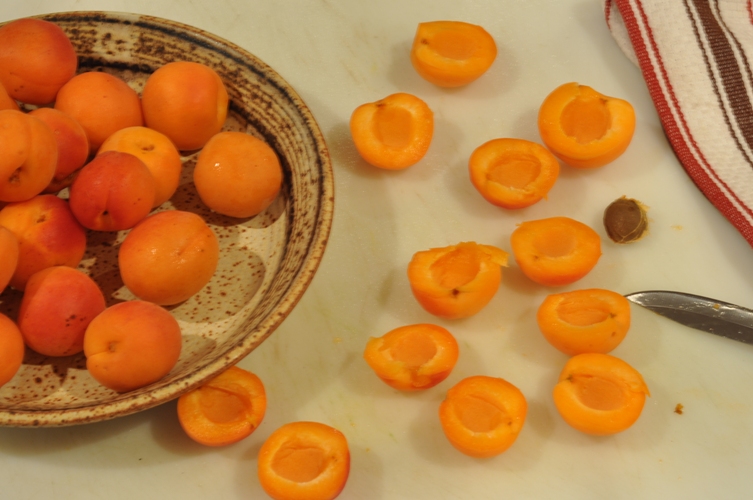

Does that sound easy or what!?! It is but I still managed to screw it up. Yeah, I set the timer for 26 hours and walked away. The next day I had apricot chips.

They’re okay and will be excellent put through the blender and sprinkled in some homemade granola but they were not the consistency I was expecting…another lesson learned. Remember to set your dehydrator for the lowest suggested time and then check back. You can always add more time!

These apricot chips also make healthy “Gussy Snacks”!
Put up Total:
- 1 litre regular mouth mason jar
One Woman’s Garbage is Another Woman’s Vinegar?
This will round-up our exploration of the few different things we made with red currants this year. I simply decided we were not going to waste anything this season (including the parts we normally discard). So, when we were left with a rich thick red pulp from the process of straining the red currants for jelly I wondered how this pulp could be preserved? And, the same thing crossed my mind for the discarded seeds and skin. We quickly concluded the pulp would be turned into Currant Fruit Roll Ups and the seeds/skin into Red Currant Vinegar.
RECIPE FOR RED CURRANT FRUIT ROLL UPS:
- pulp left over from straining currants for jelly
- 1/2 cup of sugar or less ~ Note: sugar was not required for the pulp extracted from the process of making red currant syrup since honey and some sugar were already present.
- Remove pulp from jelly bag and place in a bowl.
- Add sugar if necessary but do this a bit at a time. It is very easy to add too much sugar.
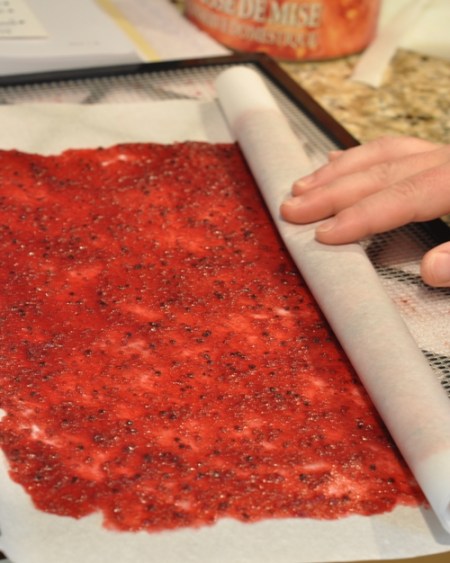
- Place pulp on the waxy side of the dehydrating paper and spread out evenly making sure it is about 1/8″ in the center and 1/4″ on the edges.

- Place trays in the dehydrator for 8 hours. It is wise to check them after about 6 hours to see if they are done. The fruit leather should be shiny but not sticky.
- Remove from the dehydrating tray and place on wax paper. Roll the leather and using scissors cut into serving sizes.


RECIPE FOR RED CURRANT VINEGAR:
- discarded seeds, skin, and pulp
- 500mL white wine vinegar
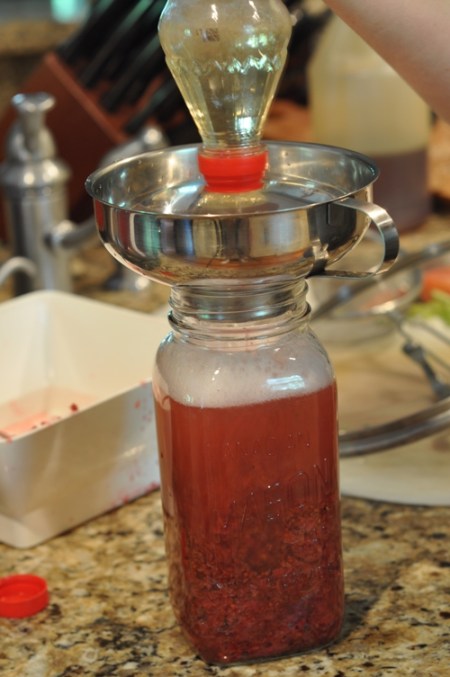

- In a clean sterilized 1 litre mason jar combine discarded seeds, skin, pulp and 500mL vinegar
- Place in the refrigerator to steep for 2-4 weeks.
- Taste after 2 weeks to determine if flavours have combined. Once satisfied with taste strain liquid through a jelly bag collecting vinegar in a bowl below and discard used seeds, skin, and pulp.
- In a medium stainless steel saucepan bring vinegar to a boil and boil for 3 minutes. Remove from the heat. Skim off any foam that may have been created.
- Once cooled, pour the vinegar into clean sterilized bottles. Cap the bottles with a cork, label, and store in a cool place.
- This vinegar should last 3-4 months but must be refrigerated upon opening.
Put up Total
- 3 x 350mL bottles
Very little extra effort was required to create these two different items. The fruit roll ups are a huge hit around here and we are excited about finding different uses for the vinegar. All in all a project worth repeating!
Currant and Thyme Jelly as Easy as It Is Tasty
The currants are so abundant in my friends garden that I’ve been back several times to pick and there are still more. The red plump berries weigh down every branch and I’ve come to realize a lot will be left for the birds to enjoy.
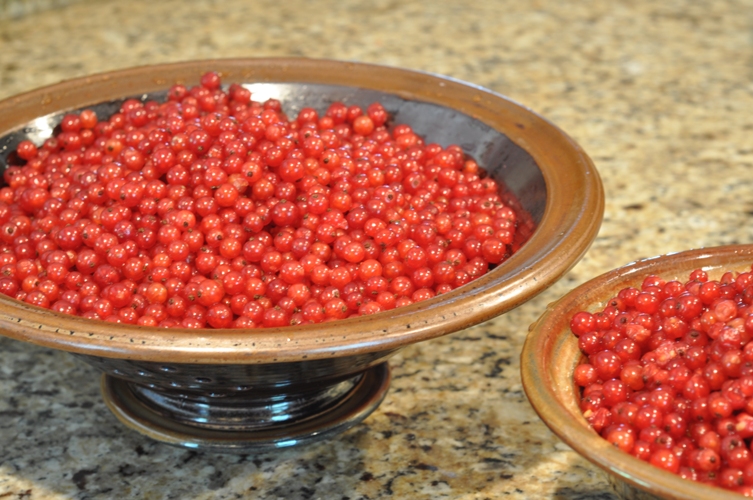
Coincidentally, each basket I use to collect the berries holds approximately 4 pounds of currants which is the exact amount required for this next recipe. It’s really great when all of the ingredients you require are in season and/or at your finger tips. That’s exactly what I realized when I stumbled upon this recipe. This recipe comes from Christine Ferber’s book Mes Confitures and is an excellent resource with some very interesting jam and jelly recipes.
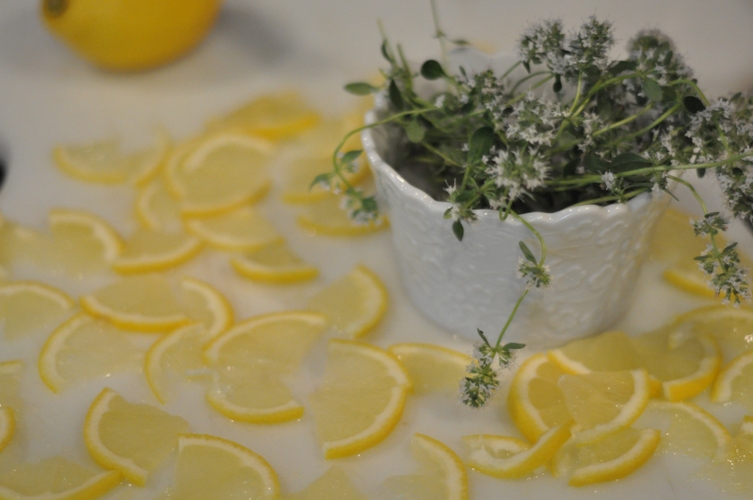
RECIPE FOR RED CURRANT JELLY WITH LEMON AND THYME HONEY:
- 4 pounds red currants; stemmed and washed (equal to 9 cups red currants)
- 4 cups sugar ~ divided
- 1 cup water (to boil with currants) and 3/4 cups water (to poach lemons)
- 2 lemons
- Juice of 1 small lemon
- 2/3 cup thyme honey
- 12 sprigs of thyme in bloom
- Prepare for water bath canning
- Wash currants well in cold water, drain, and stem the berries. In a large stainless steel preserving pan, add currants and 1 cup of water and bring to a boil over medium high heat. Cover the pan, lower heat, and allow berries to soften for about 5 minutes.
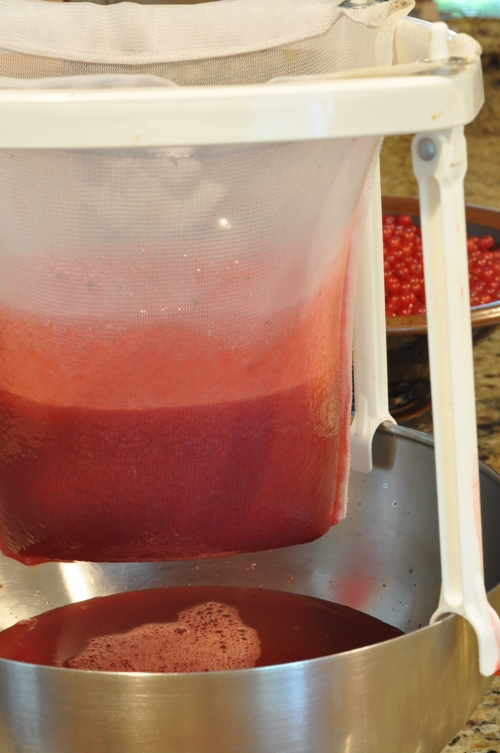
- Collect the juice by using a food mill or fine chinois sieve, use the back of a spoon to press the soften berries in the chinois sieve (the food mill method does all the work). Filter the juice a second time through a wet and wrung out jelly bag collecting only the juice.
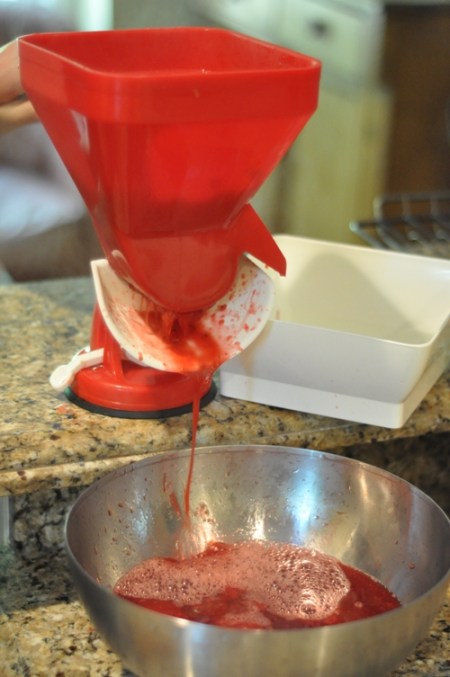 Note: We used our tomato mill to separate the seeds and extract the juice and pulp. But, we also had to filter it a second time to separate the juice from the pulp. Reserve the pulp to make fruit roll ups and the seeds can be used to flavour vinegar.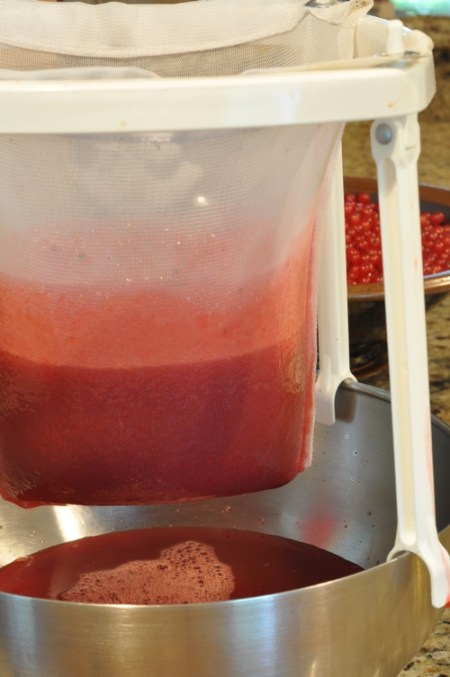
- Rinse lemons well and cut into thin rounds and then quarter. Place lemon slices in a stainless steel preserving pan with 3/4 cup water and 1/2 cup sugar. Bring to a boil. Continue to boil lemons until the slices become translucent (approximately 15 minutes). Add more water if necessary so they do not stick to the bottom.
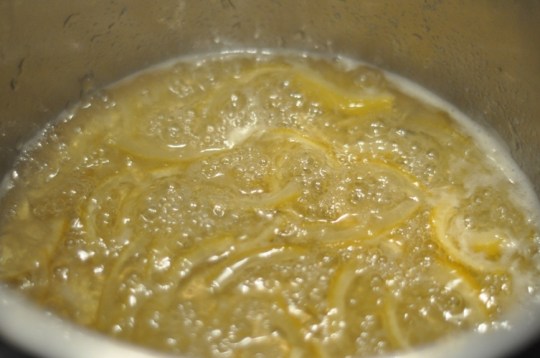
- Pour currant juice (approximately 3 cups), sugar, thyme honey, poached lemon slices with sugar-water, lemon juice, and sprigs of thyme in flower in a large stainless steel preserving pan.
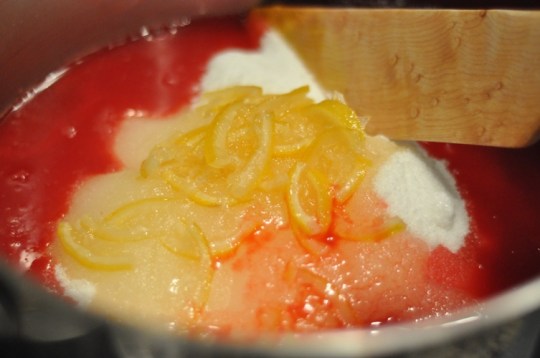 Bring mixture to a boil and continue cooking on high heat for about 10 minutes. Skim as necessary.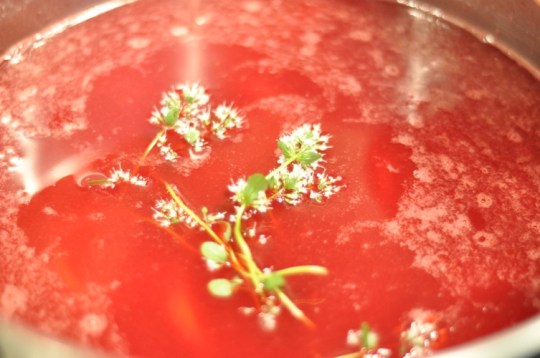
- Remove the lemon slices and thyme sprigs with a slotted spoon and reserve to add to each jar. Return jelly to stove and check the set.
- Add lemon slices and thyme sprigs to each hot sterilized jar. Skim the jelly carefully. Ladle the jelly into each jar, leaving a 1/4″ headspace. Remove air bubbles, wipe rims, place lids and screw bands on adjusting so that they are just finger-tip tight. Process in a hot water bath for 10 minutes.
- When the time is up turn off the heat and remove lid, wait 5 minutes before removing the jars. Check seals, label, and store.
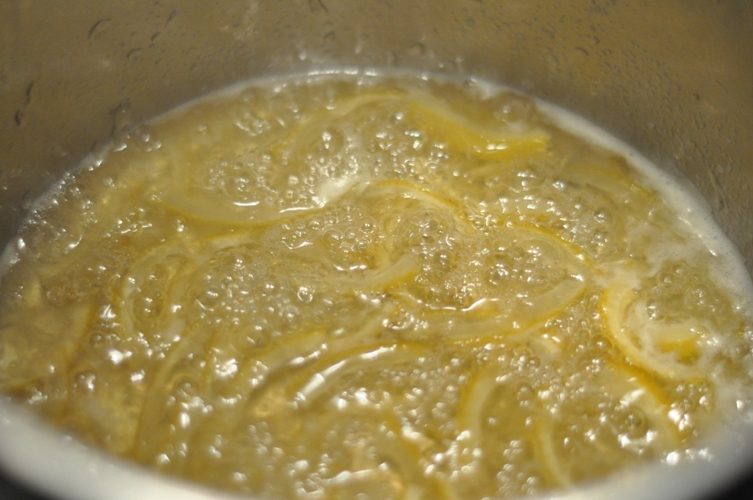
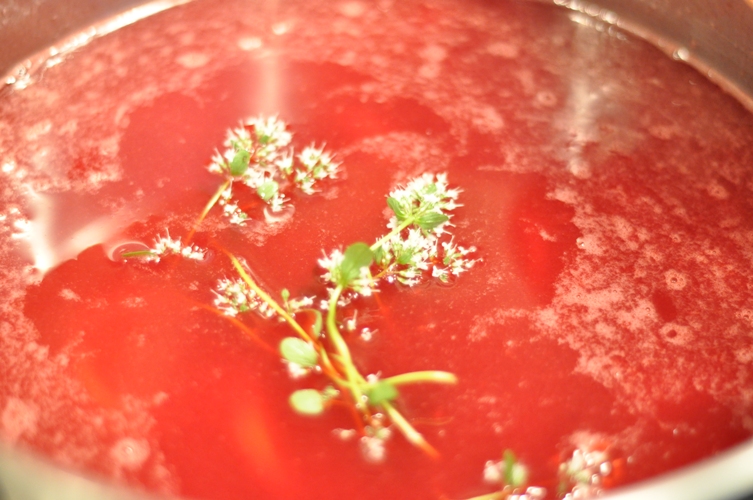
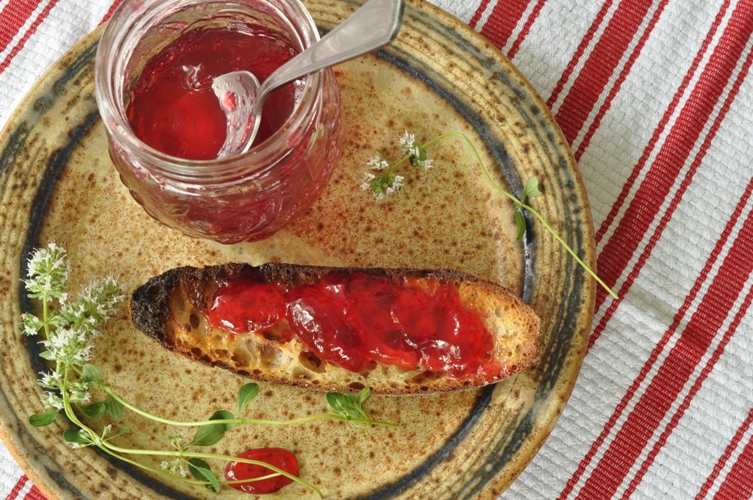
The set of this jelly turned out fantastic (if I do say so myself). I imagine it has a lot to do with the natural pectin present in these berries and the fact I remained calm. Often I either under cook or over cook my jellies but not this time. It’s a sweet, flavorful jelly and the lemon pieces really add to the overall taste by cutting the sweetness (even if they did float to the top).
Put up Total:
- 5 x 250mL regular mouth mason jars (and a small sample)
Man VS Common Sense
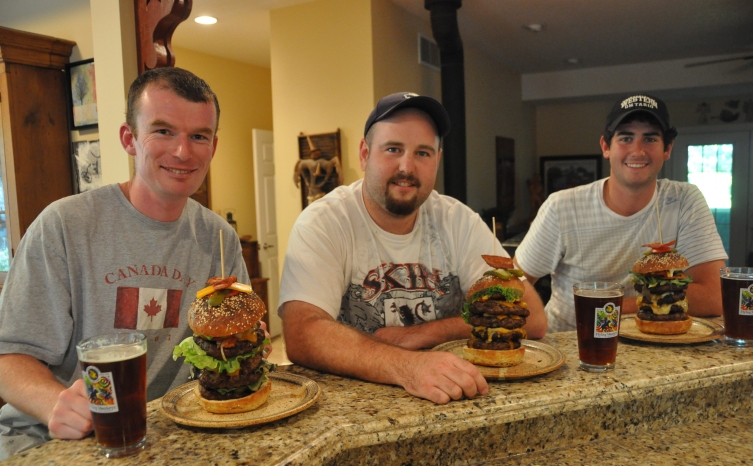
Okay…we are going to stray (slightly) from our regular CANNING programming to bring you Man VS Common Sense ~ a Sunday afternoon eat-a-thon. Yes, that’s right you heard it here first, Matt and the boys from work (Ben and Ian) decide to create their very own eating competition. The first in what appears to be a series is hosted at our home…The 2 Pound Burger Challenge.
The rules are as follows:
- Each competitor must consume two pounds of ground beef. Mmmm…delicious burgers. The meat purchased from Stephen’s Butcher Shop is the best in all of Muskoka. Richard freshly ground 8 pounds of beef knowing full well Matt’s intention was to make some gigantic beef burger flame grilled and seasoned to taste. Only the best for these competitors.
- There is no time limit. However, the first person to finish a two-pound burger (including home-made bun and toppings added) plus 3 pints of Flying Monkeys Hoptical Illusion draft beer wins the title and spoils of the competition. The spoils…more beer!
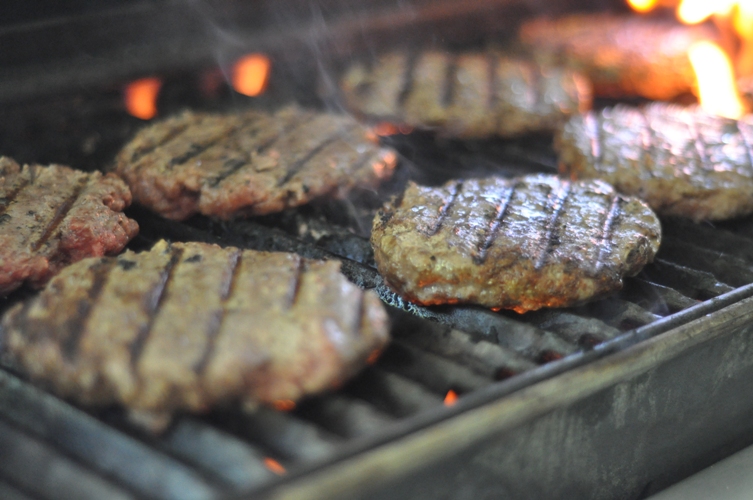
Matt carefully weighed each patty. The three competition grade burgers consisted of 4 ~ 1/2 pound patties of ground beef, seasoned to taste, and flame grilled. Each competitor is allowed to dress the burger with his preference of toppings (including our homemade pickles, tomato jam, bacon, fried onions, mustard, mayo, etc) but whatever goes on the burger must be consumed.
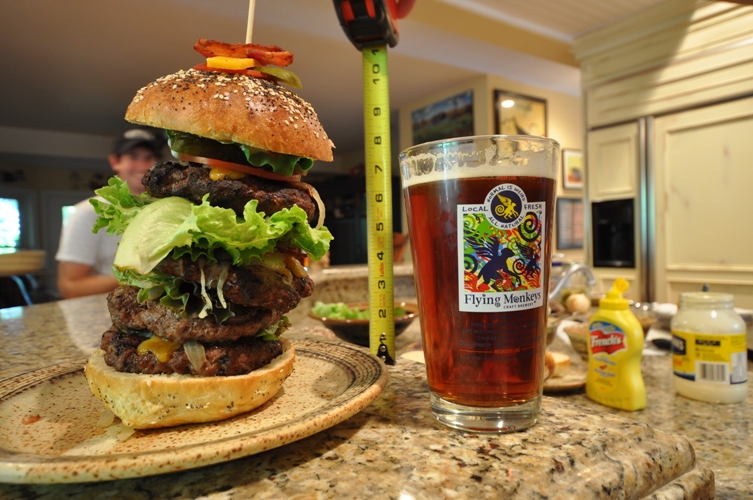
The burgers are dressed, the height is measured, and recorded, and everyone takes one last look at their plate.
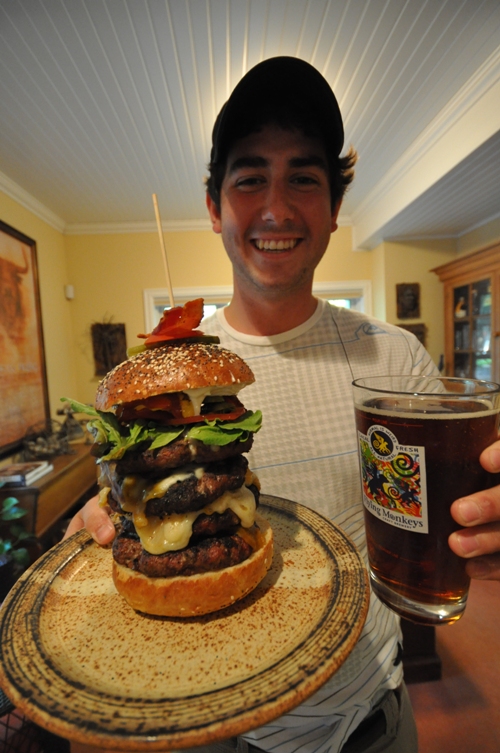
And, the winner is…with 28 minutes on the clock…drum roll please…Ben Carter!

Ben Carter wins the 2 pound burger challenge and even manages to drink three pints. We think he surprised himself!?!
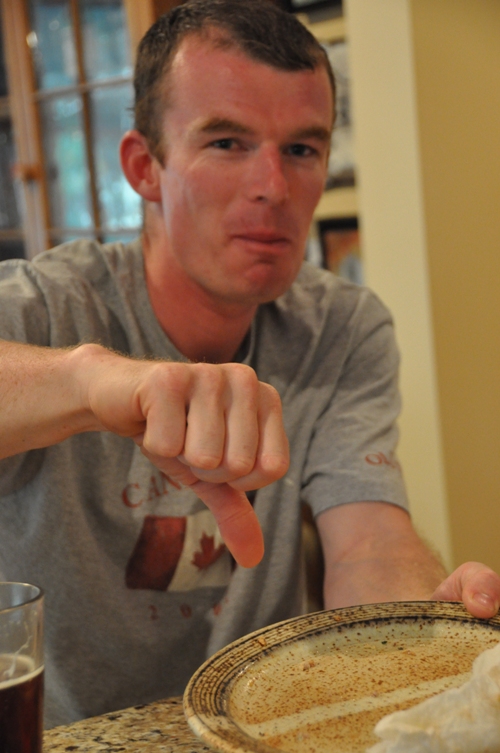
Matt Turnbull was able to swallow all of the food and 4 pints...but he still choked. Better luck with the chicken wing challenge!

While Ian McKee didn't have the appetite of his fellow competitors, he still managed to loosen his wizard sleeves. Bottoms up?
We will resume our regular canning posts over the course of the next few days with currant jelly, currant leather and a really easy recipe for flavoured vinegar to come.
What we’re Currantly drinking
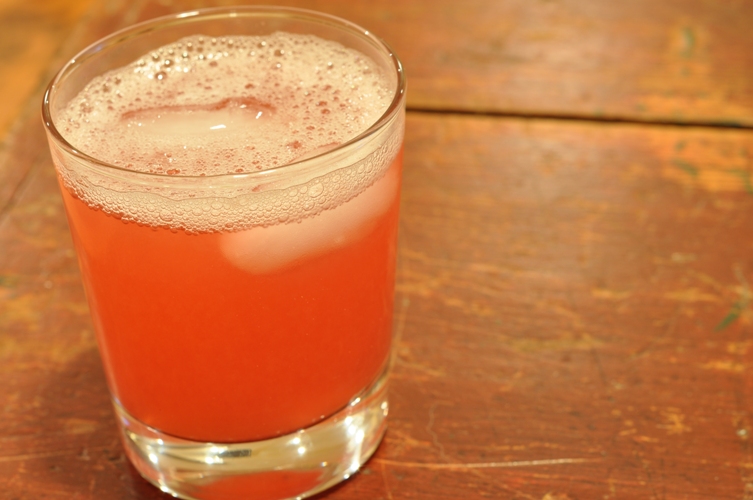
In this extreme heat (a heat few Canadians are prepared for ~ temperatures reaching 40+C) it is important to stay hydrated. And, what better way to do that than to make your own currant syrup to add both nutrition and extra flavour to water, club soda, ginger ale, or your favorite cocktail.
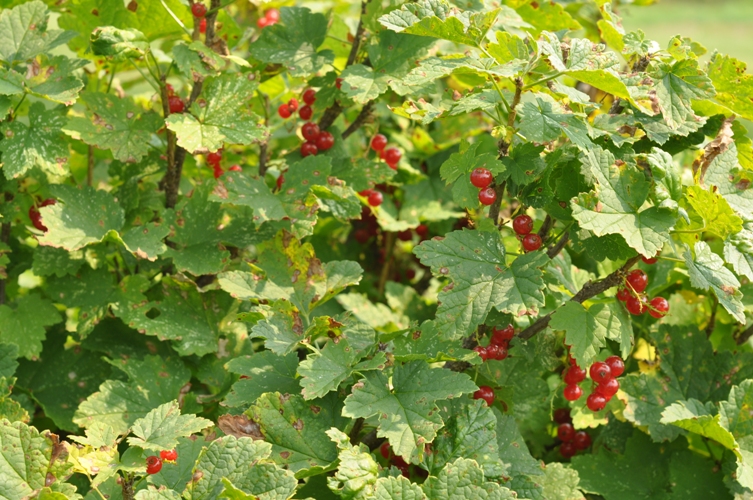
Working in the garden, foraging the fields, and picking berries are a few of the things that add peace to my life. The warm wind rustling the tree leaves, the smell of fresh-cut grass in the air, the birds chirping and singing ~ is there any better way to spend your day!?! Even on these warm days if you start early enough you can get a lot done in the garden before the sun completely wears you out.
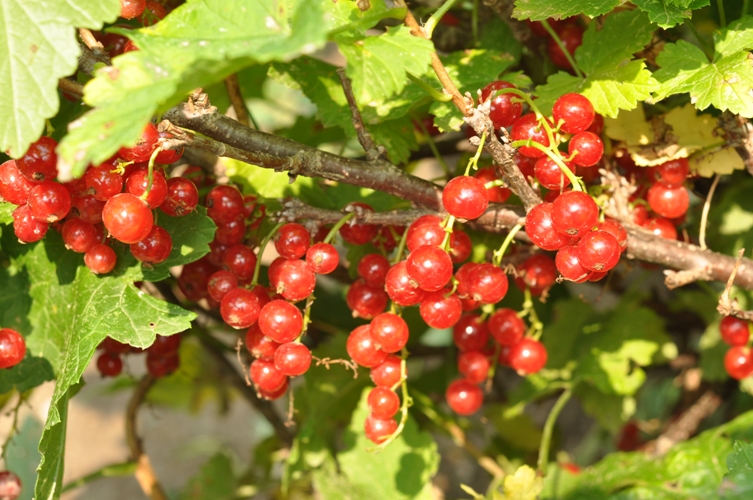
My friends currant bush is overflowing with berries and rather than having them drop off onto the ground she suggested I pick these plump tart berries to savour the flavour. At first, I thought…mmmMMM…jelly but I quickly decided to tackle juice first. Maybe it’s the thirst factor or the heat making you think of all things cool and refreshing but whatever it is JUICE was the first order of business.
RECIPE FOR CURRANT SYRUP:
- 4 pounds currants ~ approximately 9 cups
- 2 cups palmetto honey
- 1 cup sugar
- 1 1/2 cups filtered water
- Prepare for water bath canning OR skip steps 4-9 and simply label and refrigerate to use over the next week or two.
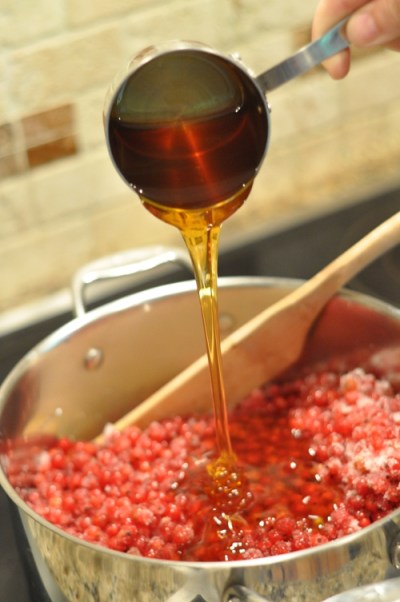
- Combine all ingredients in a large stainless steel pan and bring to a boil. Boil on high for 5 minutes until currants are soft, mushing them in the pan with the back of a spoon to extract the juice.
- Remove from heat and put mixture through a sieve or a food mill to collect the juice. Strain a second time through damp cheese cloth collecting the juice in a bowl below. Note: if you don’t mind a bit of pulp in your juice it is not necessary to strain a second time. BUT save the seeds and remaining pulp to make a wonderful flavored vinegar and fruit roll ups…posts to follow.
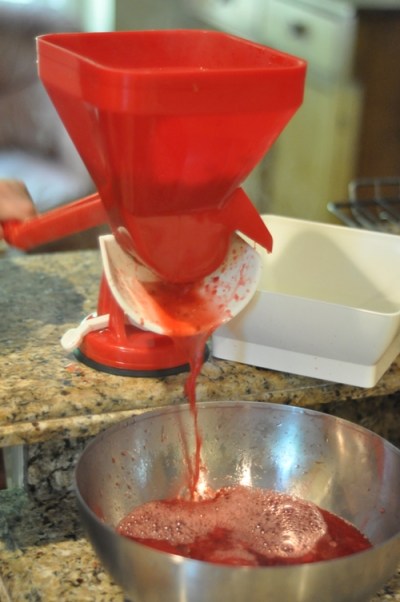
- Return liquid/ juice to stainless steel pan and bring to boil.
- Remove from heat and ladle hot liquid into hot sterilized jars, leaving 1/4″ headspace. Remove air bubbles and adjust headspace if necessary by adding more hot liquid.
- Wipe rims with a damp paper towel. Center lid on jar and screw band down to finger tip tight.
- Process jars for 10 minutes and in a boiling hot water bath.
- Remove lid and wait 5 minutes before removing the jars. Note: leaving the jars in the hot water bath rather than removing them quickly will help to prevent siphoning. Siphoning commonly occurs when there is a rapid change in temperature.
- Let cool, check seals, label, and store.
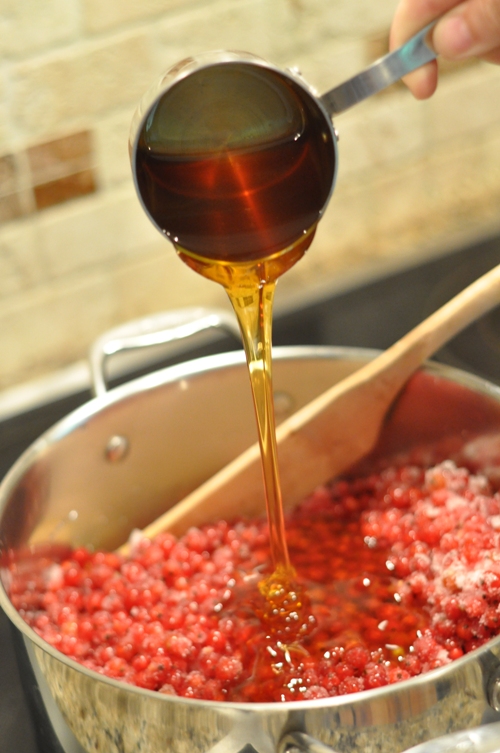
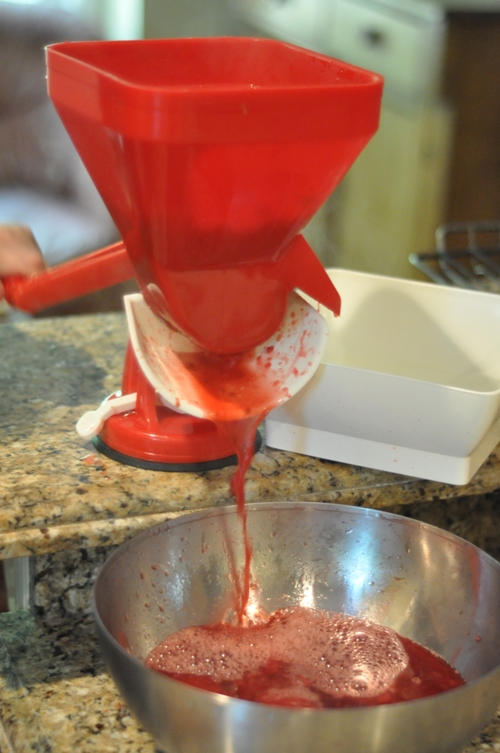
We did not bother to process this juice because (1) we are thirsty and (2) it only made 1.5 litres…which in this heat will be gone in a few days (as you can see from the photo below someone is already dipping into the spoils).
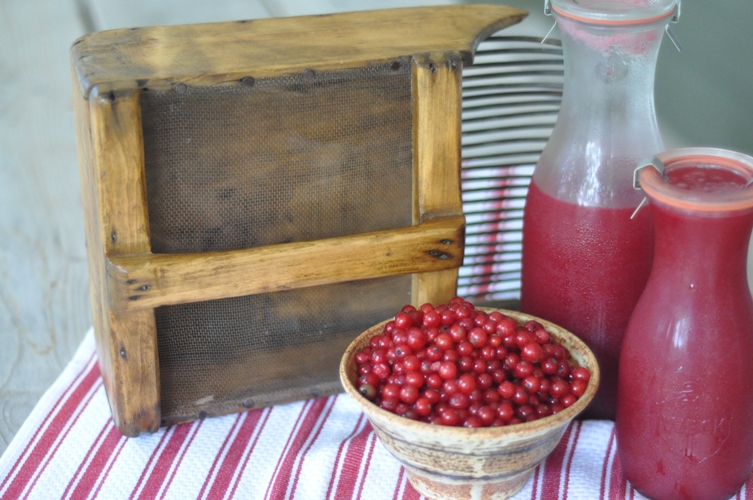
It ended up being a uniquely flavoured syrup high in anti-oxidants and sweetened with honey to combat the natural tartness of the currants. We recommend adding about a 1/4 cup of syrup to every 1 to 1 1/2 cups of water or any other refreshing beverage. The choices are unlimited!
Put up Total:
- 500 mL weck juice jar
- 1L weck juice jar
Note: A second batch was made yielding the same quantities (1 x 500mL and 1L).
Pickled Garlic Scapes ~ An Overlooked Ingredient?
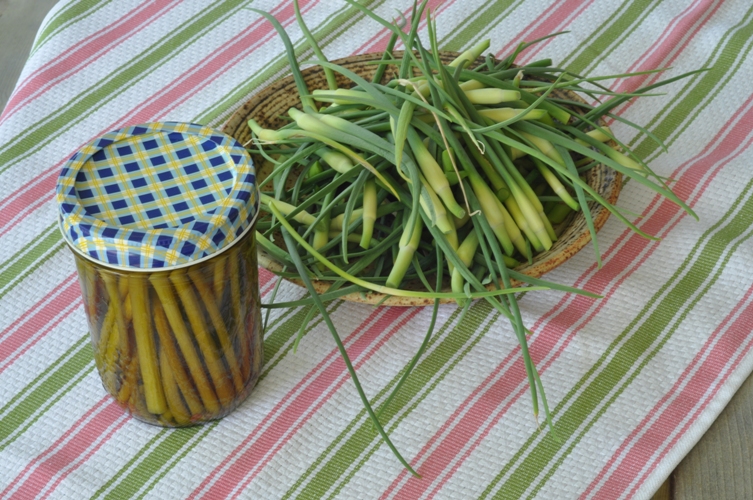
Visiting other parts of the world always broadens your horizons. For example, the Vietnamese people do not waste a thing and they make all North Americans look like extremely picky eaters. While we might not be able to thoroughly enjoy grilled esophagus or chicken cartilage in the same manner they do we should try to utilize more of the food we grow.
Garlic Scapes…this is apparently not a new thing to pickle but one you may have over looked. Although, we have not tried this before we are excited to give it a whirl and we will let you know how they end up tasting (in a month or so). We can only imagine they will rank up there with our pickled carrots and our oh so tasty dilly beans!

OUR RECIPE FOR PICKLED GARLIC SCAPES:
- 2 pounds garlic scapes; cut into 4″ lengths
- 4 cups cider vinegar
- 2 cups filtered water
- 4 tbsp kosher salt
- 2 tsp dill seeds (if available use fresh dill heads)
- 1 tsp black peppercorns
- 1 tsp red chili flakes
- Prepare for water bath canning. Sterilize jars in oven at 250F degrees for 30 minutes.
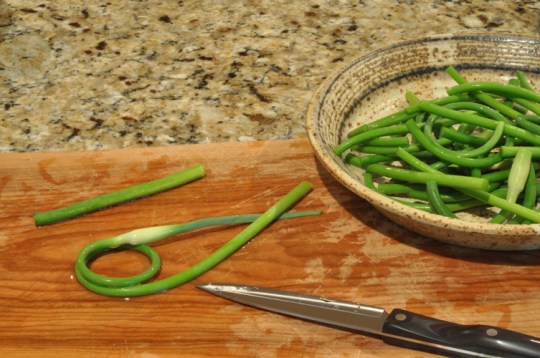
- Rinse garlic scapes well and cut into 4″ lengths. Note: Use the bottom 8+” of the scapes ~curly bits included.

- In a stainless steel (or non-reactive saucepan) combine vinegar, water, and salt. Bring to a boil.
- Remove hot sterilized jars from the oven and add 1/2 tsp dill seed, 1/4 tsp black peppercorns, and 1/4 tsp red chili fakes to each jar.

- Tightly pack garlic scapes into jars.
- Ladle hot brine into each jar leaving 1/2″ headspace.
- Remove air bubbles, top up with brine (if necessary), wipe rims, center lids on jars, and tighten rings to finger tip tight.
- Process for 15 minutes in boiling hot water bath. Remove lid, let stand for 5 minutes, and remove jars to a folded towel.
- Let cool, check seals, label, and store in a cool space.
- Note: Pickled preserves are best opened after standing for a minimum of 2 weeks…but the longer the better!

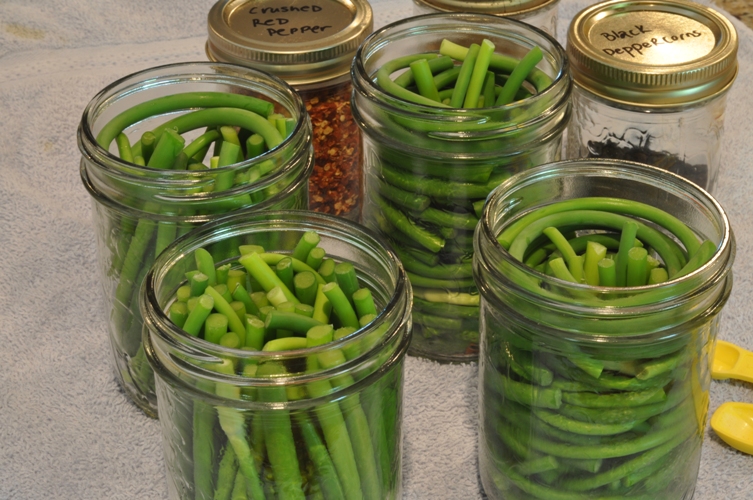
Put Up Total:
- 4 x 500mL wide mouth mason jars
These tasty little gems are also delicious fresh grilled with a bit of oil (or butter) and salted to taste, or added in subsitute of onions to your morning omelette, or used to add flavor to a slow cooked pot roast. Let’s save the scapes as they are worthy of using in our everyday cooking as well as pickling to enjoy later in the season!


 Putting Up With The Turnbulls