This Just In ~ Friends Hooked on Beer Jelly
We can’t give up making beer jelly because our friends are hooked! And, we’re responsible.
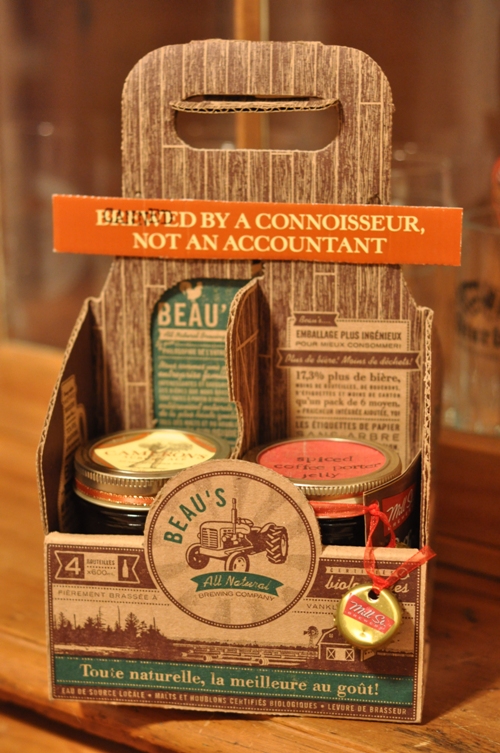
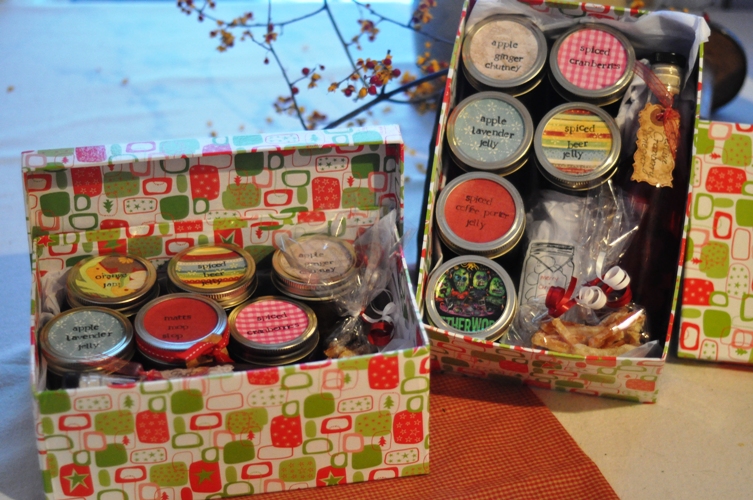
For Christmas we made up several gift boxes full of an assortment of different jams, jellies, chutneys, etc…They were beautiful boxes of goodies…a labour of love you might say.
Except for the beer jelly. As some of you know, the beer jelly gave us the most grief. It was difficult to get a perfect set and after making multiple batches we weren’t sure if we’d go back to it this soon. But, our peeps are demanding more! And, after getting our friends and neighbours hooked on the stuff who are we to deny them!?!
Back in the kitchen. Back to the stove. It’s 9 am and I’m cracking open my first bottle of beer…and then a second. Part 5 Act 8 & 9 went extremely well except for one small hiccup. Afterall, this is beer jelly making, a smooth ride to the perfect set would leave me without a story. The first batch was going along smoothly, I was calm and in jelly making mode. It was bubbling up very close to the rim, but nothing to worry about…this is just what happens. However, in the next instant, as the phone began to ring and panic set in that it was going to bubble over, I lifted the pot up from the element spilling some on the stove, and well, alcohol and high heat…YEAH, you guessed it!?! A small fire.
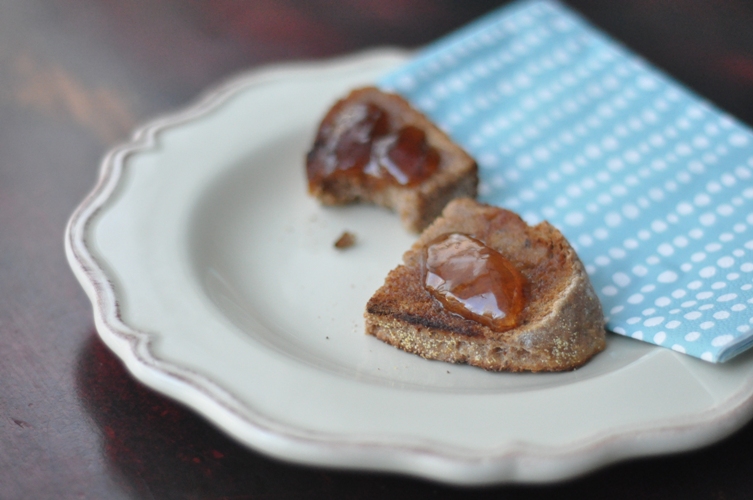
Okay, now that the flames are out…the stove cleaned up…can we just get back to the fact that these jellies turned out perfectly. YEAH!!! If I’d known all we needed was a small fire to make this jelly turn out ~ it would have happened much sooner!
Put up Total:
- Cameron’s Amber Ale ~ 5 x 250mL regular mouth mason jars
- Flying Monkey Netherworld Cascadian ~ 5 x 250mL regular mouth mason jars
Homemade Pectin
For a little over a year now, we’ve been making our own pectin. Yes, you can buy it in the store (here in Canada you can buy Bernardin’s Pectin and/or Certo and in the US everyone seems to use Sure Jell) and it is perfectly acceptable. In fact, liquid and powder pectins can take the guess-work out of that perfectly set jam or jelly. So, you might ask “Why do we make our own pectin?” And, we’d reply “Because we CAN!”
We started making our own pectin in Florida when we stumbled across a recipe for it. Oranges were in abundance and super cheap. In fact, they were so cheap we would squeeze our own orange juice every morning. Agghhhh, how we miss those inexpensive bags (and we do mean BAGS) of oranges. Living in Ontario…it’s just not affordable (any time of year) to be squeezing your own juice daily.
We’ve only made orange pectin once but will include it for those of you who have access to inexpensive oranges. Personally, it seems like a bit more work but when the price is right it may be worth it. Note: it will also have a slightly different texture to the apple pectin and may even be a bit bitter.
RECIPE FOR HOMEMADE ORANGE PECTIN:
- 2 cups membrane and white pith, or albedo from oranges
- 4 cups or 1L water; divided
- 4 tbsps lemon juice
- Juice oranges and reserve for another recipe like Spiced Cranberries
- Discard seeds. Scoop out membrane and some of the white pith from the oranges and pack tightly in a 2 cup measure.
- Using a food processor blend oranges, lemon juice and 2 cups of water. Allow to stand for 4 hours.
- Add 2 more cups of water and allow the mixture to stand at room temperature over night.
- Next day, bring mixture to a boil and simmer for 10 minutes.
- Using a fine mesh sieve or jelly bag, placed over a deep bowl, pour mixture and juice into the sieve to collect the juice.
- You should have approximately 2 cups of liquid orange pectin.
- Pour the liquid pectin into a clean jar and refrigerate for up to 2 weeks.
Normally, we make pectin from tart apples, like Granny Smiths. We usually make it in large batches but the same ratio applies for whatever amount you desire (1 pound of apples to 2 cups of water). Make what you need to use right away or make larger batches and process to store for when you want to make a preserve that requires additional pectin.

RECIPE FOR HOMEMADE APPLE PECTIN:
- 4 lbs fresh tart apples ~ like Granny Smith’s but we’ve used Ida Reds
- 8 cups water
- 4 tbsp lemon juice
- Wash apples well and cut into 1/8ths or small cubes, removing the stems and blossom end. Note: do not remove the skins, seeds, or cores as they are naturally rich in pectin.
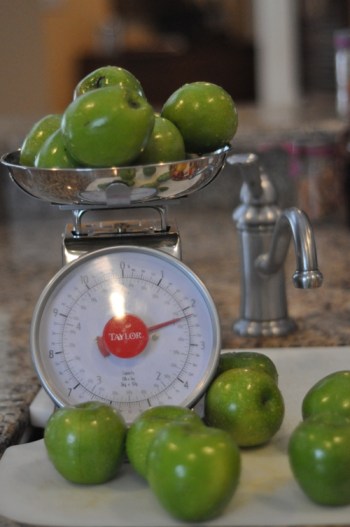
- Place apples (skins, seeds, and cores), water, and lemon juice into a large preserving pan. Bring to a boil over high heat, cover, reduce heat and boil gently for 30-40 minutes, stirring occasionally until the apples are completely broken down.
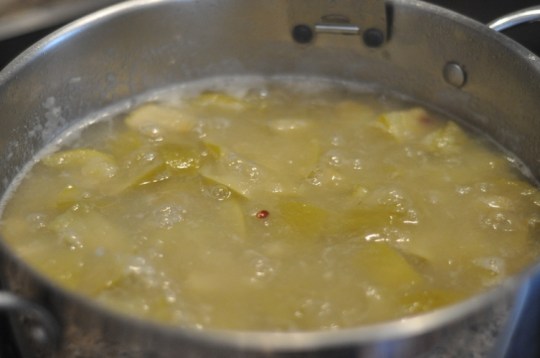
- Using a fine mesh sieve or moistened jelly bag, placed over a deep bowl, pour mixture and juice into the sieve to collect the juice. Let drain for 2-4 hours. Note: Some recipes ask you to let this drip over night. It is completely up to you but does not affect greatly the quantity of overall juice collected. This juice collected should measure approximately 6 cups.
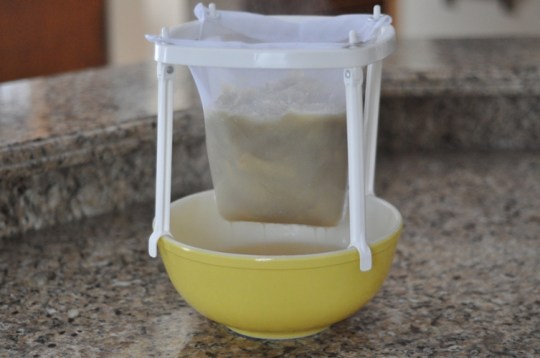
- Pour the apple juice into a clean preserving pan and bring to a boil over high heat for approximately 5 minutes. It will reduce slightly.
- Skim off any foam.
- Ladle or pour apple pectin in clean sterilized jars. Refrigerate for use within 2 weeks, freeze to use within months or process in hot water bath from longer shelf life. See below.


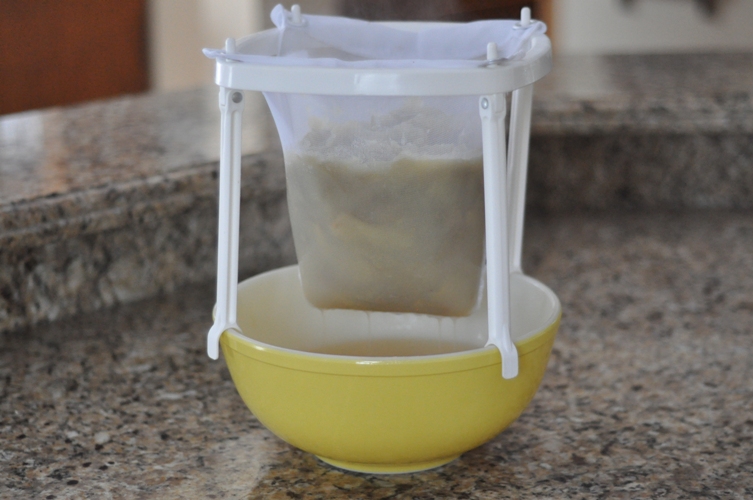
Please Note: Apple pectin can be processed in a hot water bath. Ladle hot apple pectin in clean sterilize 250mL or 500mL jars, leaving 1/4″ headspace, wipe rims, remove air bubbles, top up liquid (if necessary), and place sterilized lids and rings on adjusting so that it is finger tip tight. Process for 10 minutes. The homemade apple pectin had a pH reading of 3.36 with a correction of + or – 0.02.
We will spend a day making several batches of apple pectin following the above recipe. When we have two batches of juice collected we will boil them together and prepare for water bath canning. We will ladle our pectin into 500mL (pint) jars which is 2 cups of liquid pectin because the majority of our recipes call for the use of 2 cups of homemade pectin.
Our friends swear that our jellies and jams taste better because of the homemade pectin…really we’re not so sure but we enjoy the whole process and wouldn’t do it any other way. You can use the remaining pulp for apple sauce or apple leather. For a change, we’re going to try making the apple leather.
Put Up Total:
- 5 x 500mL regular mouth mason jars
- 1 x 200mL regular mouth mason jar (refrigerated)
Below is a helpful chart including a variety of fruits with pectin and acid levels (this information can be found in River Cottage Handbook No. 2 by Pam Corbin):
| FRUIT | PECTIN | ACID |
| Apples (cooking) | High | High |
| Apples (crab) | High | High |
| Apples (dessert) | Medium | Low |
| Apricots | Medium | Low |
| Blackberries (early) | Medium | Low |
| Blackberries (late) | Low | Low |
| Blueberries | Medium | High |
| Citrus Fruit | High | High |
| Cherries (sour) | Medium | High |
| Cherries (sweet) | Low | Low |
| Currants (red, black and white) | High | High |
| Damsons | High | High |
| Elderberries | Low | Low |
| Figs | Low | Low |
| Gooseberries | High | High |
| Greengages | Medium | Medium |
| Japonicas | High | High |
| Loganberries | Medium | High |
| Medlars | Low | Low |
| Mulberries | Medium | High |
| Peaches | Low | Low |
| Pears | Low | Low |
| Plums (sweet) | Medium | Medium |
| Plums (sour) | High | High |
| Quince | High | Low |
| Raspberries (ripe) | Medium | Medium |
| Raspberries (unripe) | Medium | Low |
| Rhubarb | Low | Low |
| Rowan Berries | Medium-Low | High |
| Sloes | Medium | High |
| Strawberries | Low | Low |
That Bloody Marmalade Tastes So Good!
Waking up to a tidy kitchen made it the perfect day to “put up” some blood orange marmalade…an experiment that went right!
Lately, this kitchen has been putting out less than perfectly set jellies and marmalades leaving us to wonder “What is going on? And, what can be done to rectify the problem?” We know the ingredients are the best we can buy, and that the taste is there but we are not achieving a perfect set every time. Doesn’t everyone want to open a perfectly set jelly, jam and/or marmalade every time!?! YES, we do! We’ve concluded it boils down to one missing ingredient and that is patience. Note to self…be more patient and enjoy the process…”you know what to look for”.
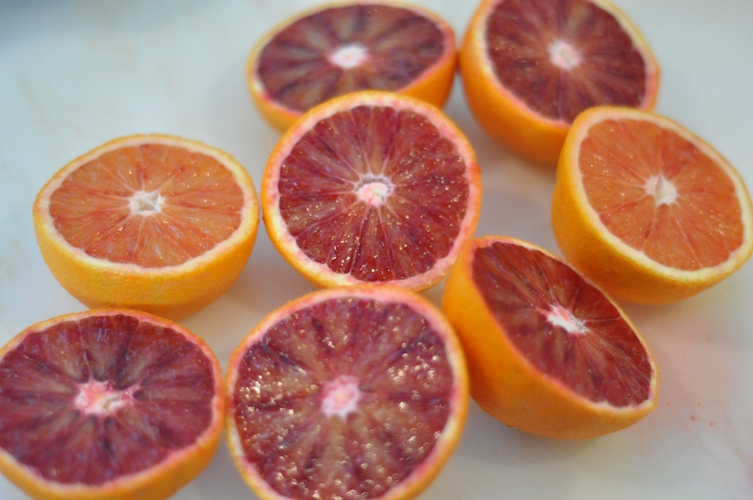
BLOODY MARMALADE: yields 6 x 250mL
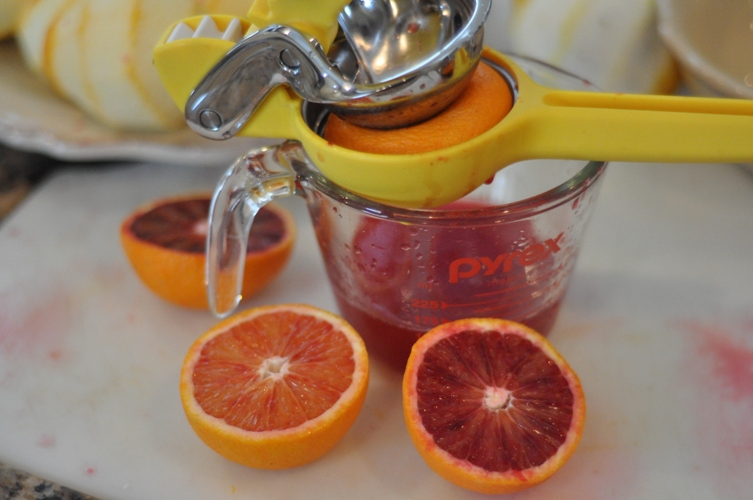
- 4 1/2 pounds Blood Oranges (approximately 12 small oranges); divided 3 pounds for pulp and 1 1/2 pounds for juice ~ yeilding 1 cup of Blood Orange juice
- 2 large lemons
- 2 cups water
- 3 cups sugar
- 1/2 cup Orange Blossom Honey
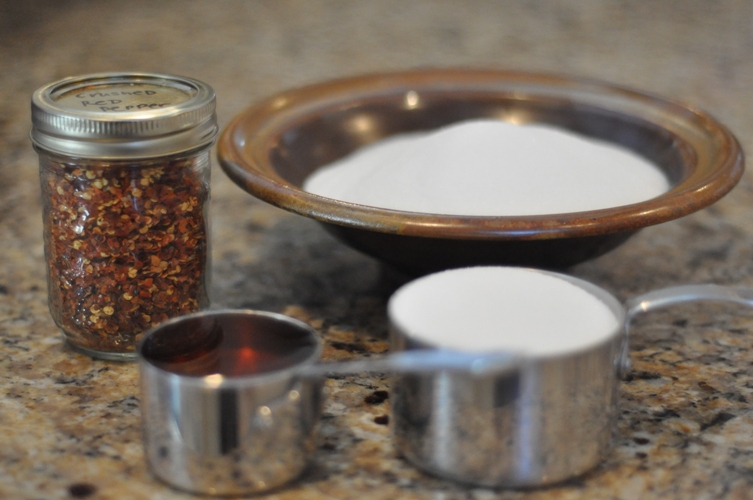
- 2 tsp red chili pepper flakes
- Place 5 spoons and a small plate in the freezer for gel tests. And, prepare for water bath canning.
- Weigh, divide, and wash the oranges well. You will want 3 lbs of blood oranges for pulp and zest and enough oranges to create 1 cup of juice (discarding the zest from the juiced oranges~ approximately 4 oranges for juice only). Wash the lemons.
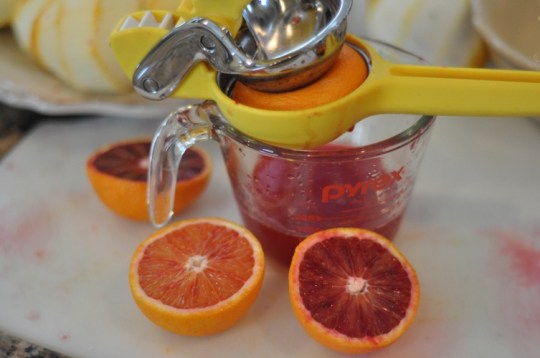
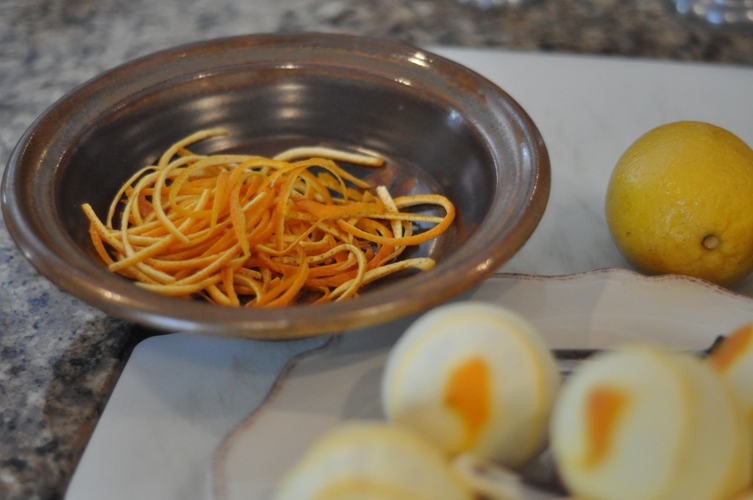
- Remove the outer rind from the oranges and lemons using a peeler and cut the peel into very thin strips.
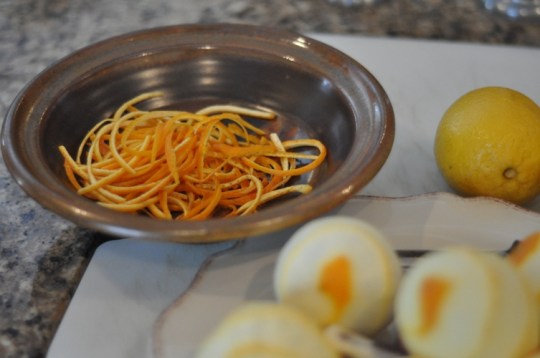 Place the rind, water, and blood orange juice in a large stainless steel saucepan. Bring to a boil over high heat; cover, reduce heat and boil gently for 20 minutes.
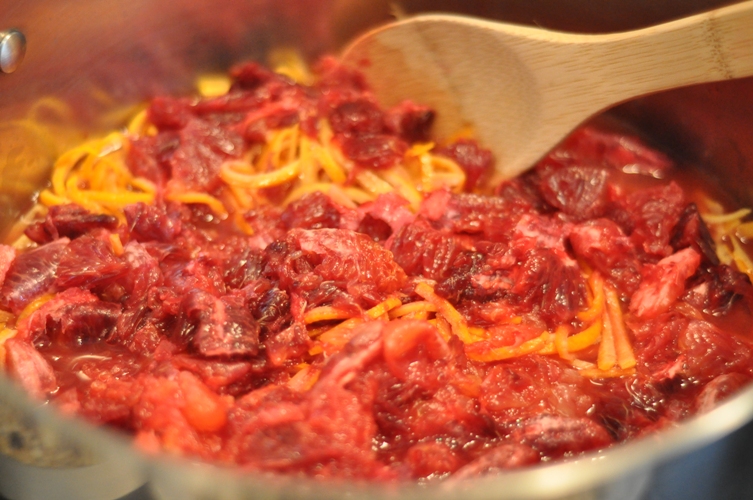
 - Meanwhile, remove all the white rind, and seeds from the 3lbs of zested oranges and lemons. Remove most of the interior membrane as well; leaving only pulp. Add orange and lemon pulp to the saucepan. Bring to a boil over high heat, reduce heat, cover and boil gently for 10 minutes, stirring occasionally.
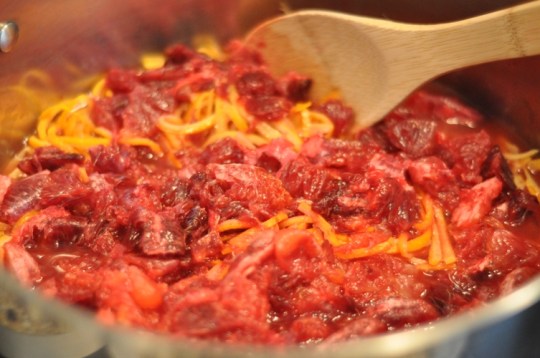
- Add sugar, honey, and red chili pepper flakes to the saucepan. Return to a boil over high heat and boil rapidly, uncovered, until set.
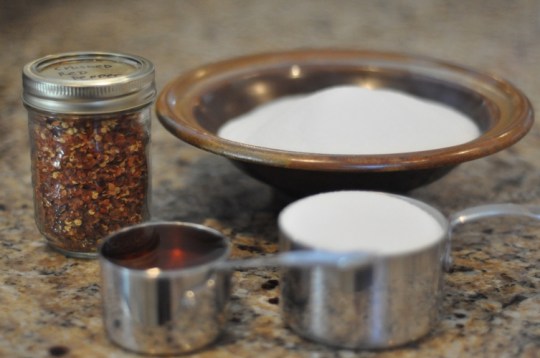 Approximately 15 to 20 minutes. The time will vary depending on the heat of your stove and the saucepan you use. Watch your marmalade closely during the last 10 minutes and perform set tests as necessary using your frozen spoons to test.
 - Remove from heat and ladle into hot sterilized jars leaving 1/4″ headspace. Wipe rims, place lids on jars and screw bands to finger tip tight. Process for 10 minutes in a hot water bath.
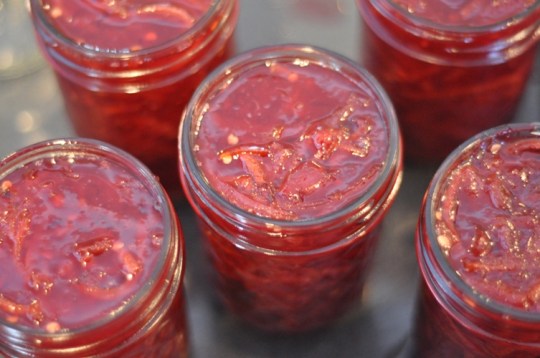
- After 10 minutes turn off heat, remove lid, let jars rest for 5 minutes before taking out of hot water bath. Check seals, label, and store.
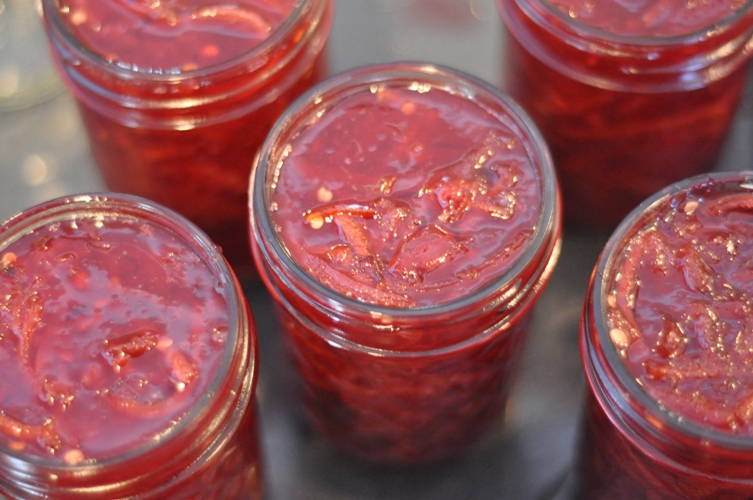
The set of this marmalade is perfect…it’s not as hard as a rock but it’s not runny. It will spread nicely on bread, crackers, a layer cake, or whatever you fancy. It isn’t overly sweet but it’s not too tart either and you can definitely taste notes of the orange blossom honey. And then, there is a little bit of heat that comes from behind just to make sure you’re paying attention to how good it really is!
Put Up Total:
- 6 x 250mL regular mouth mason jars
Eat’n Up ~ Marmalade Cake with Chocolate Glaze
During the winter months, we have more time to entertain and enjoy great food with friends and last night was no exception. We had a few close friends over for some homemade pizza, home-baked breads, and the creme de resistance…Marmalade Cake with Chocolate Glaze.
All of our meals contain preserves we’ve put up throughout the year and we think it can make the simplest foods taste great…it’s like you can taste the love in every bite. Last night, to get warmed up we put out some of our kosher dills, baby gherkins, and dilled beans, plus a sampling of Matt’s homemade breads (he put our sauerkraut in the Rye Bread…it made my mouth sing!). And, while we were enjoying these simple but oh so tasty snacks Matt made pizzas using fermented dough topped with our canned tomato sauce. It was delicious.
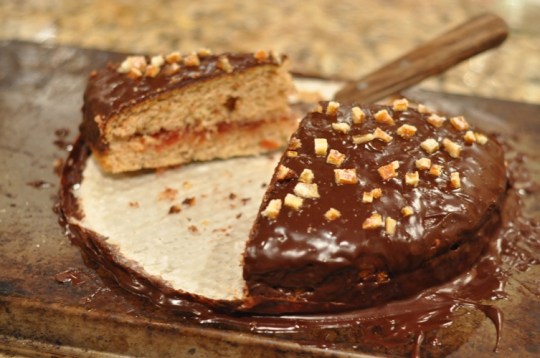
But, the orange-cranberry marmalade cake with chocolate glaze stole the show (in my book). It didn’t last long and before we had a chance to get a photo…it was nearly all gone.
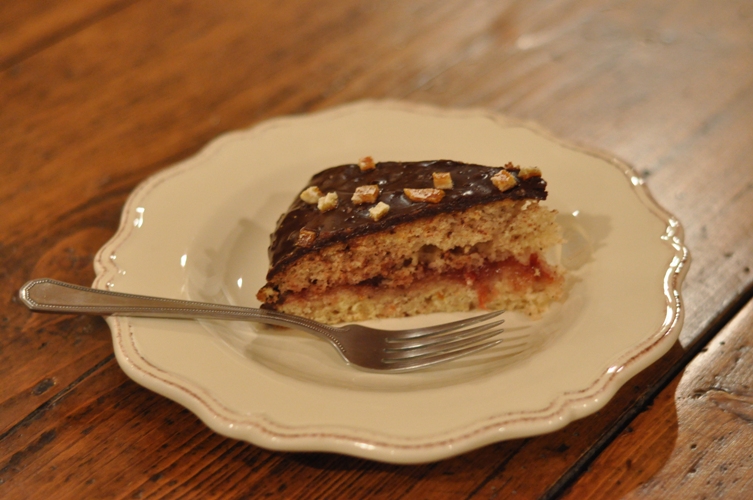
RECIPE FOR MARMALADE CAKE WITH CHOCOLATE GLAZE:
Cake Mix:
-
3/4 cup sugar
-
1/2 cup unsalted butter
-
2 eggs
-
2 cups (500mL) all-purpose flour
-
1/4 cup ground pecans
-
1 tbsp ground candied orange peel
-
1 tsp (5 mL) salt
-
1 tsp (5 mL) baking soda
-
1 cup (250mL) plain yogurt
-
1 250mL jar of orange-cranberry marmalade (equivalent to one 1/2 pint jar)
Chocolate Glaze:
- 6 ounces (175g) bitter or semi-sweet chocolate
- 1/2 cup unsalted butter
- 2 tbsp chestnut honey
Garnish:
- 1/4 cup coarsely chopped candied orange peel
-
Preheat the oven to 325F. Grease and sugar an 8-10″ springform pan.
-
Grind or finely
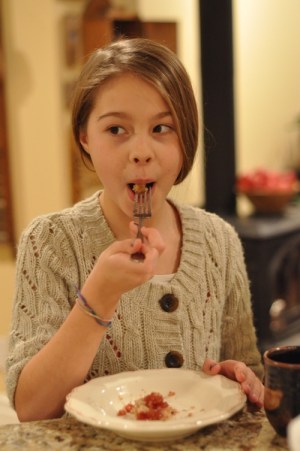 chop the candied peel and nuts.
 -
In a large bowl cream the sugar and butter. Blend in the eggs.
-
In a separate bowl mix together the flour, salt and baking soda. Add the dry ingredients to the butter mixture along with the yogurt and ground peel/nut mix. Continue folding until smooth.
-
Spoon the batter into the springform pan and bake for 1 hour or until a knife inserted comes out clean.
-
While your cake is baking you can make the glaze. Place the chocolate, butter and honey in a saucepan and melt over low heat. Remove from heat and allow to cool.
-
Allow the cake to cool for at least 45 mins. Remove the springform pan (you may need to run a knife around the edge to loosen the cake). Next cut the cake in half, creating two thinner circles. Spoon on your marmalade, smoothing out to cover the bottom cake layer. Replace the top layer.
-
Glaze the cake using a spatula. If the glaze is too thin allow it to cool a little longer. Garnish the cake with coarsely chopped candied peel while the glaze is still slighty warm. Allow the cake to cool completely for the glaze to set.
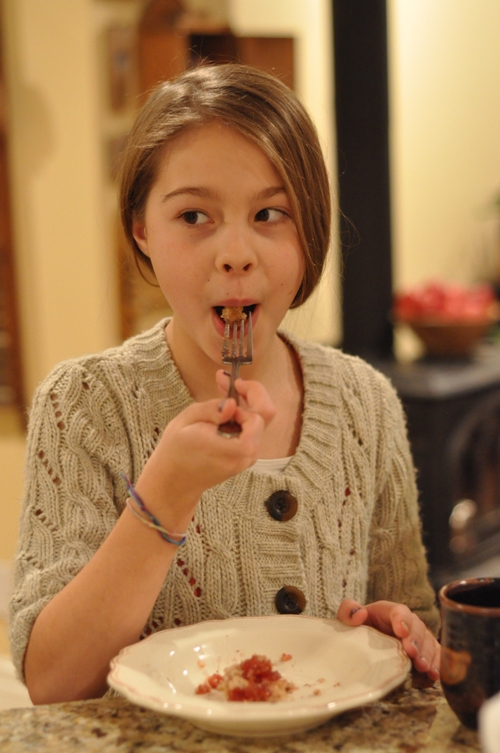
This is a great recipe to use with some of your home preserved marmalades. The bitterness of the marmalade enhances the sweetness of any chocolate dessert.
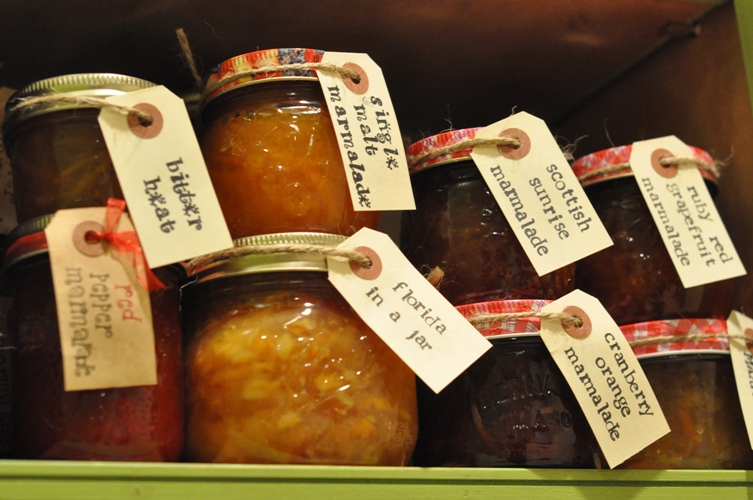
Savory Seed Sauerkraut
Okay, we know you guys are going to think we’re crazy and “how much sauerkraut can two people eat?” but we just can’t stop making the stuff! We know it seems ridiculous to have crock after crock fermenting on our kitchen counter but people we are addicted to the mystery of it all! And, our friends love us for it! Each batch behaves differently…it’s an experiment each and every time. You never know if it will co-operate to create enough liquid, will it bubble up to let you know it’s working, and all the different, tangy flavours… like this batch with the seeds…How will we know what we like the best if we don’t try them all!?!
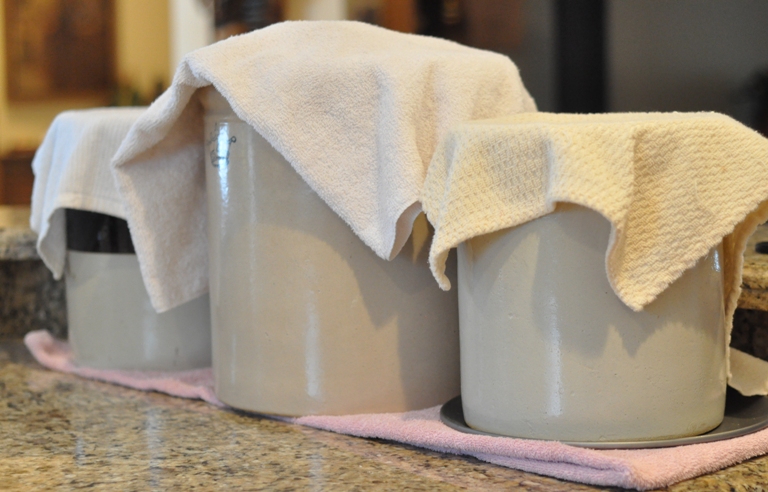
This time we are trying something a little bit different, a Savory Seed Kraut. It’s considered a low salt sauerkraut or it can be a salt free sauerkraut (for those of you trying to reduce your salt intake). For us, it started out being a salt free sauerkraut but this morning when we looked in on it and realized that the liquid was basically non-existant…we went back to the drawing board ~ or should we say back to Ellix Katz’s book Wild Fermentation.
Upon further reading, we realized that you can add salt to these krauts (just add less). This will not only help the cabbage to create the liquid brine we need but it will also help to preserve it. Ellix Katz’s recommends doing these salt free or low salt Krauts in small batches because the fermentation process is quicker and the lifespan of the Kraut is diminished because it has little or no salt. That makes sense!
But, of course, we did 15 pounds of cabbage instead of the recommended 5 pounds and are now adding some salt to help the cabbage create the brine and so that we will be able to preserve and process it in 4-6 weeks. In the end, this is what we did.
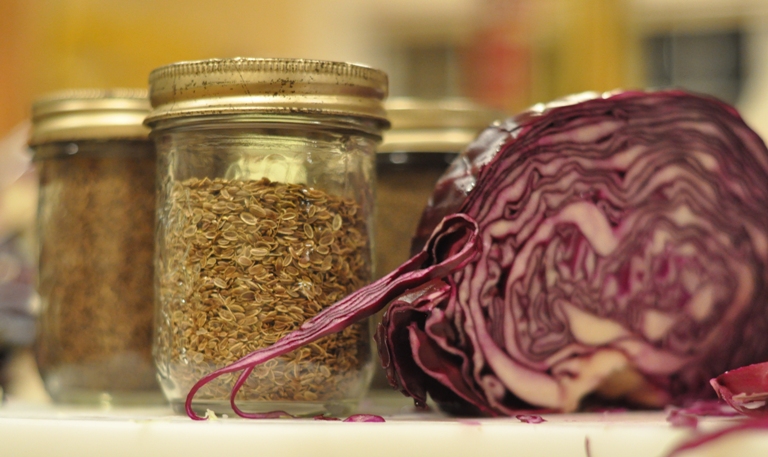
RECIPE FOR SAVORY SEED SAUERKRAUT (for a single batch):
- 5 pounds cabbage (we used both green and purple Ontario cabbage)
- 2 tbsp Pickling or Kosher Salt
- 1 tbsp each Dill Seeds, Caraway Seeds, and Celery Seeds ~ finely ground using a mortar and pestle or small grinder
- Remove outer leaves of cabbage and thoroughly wash.
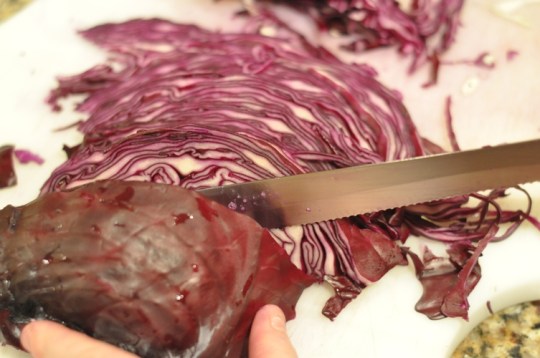
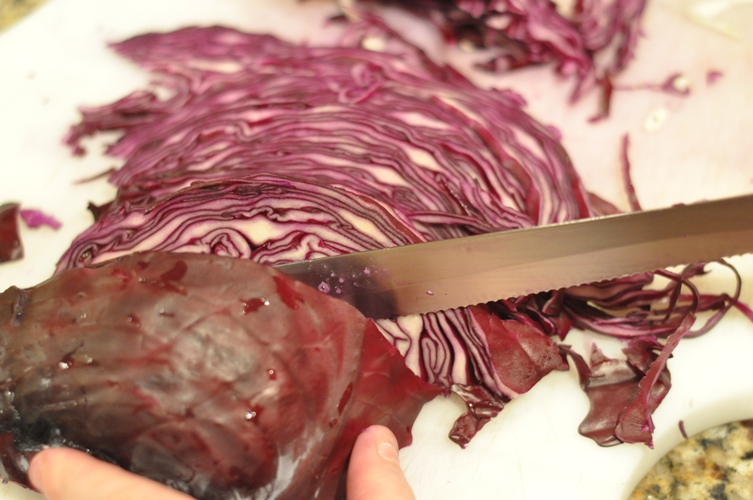
- Using a serated knife (like a bread knife) cut the cabbage head in half, remove and discard the heart. Cut each half into very thin strips and place in a large bowl. Note: you can do this in a food processor but we like doing it by hand ~ a little bit more control on the finished product).
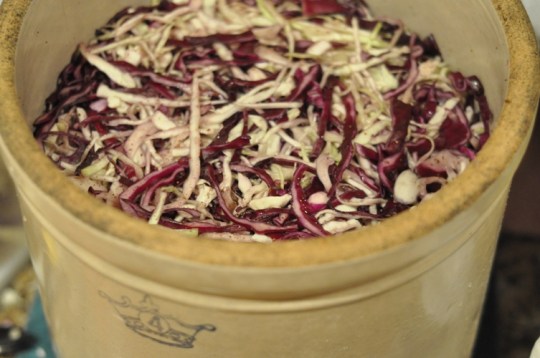
- Working in batches mix the salt and finely ground seeds into the cabbage and pack into a crock or 4 x 1 Litre jars. Note: You may want to use the 1 litre/quart jars or a small crock if you are going to do a small batch. Again, we tripled the above recipe and used a large 4 gallon crock. Pack a bit into the crock at a time. Tamp it down using a potato masher or your fists…this will help release the water from the cabbage.
- Cover the kraut with a plate with a couple of 1litre jars of water on top to keep it down. Or, if you are packing your cabbage into 1litre jars ~ pack cabbage in wide mouth jars and place smaller jars filled with water in the opening. It is important to keep the cabbage submerged in the brine.
- Press down on the jars or weight to force the liquid brine up over the cabbage and plate. It can take up to 24 hours for the liquid to rise but if it has not risen in that time add enough salt water to bring the levels up. You can do this by adding 1 tbsp or less of salt to 1 cup of water ~ stir well until the salt is completely dissolved. Remember to use chlorine free water or boil the water first ~ chlorine inhibits the fermentation process. Older cabbage contains less water…so using fresh cabbage may eliminate the need to add additional salty water.
- Leave the crock to ferment. Remember to check it every day and skim off any bloom or scum on the top.
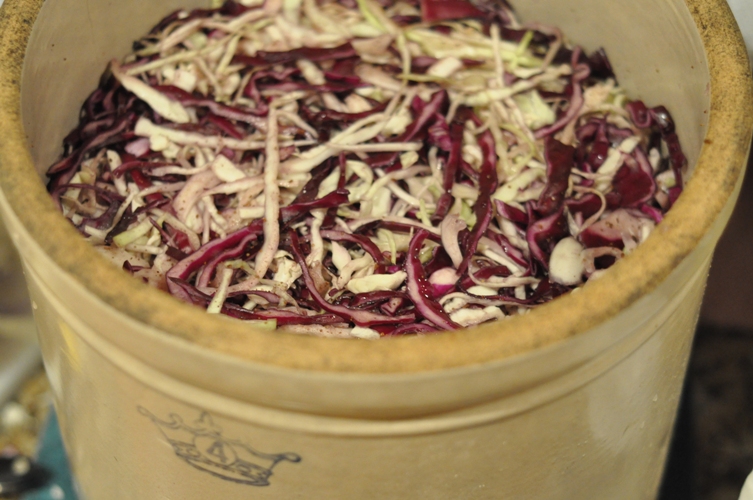
Now, the above recipe outlines what we did (because we ended up adding some salt). However, you can do this without any salt at all…just add 1 cup of water to create the liquid/brine that covers the cabbage. And, be sure to use fresh cabbage or you may not get enough liquid.
Again, it is a learning process but a tasty one at that!
Eat’n Up ~ A Simply Preserved Lunch
Lunch in our home is a simple but necessary meal and here is a simply preserved lunch ~ The Reuben Sandwich ~ with some home preserved dill pickles.
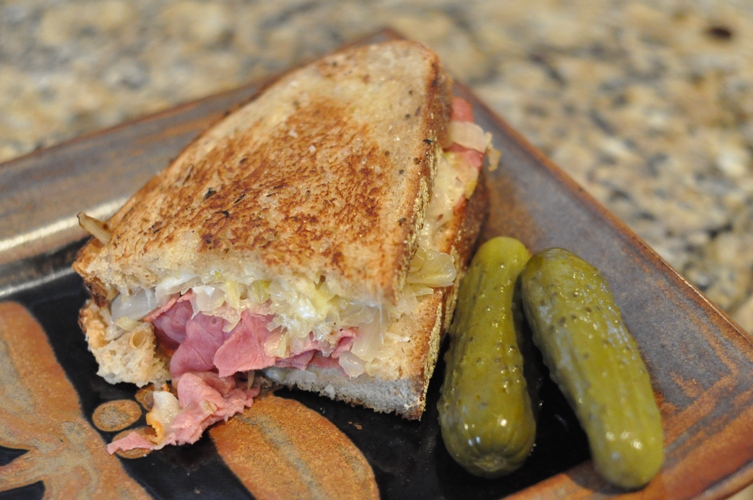
More often than not I am responsible for making my own lunch…And, why shouldn’t I be? ~ I’m a big girl. But, for those of you who don’t know ~ I can’t cook! People are often amazed to discover that I can CAN circles in the kitchen but that I have trouble making a grilled cheese sandwich ~ well it’s true. I admire all of you that can do both. Personally, I think making homemade preserves is much easier than tackling the task of dinner or lunch for that matter. However, I made the Reuben (above) all by myself using some of Matt’s homemade Rye Bread (recipe to follow in a later post), with some of our home fermented sauerkraut, and a few of our dill pickles on the side. I think it looks pretty good?! And, it tasted great!
We know that lots of you are busy in the kitchen canning, preserving, and/or just making some cool things. We’d love to hear about what you are canning or preparing with your preserves in your kitchen and we encourage you to post your pictures, thoughts, comments and ideas on our facebook page ~ Putting Up With The Turnbulls. Afterall, we could all use a little bit of inspiration to keep us motivated over the long winter.


 Putting Up With The Turnbulls