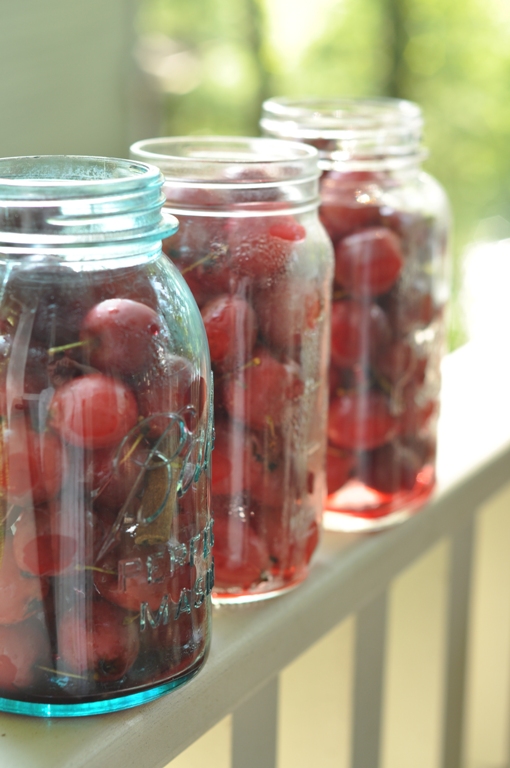
Drunk’n Cherries
Agghhhh, now here may be a new favorite for me!
This recipe comes from Sherri Brooks Vinton’s awesome canning book Put’em Up! and I don’t think that it can get any easier that this.
RECIPE:
- 1 pound of sweet cherries, such as Bing, stemmed but not pitted (we didn’t stem either…I think the stems look great and they are a natural handle on each piece)
- 1.5 cups bourbon or rum
- 1/2 cup brown sugar
- 1/2 cup water
- Using a small paring knife, cut a vertical slit in each cherry (from the stem down). This will allow the cherry to marinate in alcohol and sugar.
- Place the cherries in sterlized 1 litre jars and add the bourbon or rum.
- In a medium stainless steel saucepan bring the water and sugar to a boil, stirring to dissolve the sugar.
- Pour the syrup into the cherry filled jars, cover and shake.
- Let stand for a minimum of one week but the longer they are left the more intoxicated they become.
- These will keep for up to 1 year at room temperature.
Now, we’ve just got to wait a week before sharing these delightful little fellows!
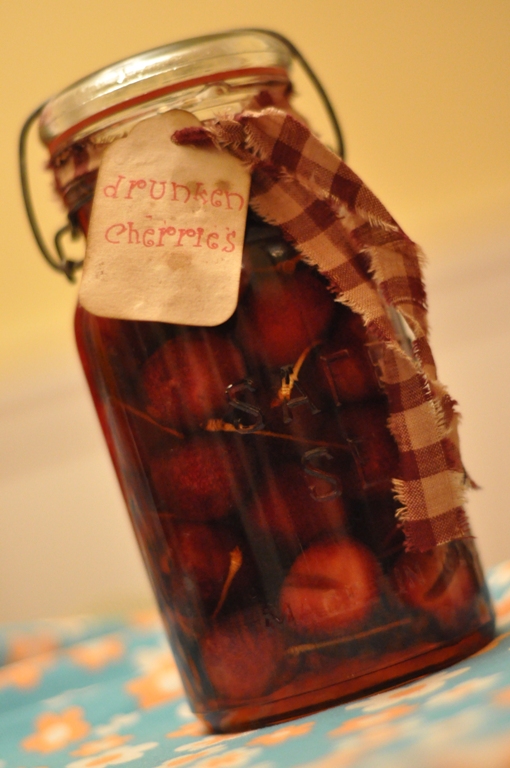
These cherries turn into the most surprisingly delicious burst of boozy goodness. They lose a little of their deep burgundy colouring and you expect them to be a bit mushy in the mouth but they remain crisp with a super strong bourbon or rum flavour. It’s hard to eat just one and a handful will get you plastered!
Put up Total:
- 2 x 1L old jars with bourbon cherries
- 2 x 1L wide mouth and regular mouth rum cherries
- 1 x 750mL regular mouth rum cherries
Elderberry Peach Preserves
This tasty recipe comes from the big Bernardin recipe book and since we had so many 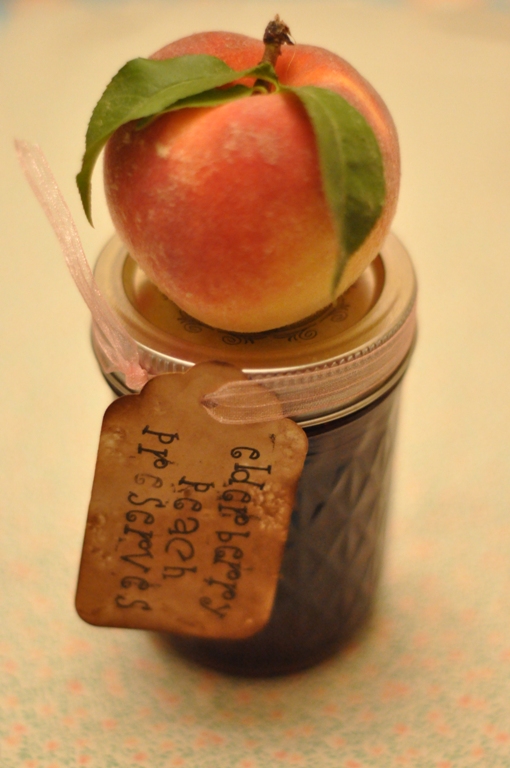 elderberries waiting their turn ~ we had to do something. Since fresh peaches are in season the marriage of these two flavours seemed like a natural choice.
It turned out great. Our only trouble was skimming the foam off the boiled jelly because the peaches float making this task a little challenging. We did our best.
Put up Total:
- 3 x 250mL diamond jars
- 3 x 250mL regular jars
- 1 x 250mL wide mouth jar
Spiced Crab Apples
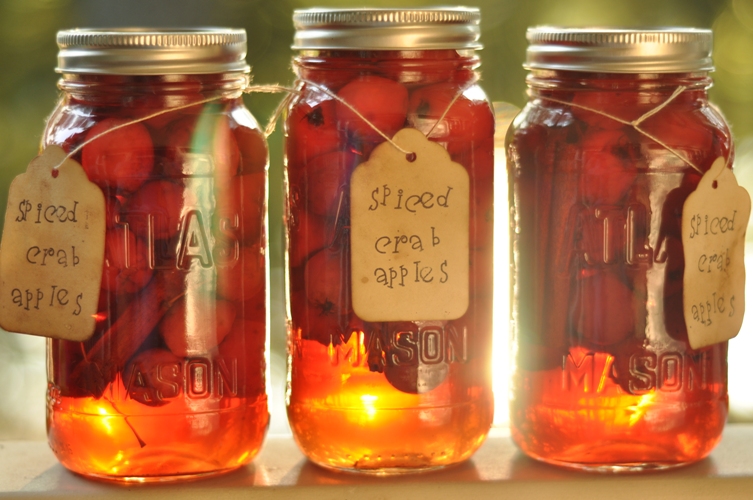
 This is a spicy pickle and a great recipe to use when you have a glut of crab apples…like we had this year. There is relatively no prep work other than pricking and washing the apples and the finished product can be enjoyed on its’ own, with cheese, or even with a bit of good Vanilla ice-cream (we like Kawarthas Vanilla ice-cream) However, we did have to play around a bit with the processing part because upon entering the boiling hot water bath the apples would burst and split at the seams. Sometimes the look can be as important as the taste…we considered them RUINED.
Thankfully, there was an abundance of these beautiful, bright red, tart little guys. So, we were able to revisit a few trees several times. And, we still left lots for the birds. You’ve got to CAN what you can, when you can!
RECIPE FOR SPICED CRAB APPLES (from Fruits of the Earth):
- 2 pounds crab apples (do not use bruised fruit and if crab apples are not available you can substitute another variety but you will have to chop and core them)
- 2 1/4 cups cider or wine vinegar
- 1 small cinnamon stick
- 9 cloves
- 1 scant tsp allspice
- 3 cups warmed sugar (just heat it slightly in the microwave before adding…this prevents the liquid from cooling)
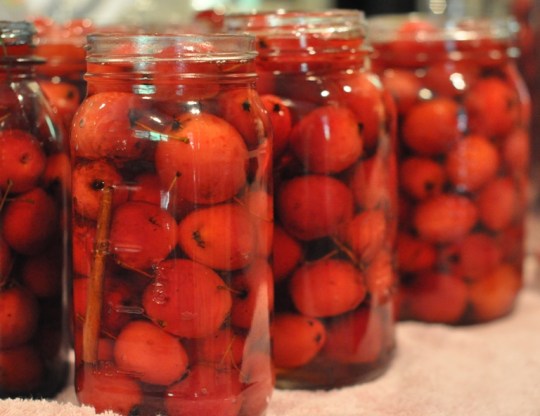
- Prick the apple skins with a darning needle or fork. (We found that this works well if you are following the recipe below but it will not prevent the skins from bursting in the hot water bath…tried it twice)
- Pour the vinegar into a stainless steel pan, add the spices and bring to the boil, then simmer for 5 minutes. Add the apples and simmer until they are tender but still hold their shape. Here it is very important to keep a close eye on your apples…it is very easy to over cook them which will cause them to burst and/or turn to mush. Lift them carefully out of the vinegar, using a slotted spoon, and pack them into hot, sterilized jars. We sterilize our jars in the oven at 250F for 20 minutes where they remain until they are ready to be filled.
- Add the warmed sugar to the vinegar and stir over a low heat until all the sugar has dissolved, then turn up the heat and boil steadily until the vinegar has reduced by about a third and become syrupy. It is important to move as quickly as possible…be sure to warm your sugar to that your packed crab apples don’t spend too much time cooling in the jars.
- Pour the hot syrup over the apples so that it completely covers them and seal the jars. The jars should seal themselves but if they do not refrigerate.
- Check seals, label, and store in a cool, dark place for 6 to 12 months.
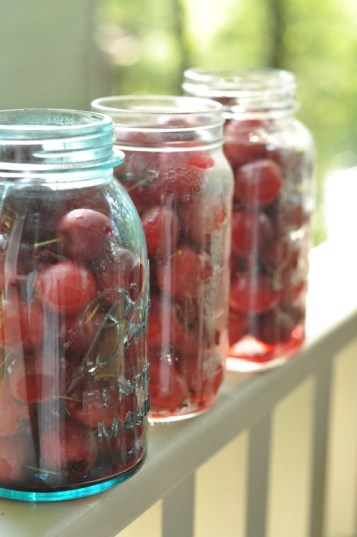
We tried making these several times. The first two batches were processed in a boiling hot water bath for 10 minutes. The crab apples burst leaving us with a very unpleasant looking finished product….even when we were extra careful to add more holes in the fruit to allow the air to escape.
In the end, we put the apples in the hot sterilized jars and filled them with boiling liquid and placed our clean, boiled, sterilized lids on…because they are super hot the jars seal themselves. We have used this method for other preserves, that have a high sugar and vinegar content, with great success. But, you will have to decide how you wish to process/seal/preserve these little beauties!
Put up Total:
- Batch 1: 6 x 1L and 1 x 250mL…burst
- Batch 2: not recorded…thrown out
- Batch 3: 4 x 1L
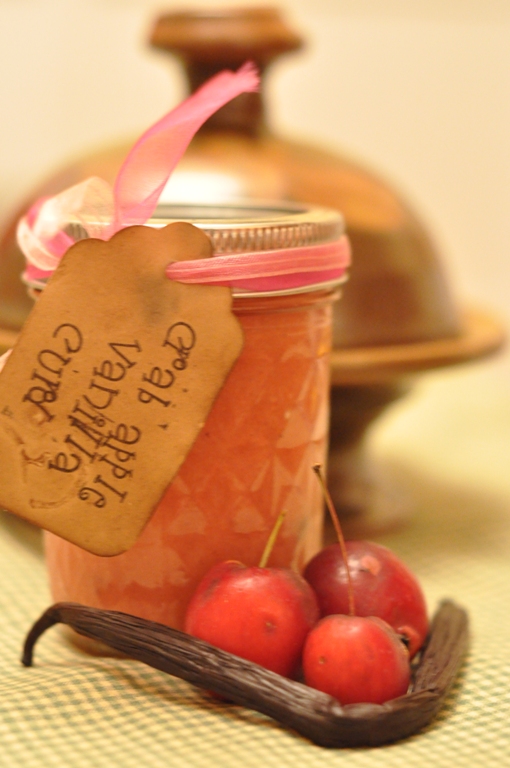
Crab Apple & Vanilla Curd
 Mmmm…this one is good. Deciding what to do with those delicious crab apples we picked on Sunday was simple when you have a recipe as good as this one. Curds have a sweet but tart burst of flavour and these little red crab apples have just enough punch to make this a favorite.
We successfully did a triple batch in one go and it turned out so nice that we’d like to do another 2 batches.
RECIPE FOR A SINGLE BATCH OF CRAB APPLE & VANILLA CURD:
- Makes approximately 3 x 250mL
- 1 vanilla bean
- 1 1/4 pounds of crab apples, halved or tart cooking apples roughly cut
- 1/4 pound of butter (preferably unsalted) cut into cubes
- 1 7/8 cups fine granulated white sugar
- 3 large eggs plus 2 egg yolks, beaten
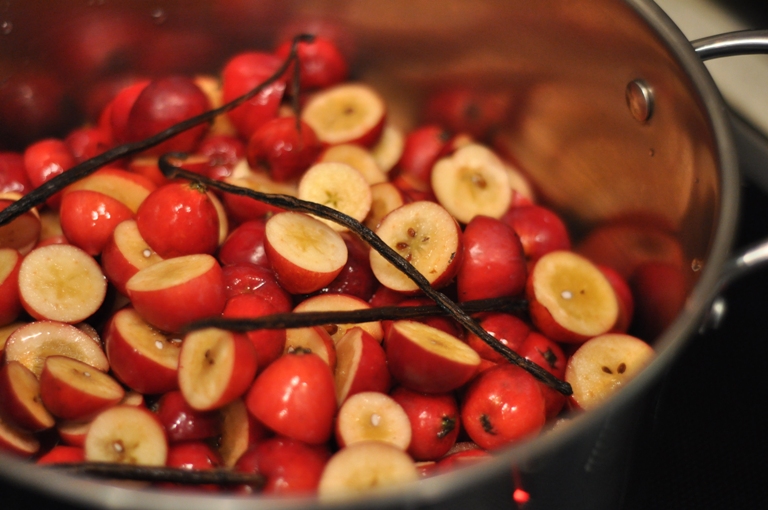
- Cut vanilla bean lengthwise and place with apples in a sauce pan adding 2 tbsp of water.
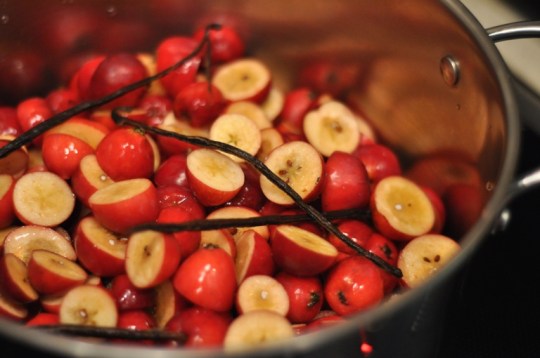
- Simmer gently until apples are soft stirring often to prevent the apples from sticking to the bottom
- Remove from the heat and let cool
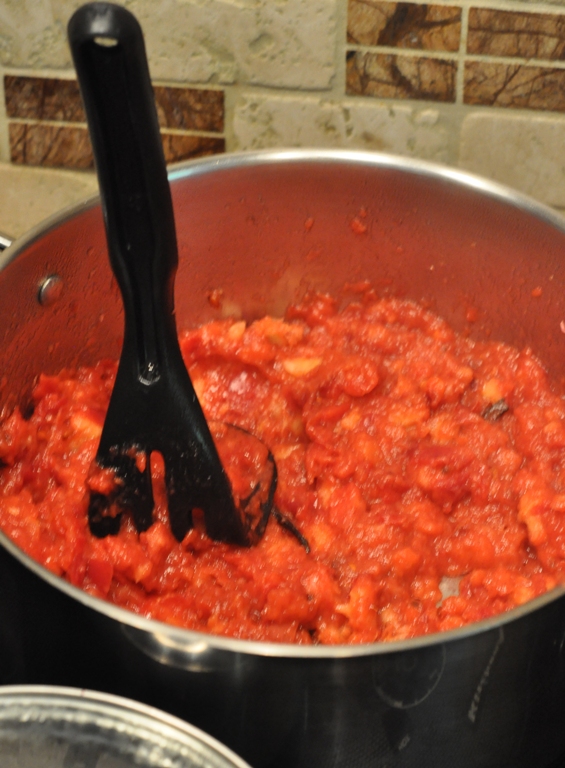
- Remove vanilla bean. Put soft apples through a food mill collecting the pulp in a bowl
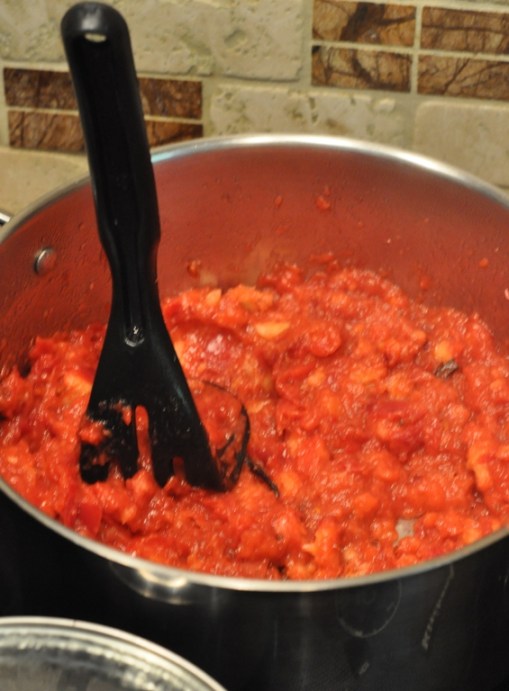
- With a knife or the back of a spoon scrape the seeds from the vanilla bean pieces and add them in with the apple puree along with the bean
- Add the remaining ingredients ~ pouring the egg through a sieve
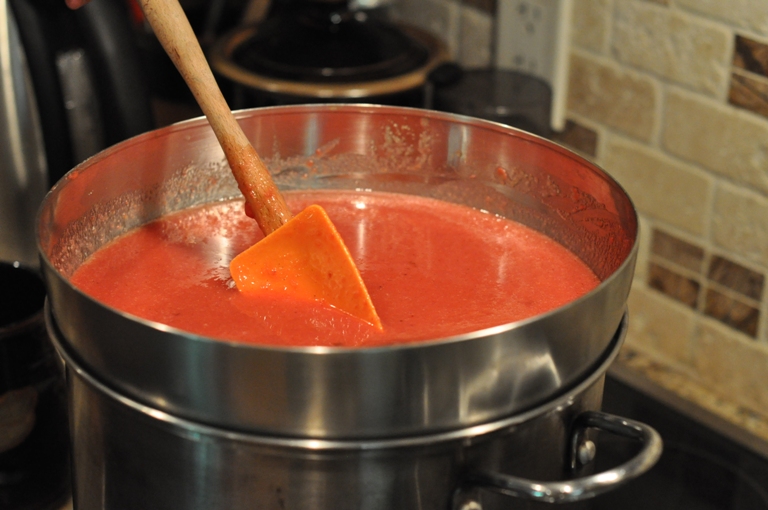
- Place the bowl over a pan of simmering water (or use a double boiler) and simmer gently; stirring constantly until the curd begins to thicken
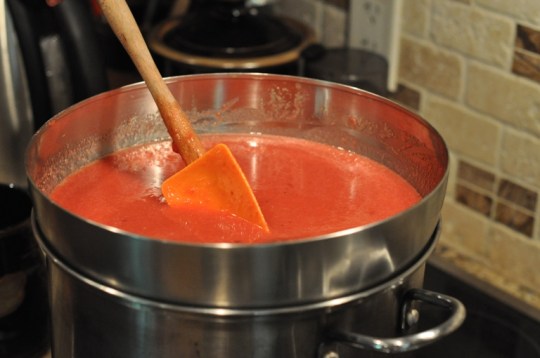
- The curd is ready when it coats the back of a spoon. This should take between 20-30 minutes. NOTE: The triple batch still only took about 30 minutes
- Remove the vanilla bean pieces
- Pour into hot sterilized jars leaving 1/4″ headspace; add sterilized snaps and lids
- Process in a hot water bath for 10 minutes
- Let jars stand in the hot water bath for 5 minutes before removing
Put up Total:
- 2 x 473 mL reused jars
- 2 x 375mL regular diamond jars
- 4 x 250mL regular diamond jar
Sauerkraut
Last but not least for today…SAUERKRAUT. We started our first batch of sauerkraut on August 8th well doing our tomatoes and I forgot to post it. But, while skimming the foam on the first batch and occasionally sampling it we decided it is too tasty not to repeat.
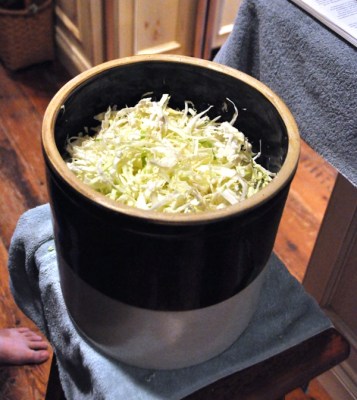
RECIPE FOR SAUERKRAUT:
- Use a crock or a large stainless steel pot.
- Layer thinly sliced cabbage and salt into the crock using a ratio of 3 tbsps of pickling salt for every 5 lbs of cabbage. We use a cerated knife for cutting the heads of cabbage. You can use your food processor but this may leave the pieces a lot shorter…think about how you would like the finished product and then decide. We slice 5lbs of cabbage at a time and pack into the crock. This allows the brine to form while we slice the next 5lbs.
- Wait 15 minutes between layers so that natural brine/water will form.
- The cabbage will naturally sweat creating liquid/brine ~ make sure this covers over all of the cabbage. NOTE: if it does not make enough liquid create a salt water brine using 4 cups water to 4.5 teaspoons pickling salt. Bring to a boil dissolving salt and cool to room temperature before adding to the cabbage.
- Place an inverted plate on top of the cabbage with two 1 litre jars full of water to keep down, cover with a towel and place in a cool place.
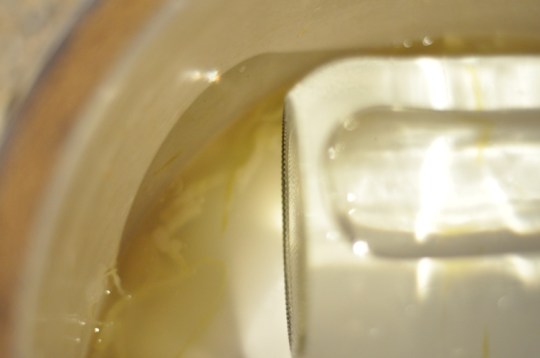
- Skim foam, bloom, or scum daily.
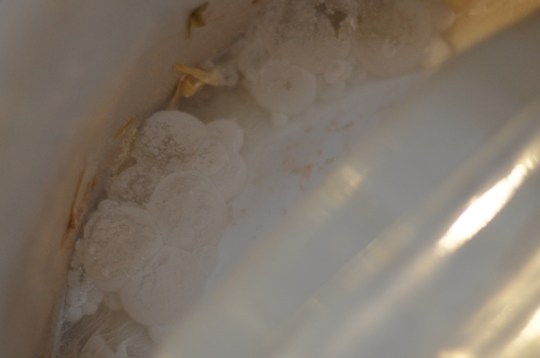
- Keep between 70-75 degrees Farenheit.
- This process will take between 3-6 weeks (we’ve done 4 batches ~ all fermented for 6 weeks and a few we left a little longer). The sauerkraut/cabbage will still be crunchy at 6 weeks but may start to soften if left longer.
- There are two methods for processing…they are as follows:
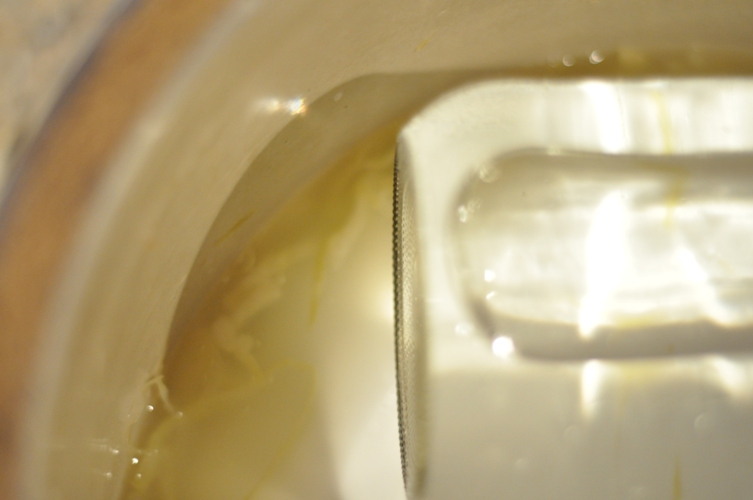
Method 1 ~ Raw-Pack Method:
- Prepare for water bath canning.
- Pack sauerkraut, with brine, into hot sterilized jars, leaving 1/2″ headspace (we sterilize our jars in the oven for 30 minutes at 250F). Remove air bubbles and adjust headspace, if necessary, by adding more brine.
- Wipe rims (using a damp paper towel), place lid and ring to finger tip tight on each jar and process 500mL (pint) jars for 20 minutes and 1L (quart) jars for 25 minutes in hot water bath. Turn off heat, remove lid and let stand for 5 minutes before removing jars. Check seal, label, and store.
Method 2 ~ Hot-Pack Method:
- Prepare for water bath canning.
- In a large stainless steel saucepan, bring sauerkraut, with brine, to a simmer over medium-high heat. Do not boil. With 15-25 lbs of cabbage this will probably have to be done in batches. Note: this is where sterilizing your jars in the oven will help free up an element on your stove so you can heat two batches at once and it will keep your jars hot.
- Hot-pack sauerkraut and brine into hot sterilized jars, leaving 1/2″ headspace. Remove air bubbles and adjust headspace, if necessary, by adding more brine.
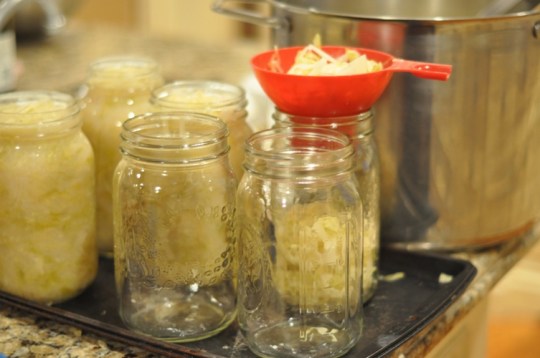
- Wipe rims (using a damp paper towel), place lid and ring to finger tip tight on each jar and process 500mL (pint) jars for 10 minutes and 1L (quart) jars for 15 minutes in hot water bath. Turn off heat, remove lid and let stand for 5 minutes before removing jars. Check seal, label, and store.
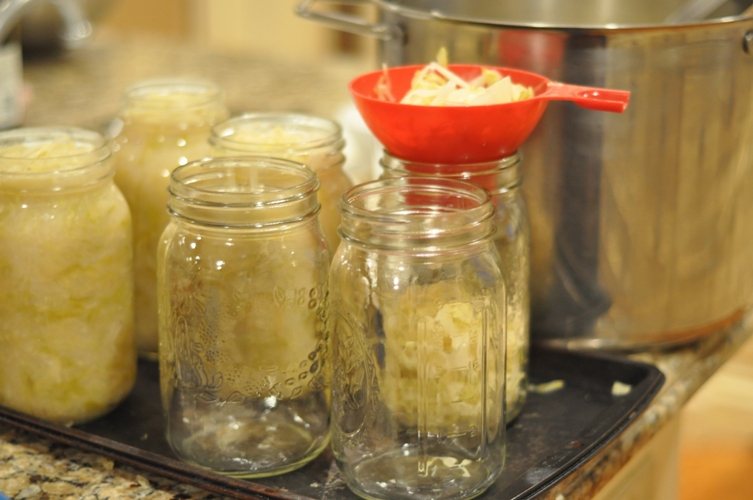
We have only used the hot-pack method and it seems to work well. To prevent excessive air bubbles, we fill the jars by layering the sauerkraut and packing each layer down well. Pour liquid in at the half way point and again when your are almost at the top. You will get approximately 6 x 1L jars when you start with 20lbs of cabbage.
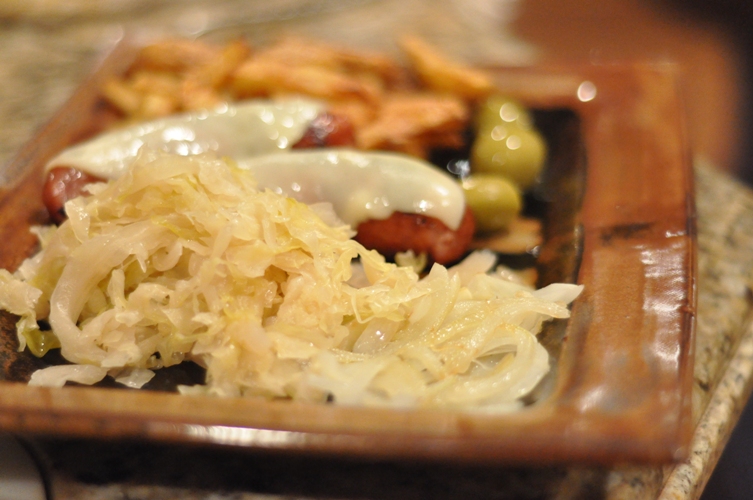
Making sauerkraut is so much fun! It is a tasty experiment in the mysteries of fermentation, a process that was discovered by our ancestors hundreds of years ago. Enjoy your sauerkraut as a side, in a reuben sandwich, with sausages, or even in some homemade bread. Once you make your own you will never want to buy it again!
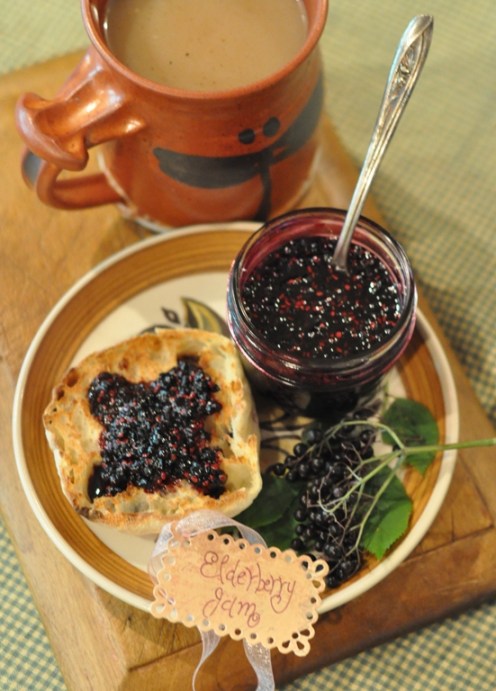
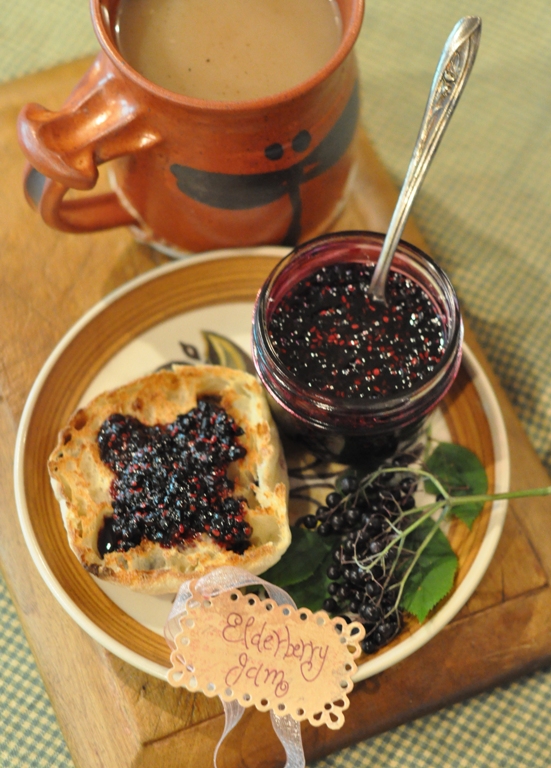
Elderberry Jam
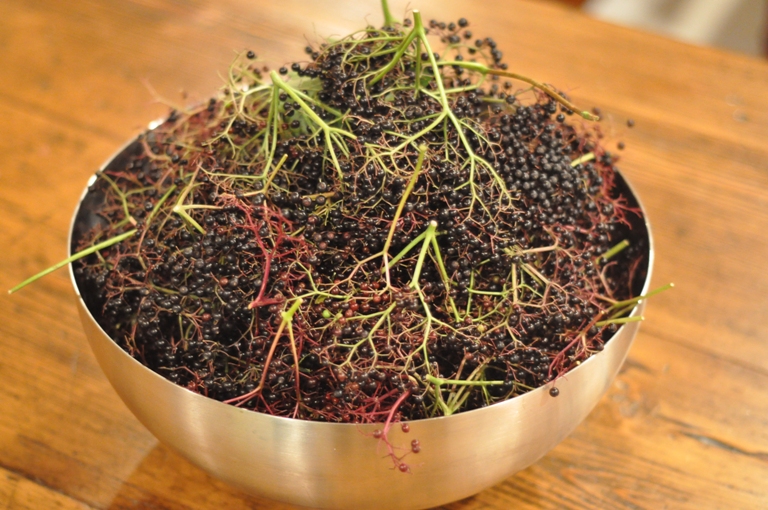
A lot of work goes into this jam. I have spent over 15 hours stemming these little beauties. We were so successful foraging yesterday I don’t think we realized at the time just how many berries we had collected. I have stemmed 36 cups of berries…my hands are stained burgundy with their juice but boy is the jam worth it!
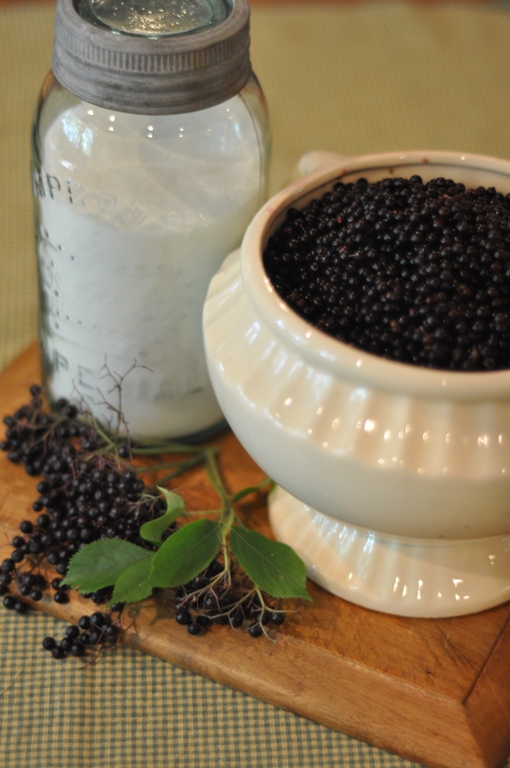
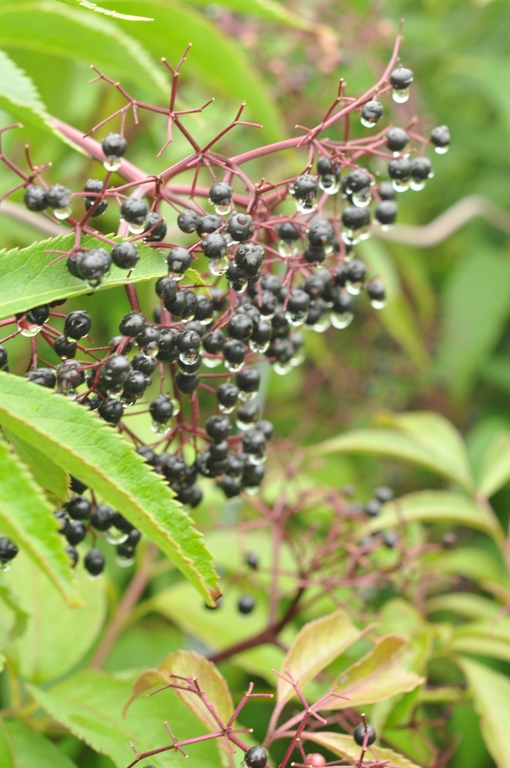
These little guys grow all over Muskoka and foraging for them becomes very addictive. Unfortunately, they are not a berry that tastes good on its’ own. While they are perfectly safe to eat out of hand they have a bitter taste. However, the addition of sugar transforms them into a wonderfully tasty treat. Well worth the effort!
RECIPE FOR ELDERBERRY JAM:
- 8 cups of stemmed and washed elderberries
- 1/4 cup white vinegar
- 6 cups of sugar
- Stem and wash berries. The process of stemming these berries is time consuming but makes for fast work with help or to keep hands busy while watching tv.
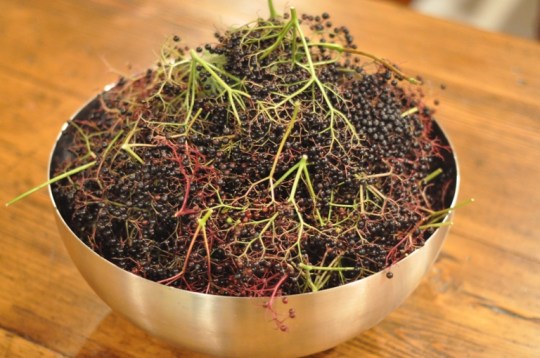
- Place berries in a large stainless steel sauce pan and using a potato masher crush to release their juices.
- Add vinegar and sugar to the crushed berries and cook on medium high until the sugar has dissolved.
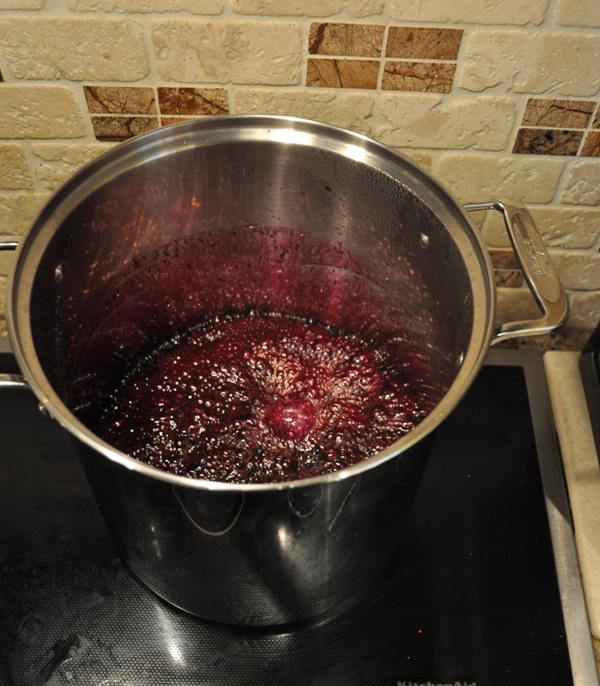
- Then, turn up the heat and bring to a boil, stirring frequently to prevent the jam from sticking to the bottom.
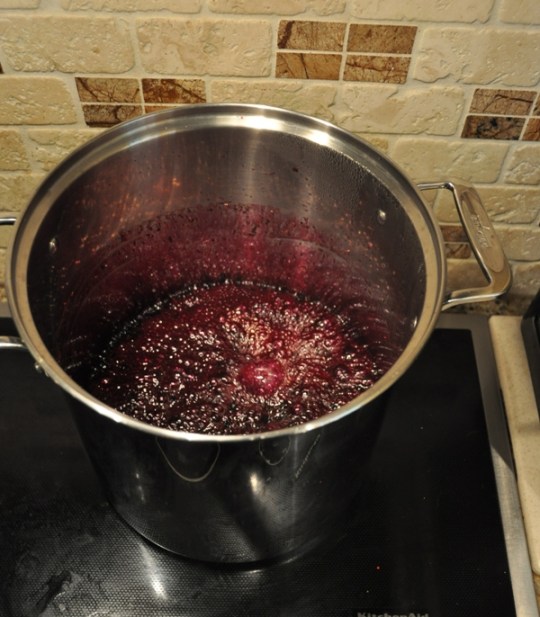
- Boil hard for approximately 35 minutes or until the setting point has been reached at 220F. Perform a jell test by placing a drop of jam on a frozen plate and returning the plate to the freezer for 1 minute. Remove and using your finger nudge and/or separate the jam. If it is ready it will retain its’ shape.
- Pour hot jam into hot sterilized jars leaving 1/4″ headspace. Remove air bubbles, wipe rim, top up with additional jam if necessary and add sterilized snaps and lids securing until resistance is met and they are finger-tip tight.
- Process in hot water bath for 10 minutes. When time is up turn off heat and remove the lid, leaving the jars to stand in hot water bath for 5 minutes before removing.
- Check seal, label, store, sample and enjoy!
Put up Total:
- 7 x 250mL regular mouth jars
- 3 x 250mL wide mouth jars


 Putting Up With The Turnbulls