In the Garden
Sometimes life gets in the way of all of the other things you enjoy doing…like telling you what we’ve been doing!
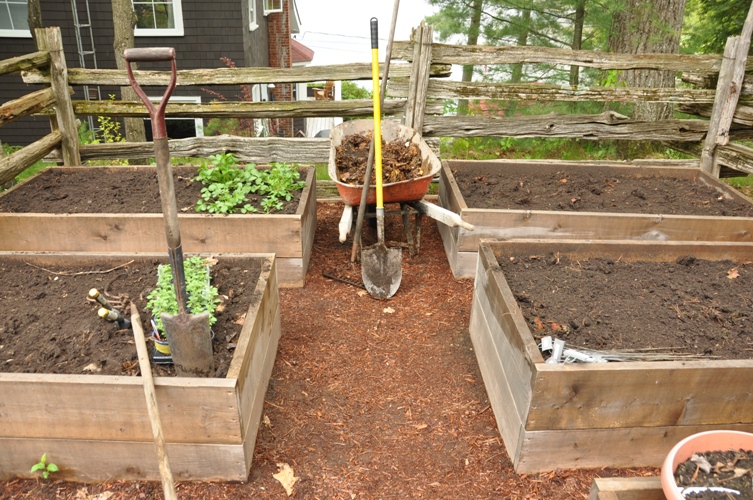
Lately, Matt and I have been busy catching up on all the things that slip through the cracks while you are away on a month-long journey. Now, back in the saddle and swing of things we’ve accomplished a number of our spring tasks. We have added the compost to our raised garden beds, weeded and turned them over, planted all our vegetables, purchased two new and amazing tower water stands, moved and spread tons (and I mean tons) of soil to re-seed our lawn, spread mulch over our flower beds, planted our annuals, and we are now finishing up a rather large section of hand railing. After this weekend, we should be able to breathe a sigh of relief and get back into the kitchen to prepare for the canning season ahead. Thankfully, everything here in Northern Ontario is a little bit behind (like us) and even our strawberries are just ready to pick!
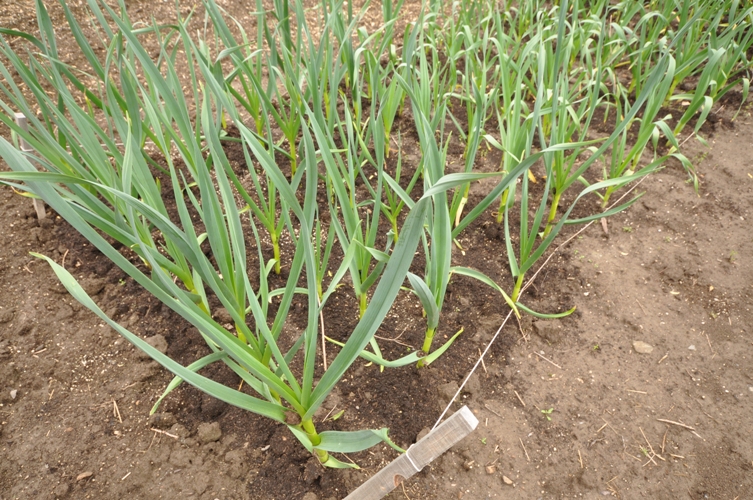
Garlic Planted in the Fall at Suzann's
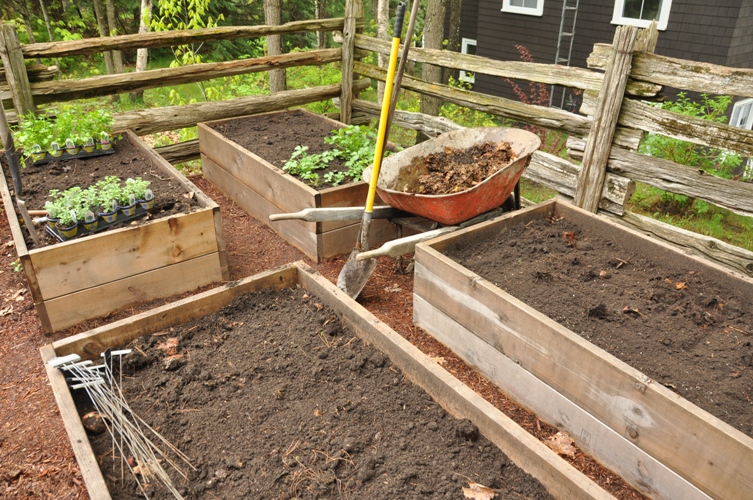
Adding Compost, turning over the soil, and planting herbs
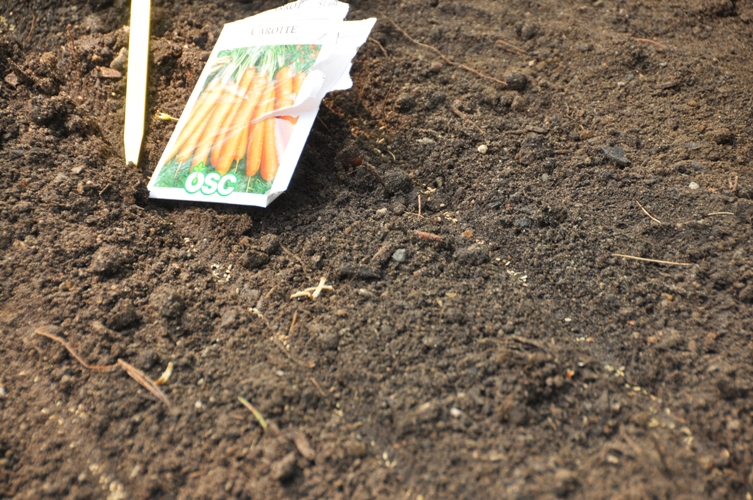
Planting carrots seeds
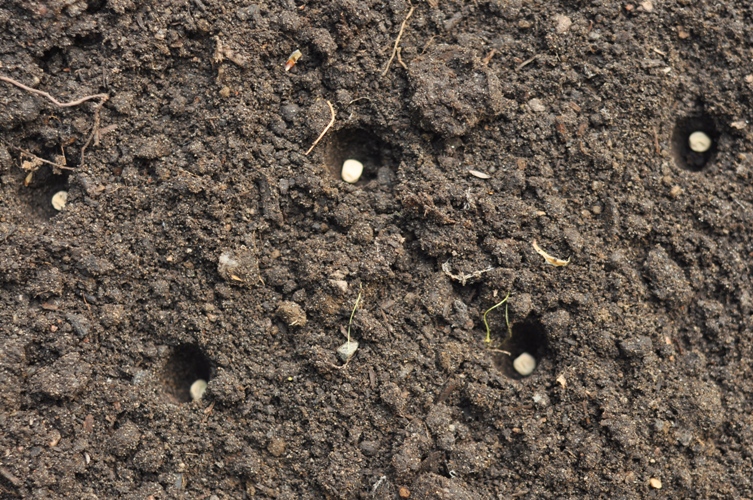
Planting snow peas
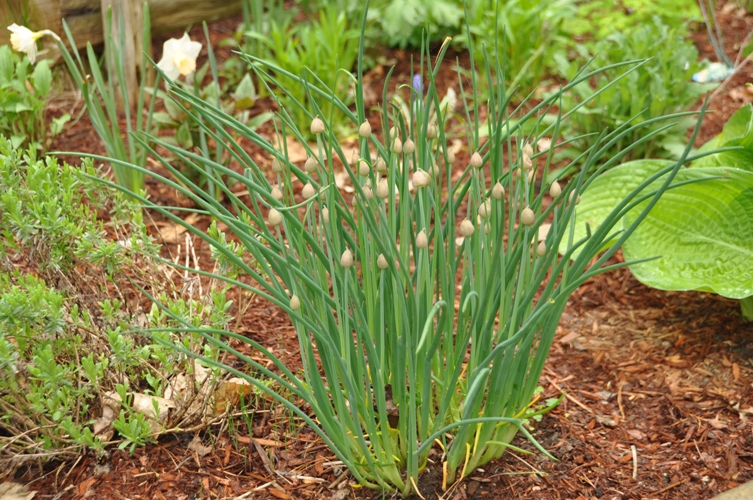
Chives survived another winter and look better than ever
Our garden was planted several weeks ago and looks a lot different now. I will update with some progress photos once it stops raining…it’s been raining for 3-4 days. A wet spring indeed which should mean plump wild raspberries and blackberries later on!
Rhubarb Strawberry Pie ~ Mmmm…Lip Smacking Good!
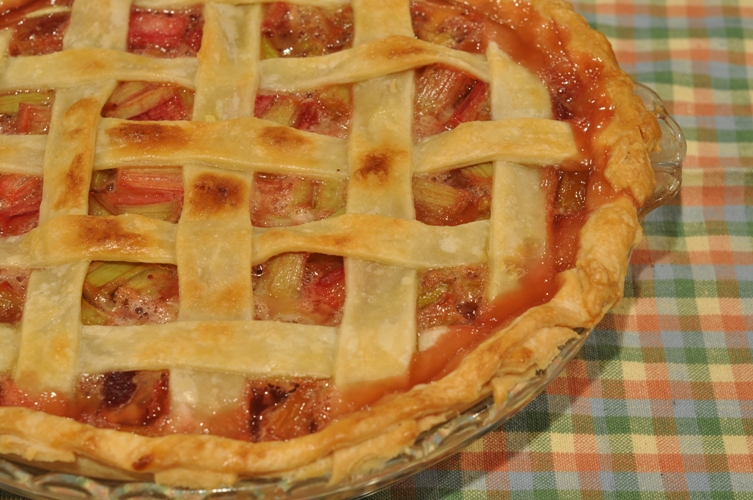
When it comes down to it there really is nothing better than a good olde fashion pie made with fresh rhubarb and some whole strawberry preserves. We wish you could have been with us to gobble this down but take comfort in the fact not a crumb was wasted!
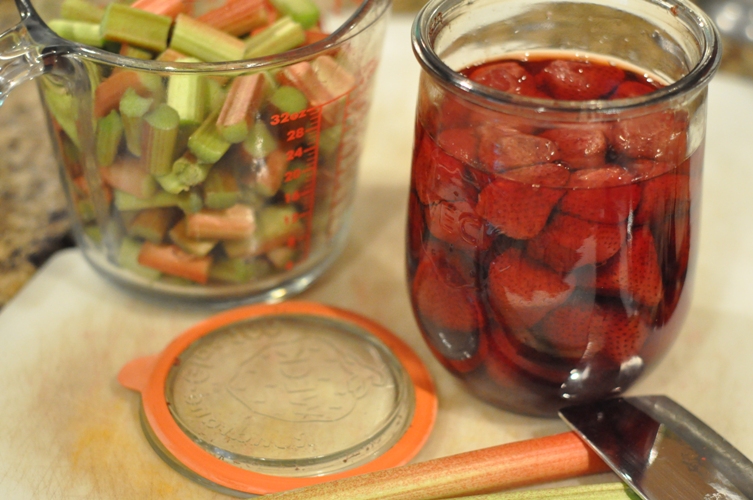
RECIPE FOR RHUBARB STRAWBERRY PIE:
- 3 cups fresh rhubarb; cut into 1″ lengths
- 1 x 500mL of preserved whole strawberries in light syrup
- 3/4 cup white sugar
- 1/2 cup flour
- 1/4 tsp salt
- Combine sugar and rhubarb and let stand for 20 minutes.
- Combine all other ingredients.
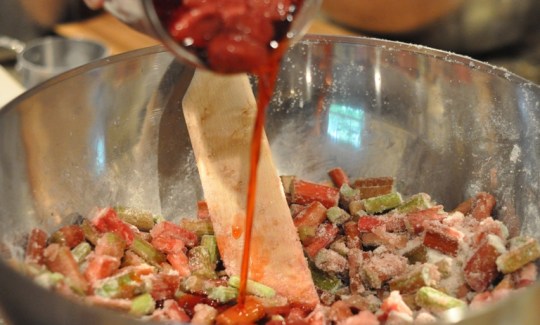
- Pour mixture in empty pie shell. Note: we use the Tenderflake pastry recipe but use your own favourite recipe.
- Place top crust on and cut slits to vent. Note: cutting slits is unneccessary with the lattice top.
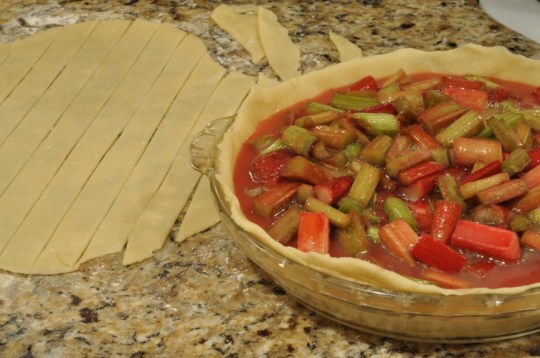
- Bake in pre-heated oven at 425F for 30 minutes, then lower heat to 350F and bake for another 20-30 minutes. Note: check during the final baking stages as everyone’s oven cooks differently.
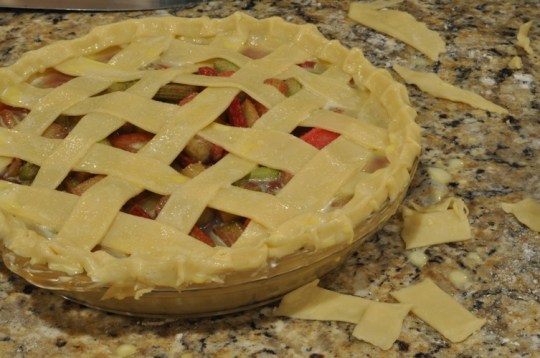
- Cool completely before slicing.
- Serve and devour.
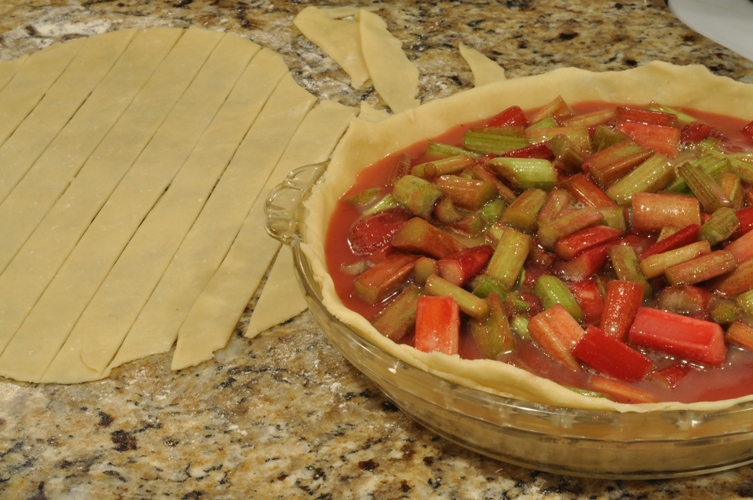
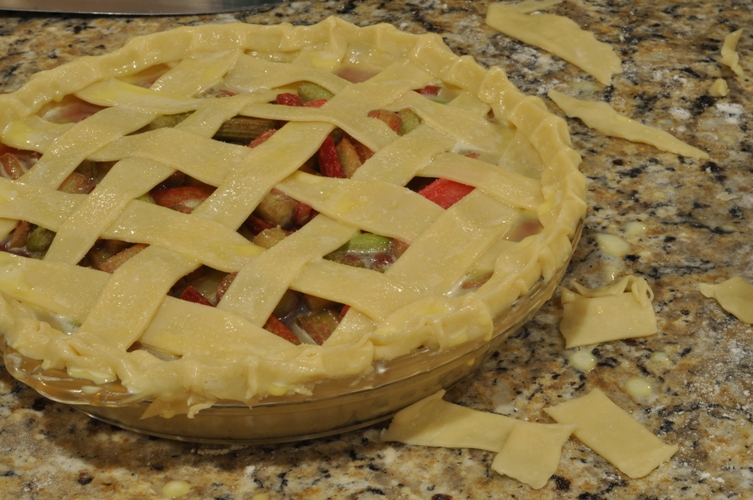
Rhubarb Decimated…Preserves and Pie Galore!
Last weekend, Matt and I dropped in to visit some very special friends. You know the kind of friends most people dream of having…sharing, thoughtful, giving of their time, energy, and love, different enough to be interesting but similar in all of the important ways. Jon and Suzann are the best of the best ~ “salt of the earth” and we are thankful to have them in our lives. Okay, enough of the mushy stuff, you get the point, we love these people.
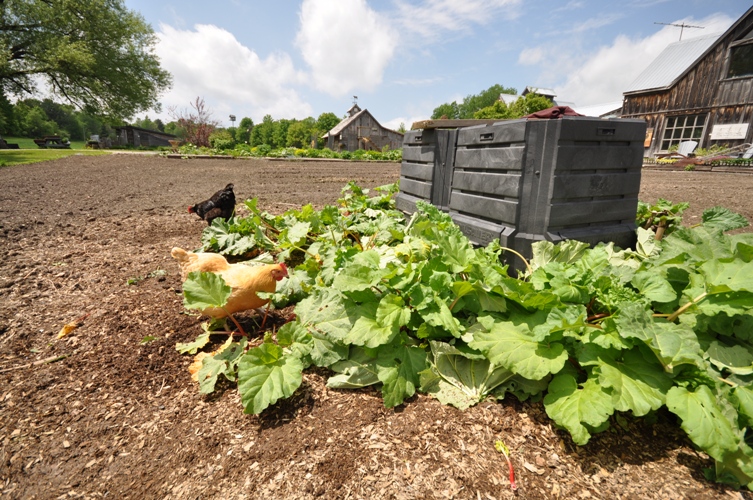
Suzann and Jon, grow an incredible garden of perennials, veggies, and annuals. They have a picturesque old farm-house surrounded by fields and forest and an unbelievably breath-taking garden that showcases Suzann’s artistic talent as a gardener as well as being the home of Jon Partridge Pottery and The Artful Garden. Together they make a formidable team and create an environment easily described as heaven on earth.
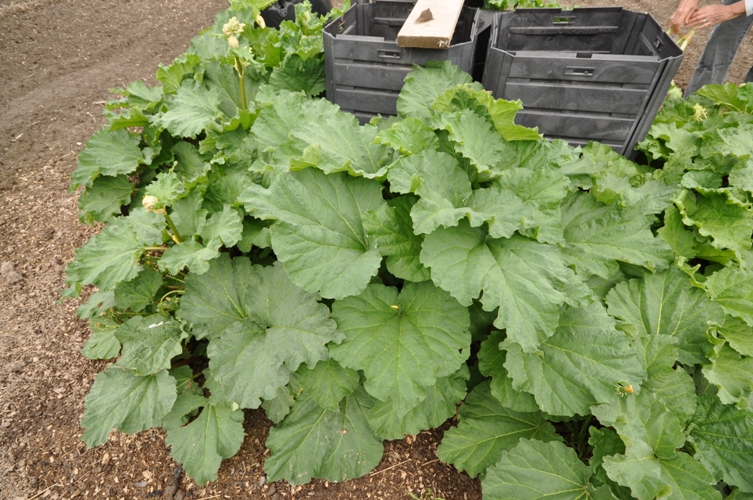
Suzann also graciously gifts us enough veggies to keep a small army fed and we thankfully accept these gifts to put up each season. She has rhubarb growing in HUGE massive bushes. How else would Suzann do it!?! She’s not only got green thumbs but fingers and toes as well. Her rhubarb plants were the largest I’d ever seen and totaled about 30 square feet. And, she kindly balded the patch and gave us the spoils.
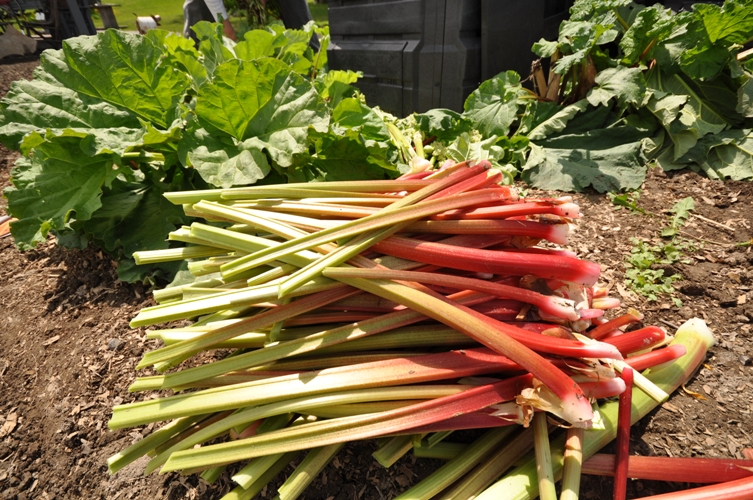
Now, what to do with 25lbs of rhubarb stocks. First, you reminisce about when you were a child, eating the bitter-sweet stocks (dipped in sugar), cutting and preparing them with mom for a pie, or maybe freezing some for a sample of summer in the dead of winter. Once the memories have stopped flooding back you’ve got to get to work. Washing, chopping, and sugaring up for some good olde fashioned preserves…rhubarb in light syrup.
RECIPE FOR RHUBARB IN LIGHT SYRUP
- 5lbs or 16 cups of rhubarb; sliced in 2.5 cm or 1″ pieces
- 3 cups sugar (add 1 cup more or less depending on the tartness of your rhubarb)
- Wash rhubarb well, remove leaves, and cut into 1″ pieces.
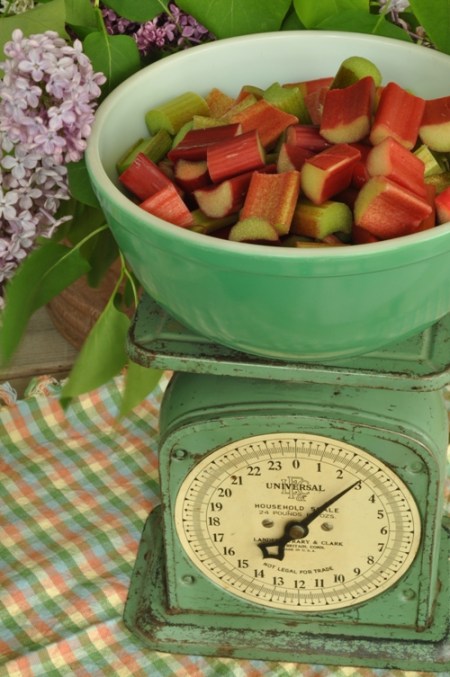
- Toss with sugar, cover, and let stand in a non-reactive bowl for 4 hours.
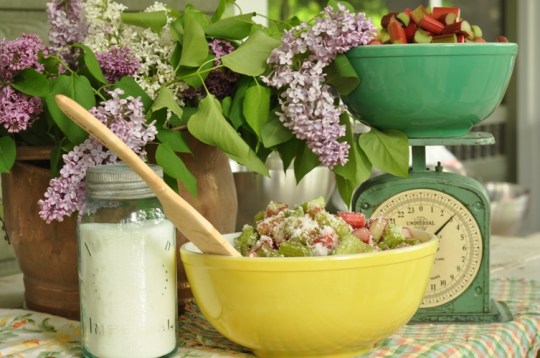
- Prepare for water bath canning ~ sterlize jars in the oven at 250C for 30 minutes.
- Transfer mixture into a large stainless steel pot.
- Bring to a boil over medium heat and boil for approximately 30 seconds.
- Remove from heat and ladle hot rhubarb and liquid into hot jars, leaving 1/2″ headspace. Note: if necessary top each jar up with boiling water.
- Remove air bubbles, wipe rim with a damp paper towel, center lid on jar and adjusting ring until it is finger-tip tight.
- Process both 500mL (pint) and 1L (quart) jars for 15 minutes.
- Remove canner lid, wait 5 minutes, then remove jars. Let cool, label, and store.
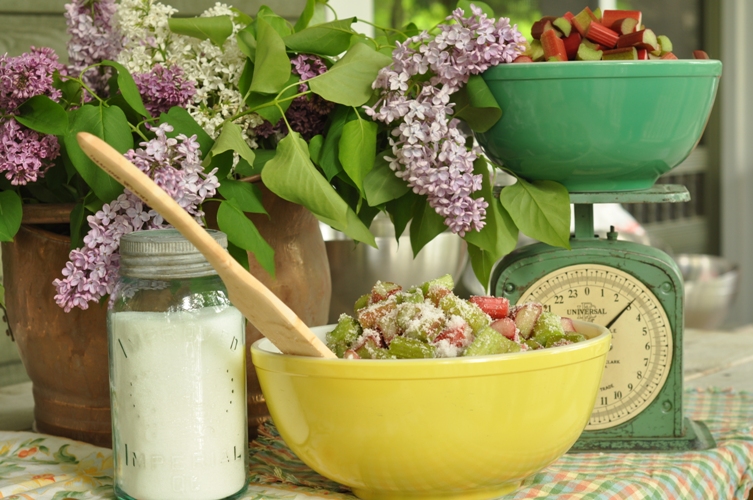
Put up Total (3 batches):
- 2 x 1L Weck Tulip Jars
- 4 x 1L regular mouth mason jars
- 4 x 500mL regular mouth mason jars
A recipe for the most delicious rhubarb pie to follow…so check back!
Foraging, Fiddleheads, & Ferns
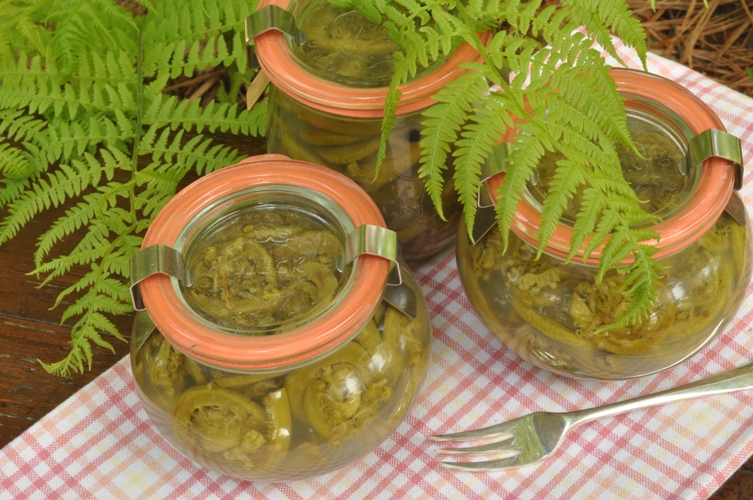
Well, folks we are back on Canadian soil and officially back in “canning mode”…how could we not be with the spring bounty that is ready to burst at the seams almost everywhere you turn. We were lucky enough to make it back from Vietnam in the knick of time to catch the very last of the fiddleheads.
Fiddleheads are the furled fronds of young ferns and are an excellent tender veggie which can be prepared as a side dish or PICKLED to preserve and enjoy as a special treat in the months to come.
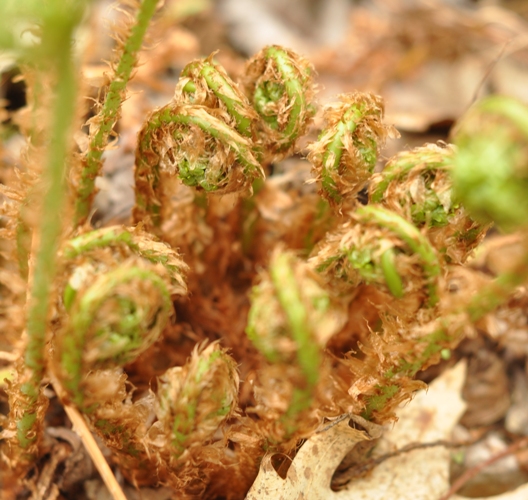
Foraging for all kinds of different foods (rosehips, choke cherries, wild raspberries, milkweed pods, etc) is a passion for us. We love being outside with our dogs, in nature taking a break from the rest of the world and when you can do that and hunt for food, it’s even more fun. Living in Muskoka, ostrich ferns as well as a number of other native fern species grow wild along roadsides, in the forest, and on trails. Keeping your eyes out for abundantly growing fern patches is best done all year. We note where the ferns are thickest so harvesting in the spring can be done with relative ease. It can be a time-consuming project if the ferns are too spread out or the patch is immature.
Before foraging for wild foods be sure to do your homework. There is nothing worse than picking the wrong thing. Although, we will not go into great length here about which ferns are edible etc…we recommend you check out Wildwood Survival. It is an interesting site with great photos and information about the appropriate ferns to harvest. Also, remember the importance of sustainable harvesting and never pick more that three fiddleheads per plant. Each fern produces about 7 fronds and over harvesting will kill the plant.
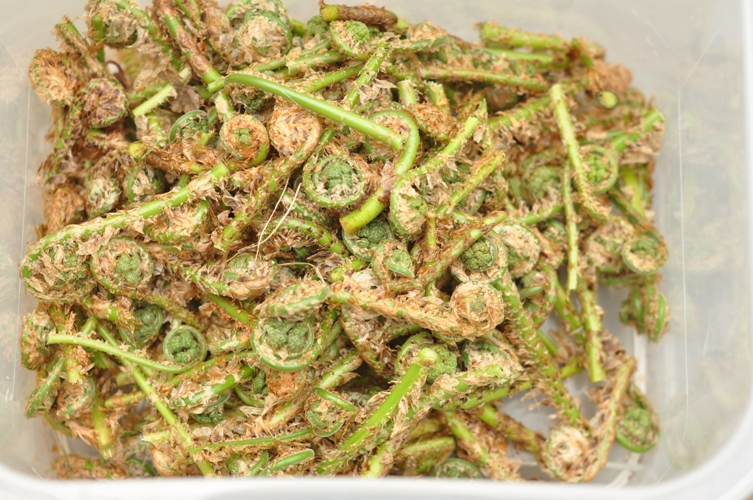
But, if foraging is not your thing and you still want to try making this very unique and delicious pickle don’t worry. Most of you will be able to find fiddleheads at your local farmers’ markets or even in the grocery store. The nice thing about the ones you buy is that the brown paper like coating has been washed away and they just need a quick rinse to be ready to go. The foraged fiddleheads require quite a bit of washing to remove this paper wrapper before being able to eat, cook, or preserve. That being said, we still love to forage and the time spent together with our dogs in the forest is time well spent!
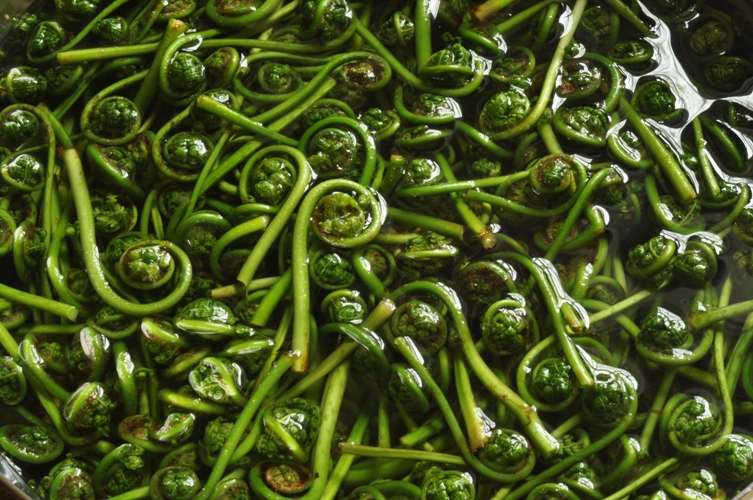
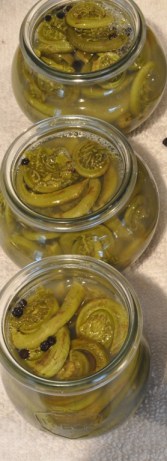
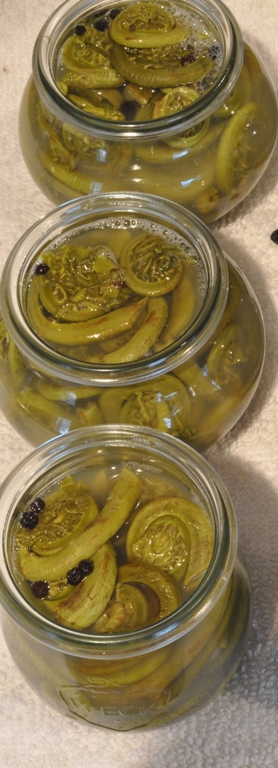
RECIPE FOR FIDDLEHEADS PRESERVED IN LEMON:
- 4 cups fiddleheads, paper hulls removed, washed and ends trimmed off
- 3/4 cups of bottled lemon juice
- 1 1/4 cups white vinegar
- 1/4 cup white cane sugar
- tbsp of pickling salt
- a few cloves of garlic to be removed before jarring
- 1/2 tsp black peppercorns
- Prepare for water-bath canning. Note: we sterilize our jars in the oven at 250F for 30 minutes.
- Mix all ingredients well (except fiddleheads).
- Bring to a boil
- Add fiddleheads and return to a boil
- Pack fiddleheads into hot sterilized jars
- Ladle boiling brine into jars leaving 1/4″ headspace
- Clean rims with a paper towel, add snaps and lids
- Process in boiling hot water bath for 10 minutes
- Remove lid, let jars stand in the hot water bath for 5 minutes, remove jars, check seals, label, and store.
Put up Total (2 batches):
- 4 x 250mL Weck deco jars
- 2 x 25omL Weck tulip jars
Vietnam ~ Coffee Capital of Asia
Vietnam is the world’s second largest producer of coffee beans, after Brazil. Robusta beans account for the vast majority of beans produced in Vietnam, although the production of higher quality Arabica beans is on the rise. Since 2000, the country’s obtain a notorious reputation for driving down world coffee prices by flooding the market with inferior beans. These inferior beans get combined with higher quality beans before finding their way onto supermarket shelves.
Okay, so I knew going into Vietnam there would be an abundance coffee but that very little would be worth bringing home. What I wasn’t expecting to find was the Vietnamese equivalent of arguably the most sought after and expensive coffee in the world, Kopi Luwak. Weasel coffee or Ca Phe Chon is the name given to a select number of coffee beans that have been lucky enough to pass through the digestive tract of a Vietnamese civet cat. At a $120 a pound its undoubtedly the worlds most expensive poop.
Now to those of you who have never travelled to Vietnam, I envy your intelligence, but you should know that things (all things) in Vietnam are cheap and I mean really cheap. If the Vietnamese actualy had a code of ethics you would feel like your were stealing. Bargaining is the name of the game and it’s the difference between paying one fifth (if you don’t) and one tenth (if you do) of what you pay at home.
Regular readers of this blog know that we Turnbulls like to roast our own green coffee beans, believing this ensures the most flavourful cup of coffee. And, what the hell else are we to do with all our spare time! So, after spending our first night in Hanoi we set out bright and early on a weasel hunting expedition, instead of a rifle we armed ourselves with a 10mm lens for blog photos and a fist full of Vietnamese dong (about forty bucks) for our trophy.
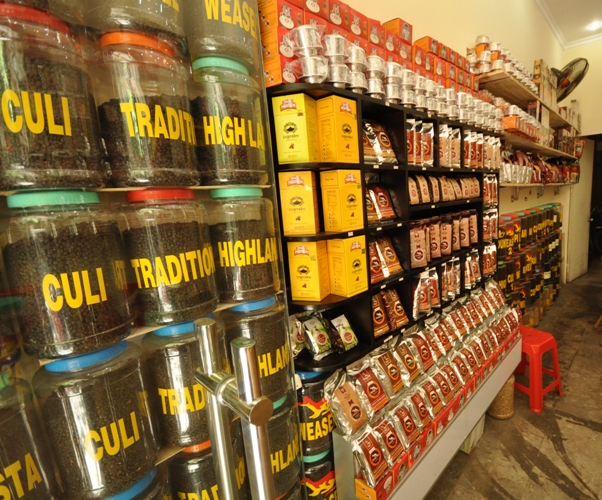
Finding a coffee shop in Hanoi is about as difficult as finding a Tim Hortons in Orillia, there’s at least one on every block. Finding the green beans you want is another story. “Do you have any green weasel beans?” I would ask the shop owner. Recognizing the word weasel the shop keeper would immediately reach for a burlap sack or large plastic tub containing some very oily over roasted beans, insisting that you smell them. After taking a whiff of the beans we would kindly say no thanks to the dejected shop keeper, dumbfounded that we could resist the aroma and not just hand over our cash. We must have entered a half-dozen shops before finding one that actually had green beans on display. Finally we had our prey in sight.
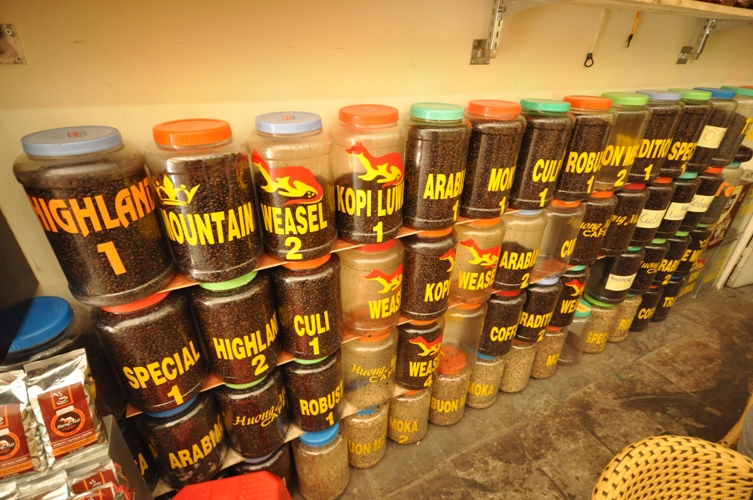
Insisting that we try the weasel coffee before purchasing, the shop owner’s daughter set about preparing a cup. The girl opened the fridge and reached for a water bottle containing what we could only assume was some very concentrated cold brewed coffee, which she diluted with hot water before serving. The pungent earthiness was immediately unique even though the dark roast flavour tried to obscure any other notes. We tried other coffee too, each from its own separate water bottle, but none as memorable as the weasel. In the end we purchased two kilos for $17.50 each, a dollar off the asking price, which is not much but it’s kinda like bargaining at the Goodwill. It was already $265 dollars cheaper than you would pay in Toronto. We also picked up a couple of individual metal coffee filters, these are nifty little gadgets that produce the strong little coffees found at most restaurants and cafés throughout the country.
After spending three weeks in Vietnam we returned to Hanoi before flying home to Canada. Not knowing whether or not we’d ever return, we stocked up on weasel, grabbing another four kilos. Upon arriving home we quickly set about researching the weasel coffee and how we might be able to get some beans shipped to Ontario. We found a lot of conflicting info online about weasel coffee and were surprised to find out that certain companies in the U.S. and Vietnam are producing weasel beans using a synthetic process which mimics the enzymatic action of the civet. Some reports state, this coffee is indistinguishable from the real thing and most beans sold as weasel in Vietnam are not real. Whether or not green beans are more likely to be authentic, we’ll probably never know.
I’m going to sum up this post with two final thoughts. In an ode to Andrew Zimmern ” IF IT TASTES GOOD DRINK IT.” And secondly just think if dog shit was this expensive we’d all be millionaires!…..useless dogs.
Market Culture in Vietnam
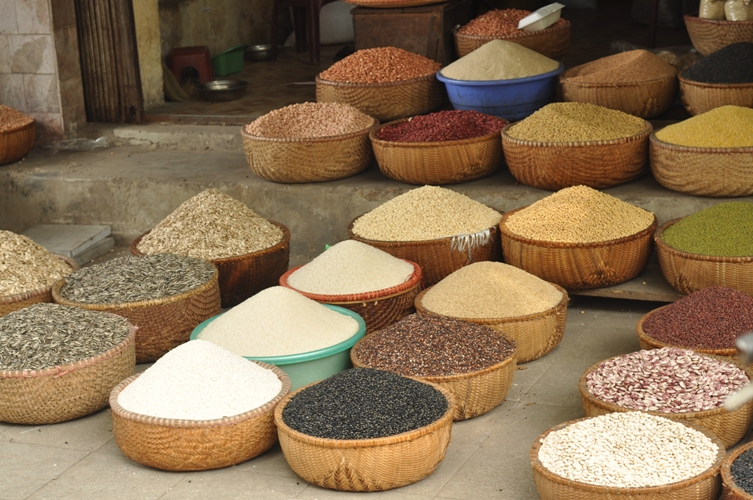
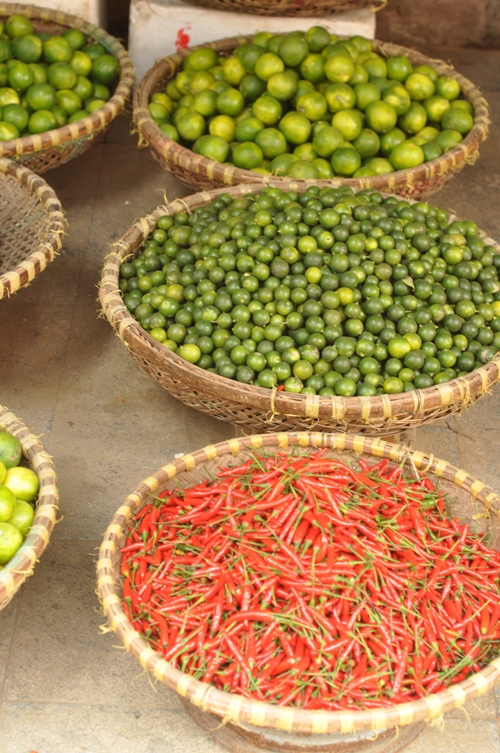
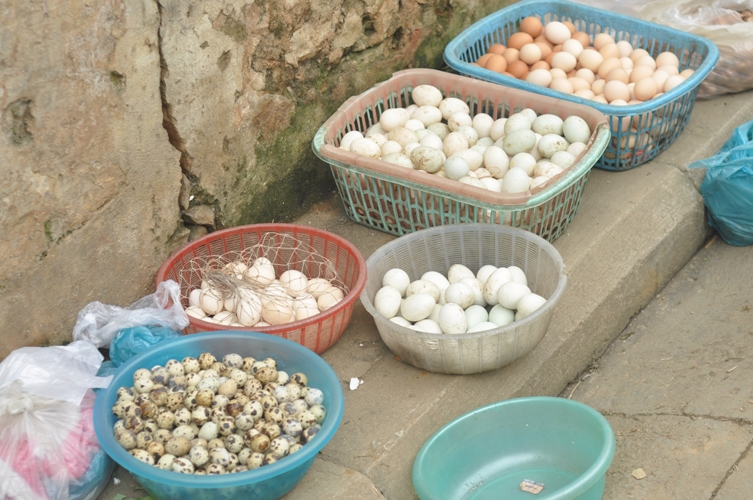
Market culture in Vietnam is still alive and well. The hustle and bustle of Vietnam’s open markets can be summed up in one word…chaotic. They are a very busy meeting place for locals (and foreigners) to trade, sell, and negotiate their overflowing abundance of meats, fruits, vegetables, flowers, spices, and plastic knickknacks. It seems like everything and anything under the sun goes at these markets. And, even in the indoor markets, motorbikes frequent the halls whizzing, honking, and pushing their way through the traffic of pedestrians.
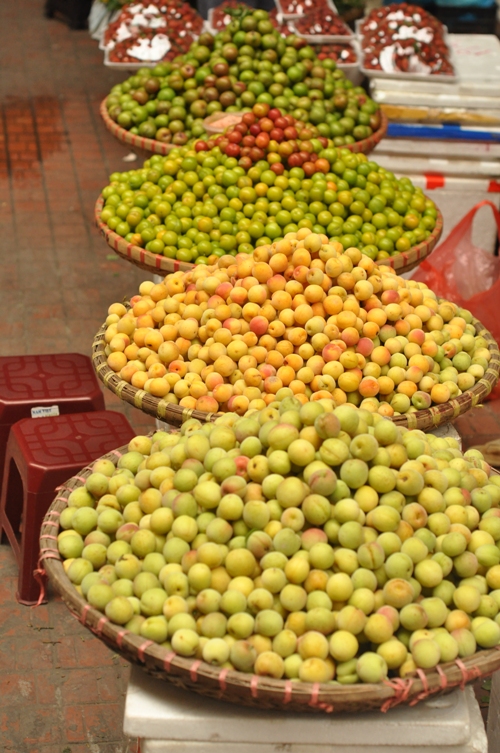
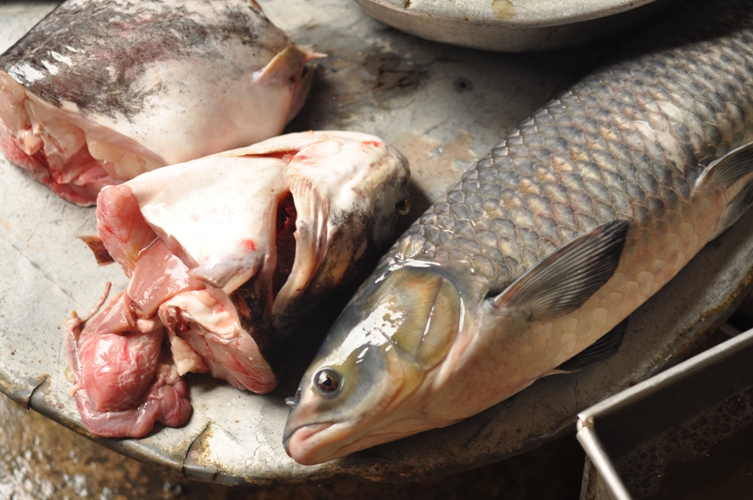
Every large city and even the smaller towns have active markets which act as their main shopping arena. Much like the malls you find in North America, these crowded open and closed market places provide the local Vietnamese population with a central place to pick up fresh food, clothes and shoes, appliances, linens, and even furniture.
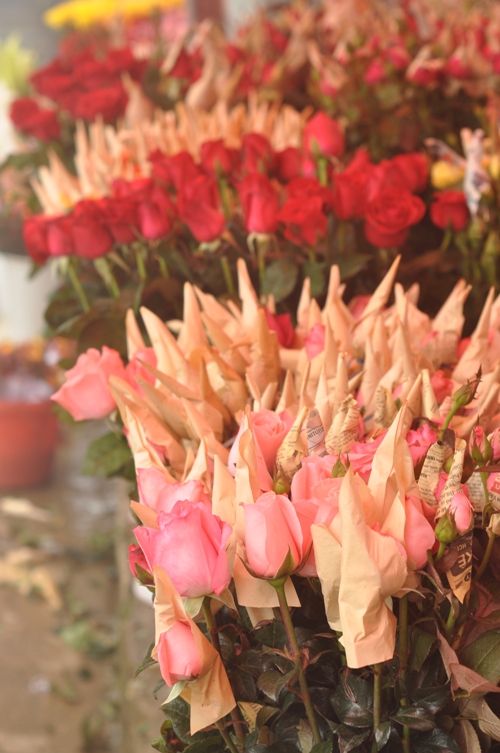
Foreigners travelling to Vietnam should definitely check out these markets to experience the vast variety of goods available from all over the countryside and beyond. Not to mention the smells that fill your nostrils and overload your senses in a way you’ll never get at the supermarket. It might have something to do with killing and butchering livestock in the street or the petrified (dried) seafood crowding the stalls, or maybe it’s the garbage like smell coming from the durian!?! Not really sure but whatever it is we garantee it’s not the overflowing baskets of garlic (’cause that smells good in comparison).

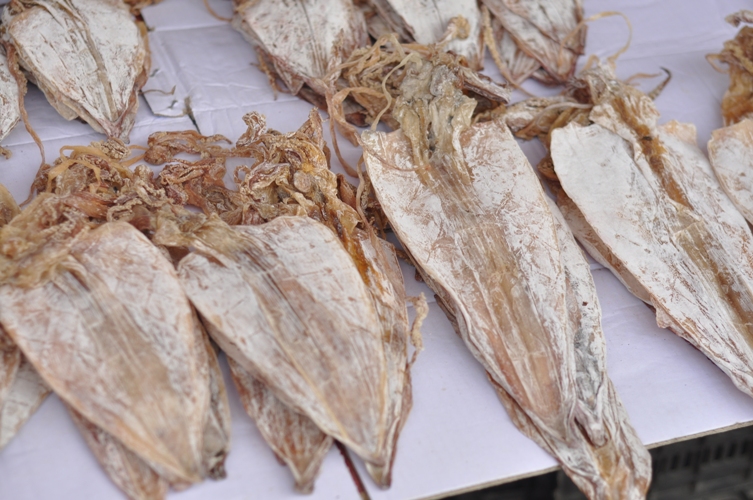

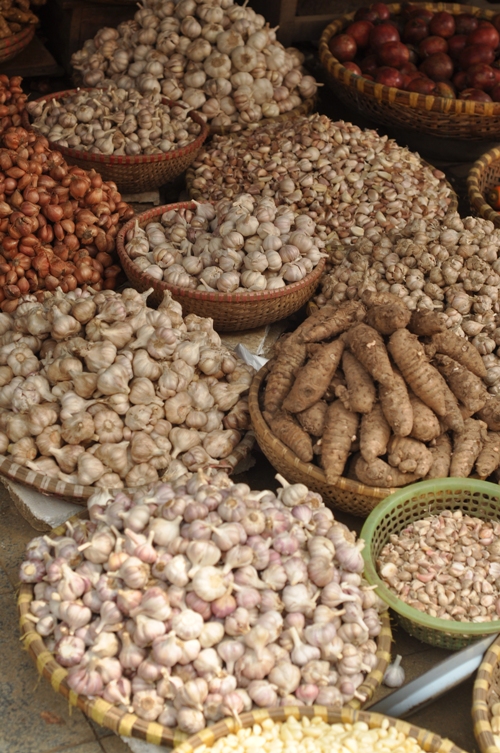
The art of negotiation is a must and something foreigners should not shy away from. It takes some practice to barter successfully but realizing that every vendor inflates their products prices by at least 200 percent ;if not, 400 percent is helpful when determining what an item should cost. Start at a reasonable price (much less than the item would cost at home), be a little bit flexible but determine what your bottom line is and hold your ground.
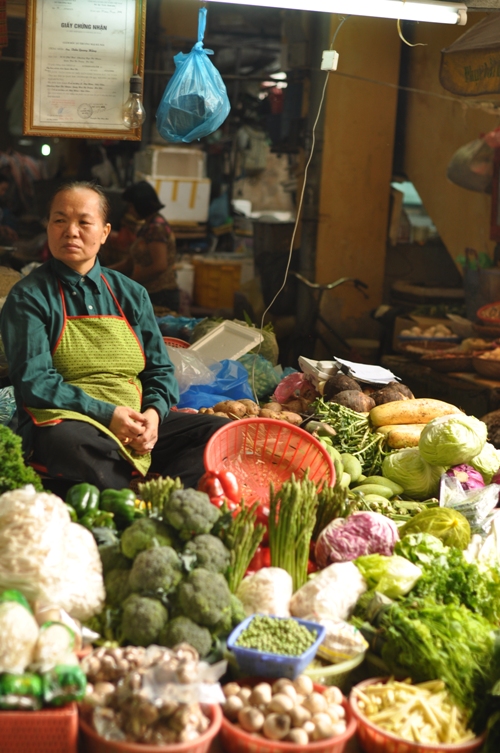
It is helpful if you smile, joke, and use a bit of flair when trying to settle on a fair price and there is absolutely nothing wrong with walking away and trying to negotiate with another vendor. Chances are there are many stalls selling the same item and you are bound to get what you want for a reasonable price.


 Putting Up With The Turnbulls