Stewed Tomatoes
Another canning adventure begins and we have high hopes for putting up as much food as we can during the season.
Although we started canning almost 3 weeks ago we are going to start here and periodically work backwards to show you the food we’ve already preserved. Today’s adventure started late and will end later but “Stewed Tomatoes” are one of my favorites. Just the ingredients alone remind me of picking in the fields of the Holland Marsh with my mom and siblings many years ago.
To start we blanch all of our tomatoes. Working in large batches of 1 bushel at a time we blanch, peel and core all of the tomatoes.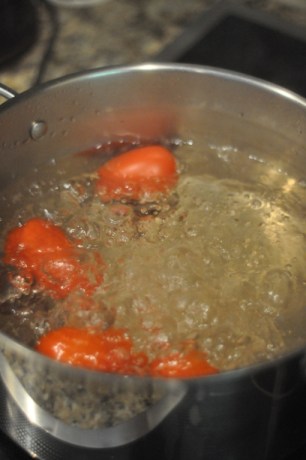
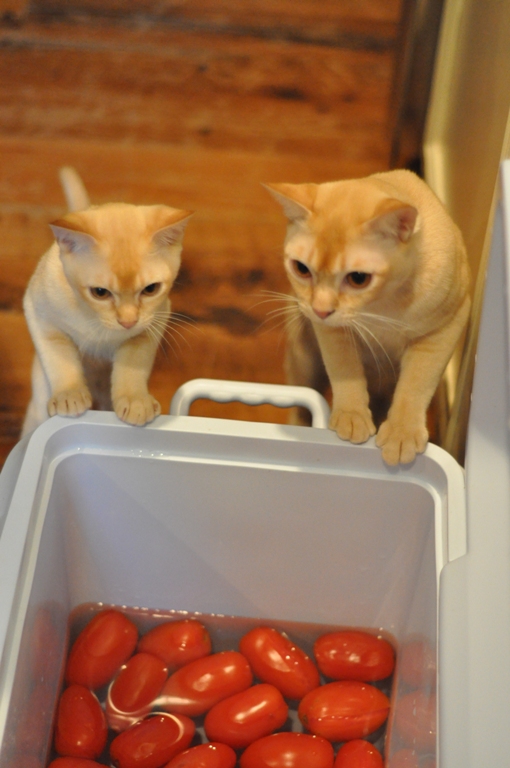
Sometimes we are lucky enough to have a little help. We consider these two our apprentices…they are both quick studies!
After all of the tomatoes have been prepared we move on to all of our other ingredients which include chopped celery, onion, and zucchini. You can substitute green pepper for the zucchini.
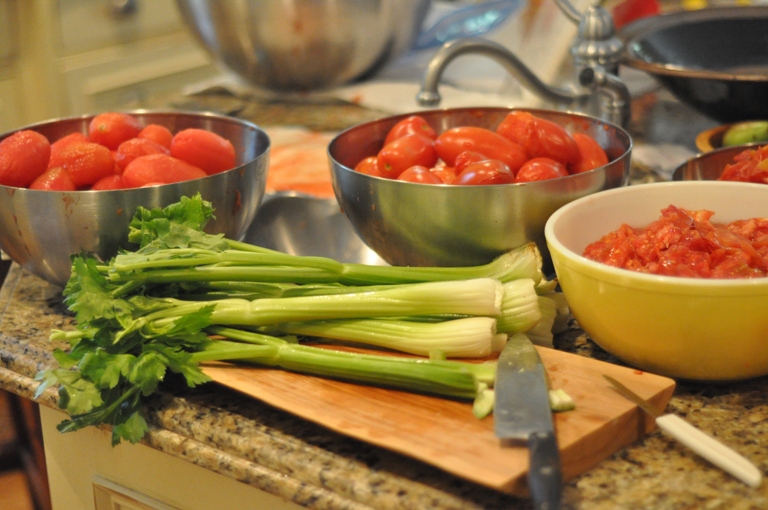
Then onto the stove to brew for 10 minutes before being placed in hot sterilized 1 litre jars.
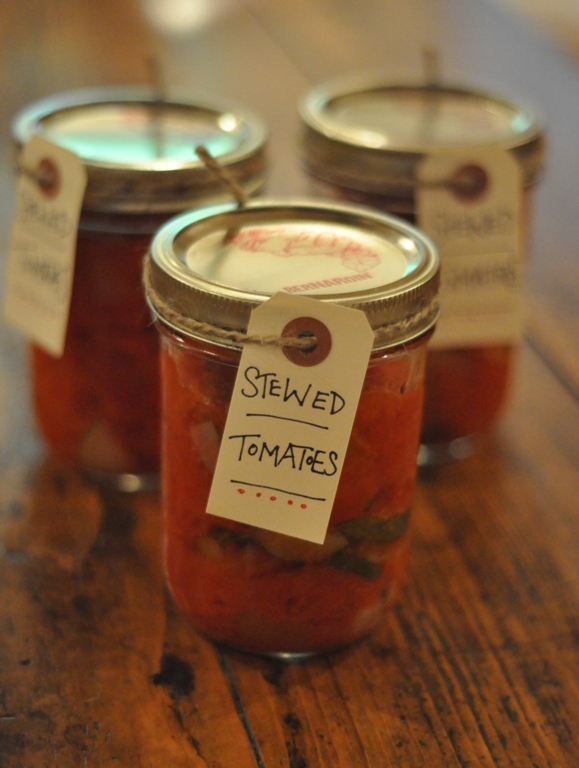
The finished product is so tasty on pasta with a little cheese or it can be enjoyed as a side dish. Either way the freshness of summer has been captured in a jar!
OUR RECIPE for STEWED TOMATOES:
- One Batch will equal approximately 4 x 1 litre jars
- 16 Cups of Roma Tomatoes – blanched, peeled, and cored. Cut into 1.5″ squares or to desired size
- 2 cups zucchini – quartered and sliced
- 1.5 cups celery – diced
- 1 cup onions – diced
- 2 tsps kosher salt – you can also use pickling salt but we think the kosher salt has a better favor…you be the judge
- Mix ingredients together and cook for 10 minutes or until vegetables start to soften
- Sterlize jars and add 1 tbsp bottled lemon juice for every 500mL jar and 2 tbsp lemon juice per 1 L jar
- Process in a PRESSURE CANNER following the directions.
Helpful hints:
- When blanching tomatoes score the end so that they do not have to spend as much time in the boiling water and make sure to place them in an ice water bath to cool quickly.
- The recommended headspace for pressure canning tomatoes is 1″ but we reduced this to 1/2″ because it was leaving so much unused space in each jar.
There are so many great blogs out there by other canning junkies and for me many of them have been super helpful. As we go along I am sure we will get better at explaining the process and sharing our successes and failures with you. For now, I hope you will enjoy our pictures and share in the fun we have making all kinds of tasty treats.
Put Up Total:
- 17 x 500mL (8 Wide Mouth Jars and 9 Regular Mouth Jars)
- 17 x 1 L
Choke Cherry Jam
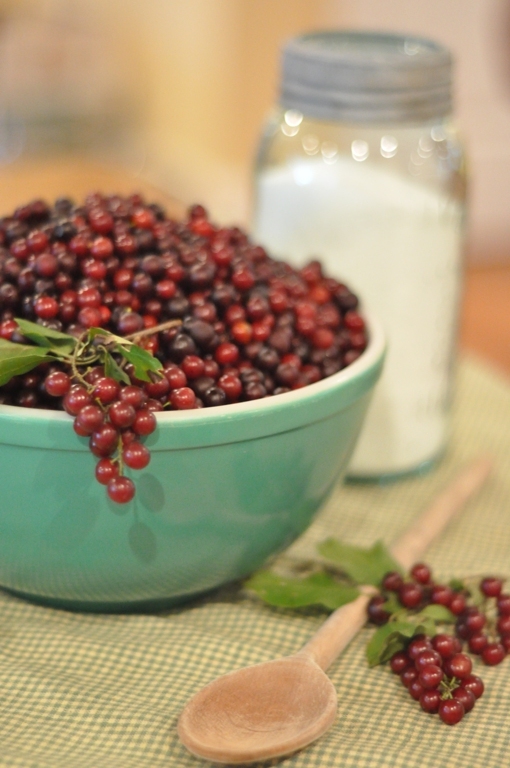
One morning while out on the hunt for vintage canning jars we stumbled upon a large choke cherry bush. Curious and wondering if these plump berries were eatable I moved in for a closer look. Mom recognized them right away…ah ha…another wild and eatable item we can preserve just growing on the side of the road!
About a week later we decided to pick some to make jam. They are still a little under ripe but we just couldn’t wait. From what I understand you should wait until they have turned from red to black and then patiently wait another week. While anyone who knows me knows that patients is not my forte. I’ll let mine stand a few days to ripen after I’ve picked them.
These choke cherries come by their name honestly as one taste of these little things can turn your mouth inside out…but, I just couldn’t help myself.
I spent the better part of an afternoon stemming and washing the berries and Matt made the jam one evening while waiting for me to arrive home from the big city of TO with a special gift for my sister…MOOSEH (her very 1st burmese kitten). He’s our “canning mascot” on the side bar. Isn’t he sweet!?!
Helpful Hints:
- When making the Currant Jam it is very easy to over cook and thicken too much because of the high pectin levels. We figured this would be the same for the Choke Cherry. However, we did undercook it the first time and after the jars were processed and sealed we realized it did not set up enough. Simple…just re-cook and re-process.
Put Up Total:
- 6 x 250mL regular mouth jars
Pickled Apricots
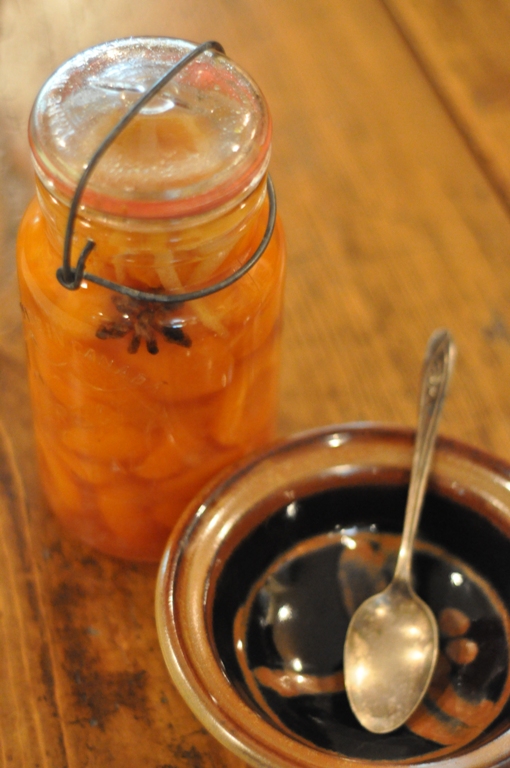
While tending to my store/art studio Thyme of the Season I decided I would get a head start on some additional preserving that I wanted to do. We had purchased some very nice looking Ontario apricots at the veggie store and I wanted to use the left over pear pickling sauce to preserve them…nothing goes to waste around here.
I started out by cleaning the kitchen…bleaching my counter-tops and putting out fresh clean towels to cover the counter surface. The water on the stove-top was brought to a boil and I submerged the apricots bit by bit. Blanching the fruit for 20 seconds to 1 minute is the recommended time by this seems to vary depending on ripness of the fruit. However, slipping the skins off any kind of fruit has never been my forte and I still struggle to perfect this technique. I think that sometimes I don’t leave them in long enough and other times too long. I also wonder if the fruit should be brought to room temperature first? Some many questions…so much to learn.
While I removing the skins I sterilized my jars in the hot water bath, prepared my lids and brought the syrup to a boil. I filled each jar with the apricots and poured the hot liquid over leaving an 1/2″ headspace. I wiped the rims, placed the snaps and lids on and processed the 2 – 1 litre jars for 15 minutes.
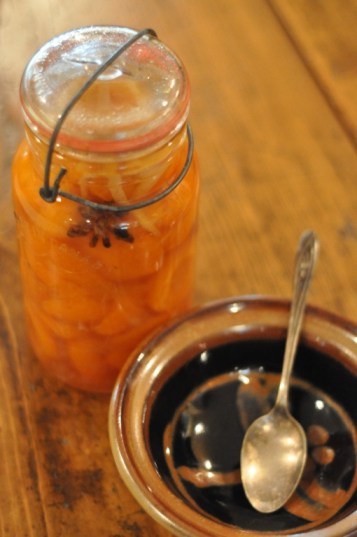
- Now, they didn’t last long!?!
Put Up Total:
- 2 x 1 L Old Jars
Pickled Three Bean Salad
Bean salad is one of those home canning staples, like chili sauce and corn relish, you just have to can them. Again we stuck to Bernardins recipe, changing the lima beans to kidney beans because we had them on hand.
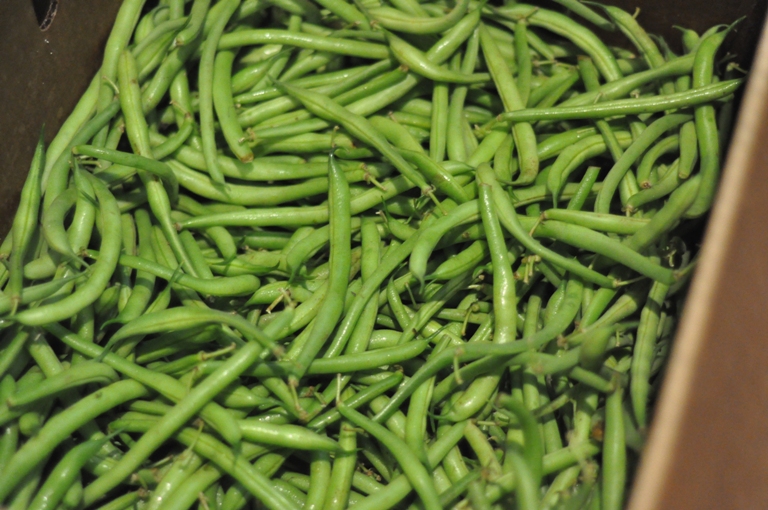
Nothing puts a smile on my face like coming home after work to a bushel of beans. Lets get canning baby!
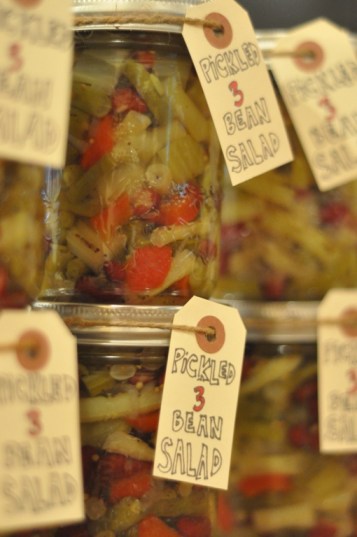
Here’s the finished salad with cool custom labels. Guaranteed to be all the rage at the next family picnic! If they last long.
Put Up Total:
- 34 x 500mL Wide Mouth Jars
- Plus, 1 x 500mL Wide Mouth for the Fridge
Dilled Green and Yellow Beans
This past Wednesday (August 4th) my mom and I picked up two bushels of beans…one green and one yellow. Cost per bushel and 1/9th was $35. Our plan was to can as many as we could before Matt got home from work. Working in batches we started by making DILLED GREEN AND YELLOW BEANS following the recipe in Bernardin’s Complete Book of Home Preserving.
Here’s how we made out….
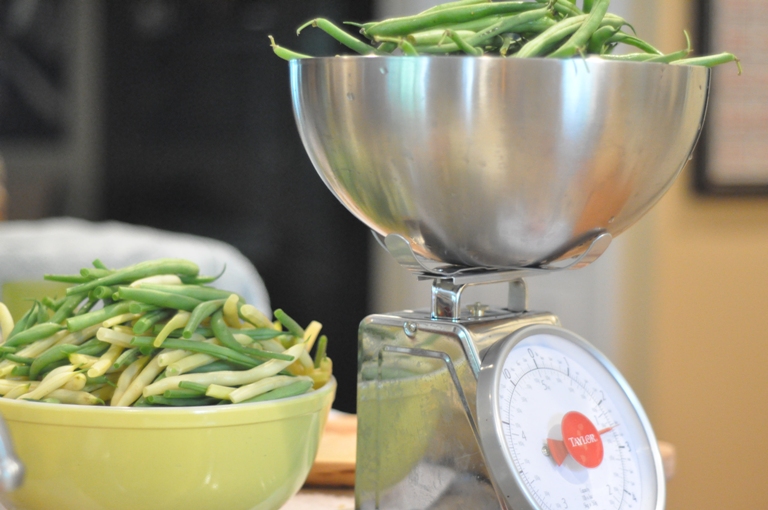
Mixing both the yellow and green beans together with some added red bell pepper is a great way to give a little extra colour and punch to each jar. The taste says it all!!! AMAZING!!!
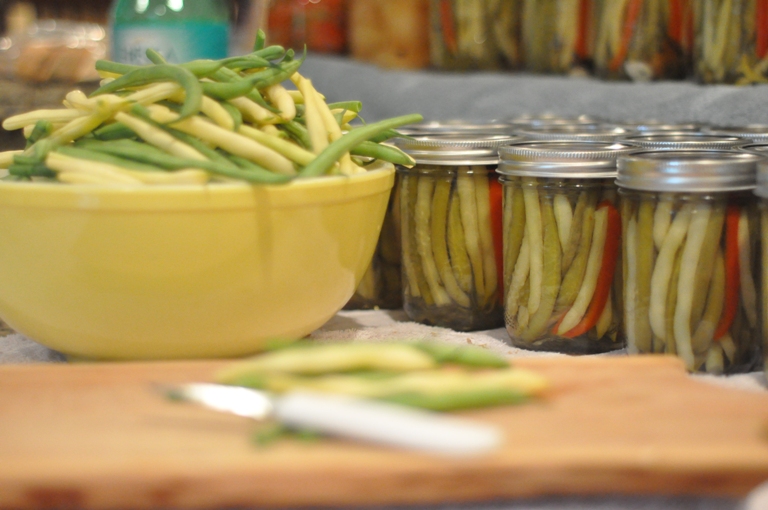
As you can see some of the jars are cooling to the side but stemming 2 full bushels of beans takes the better part of a day with two people working together.
From our own garden we were able to include 2 x 1 litre jars to this batch of dilled beans. Most of the beans in our garden are picked and eatten daily…often not even making it to the table.
FROM OUR GARDEN:
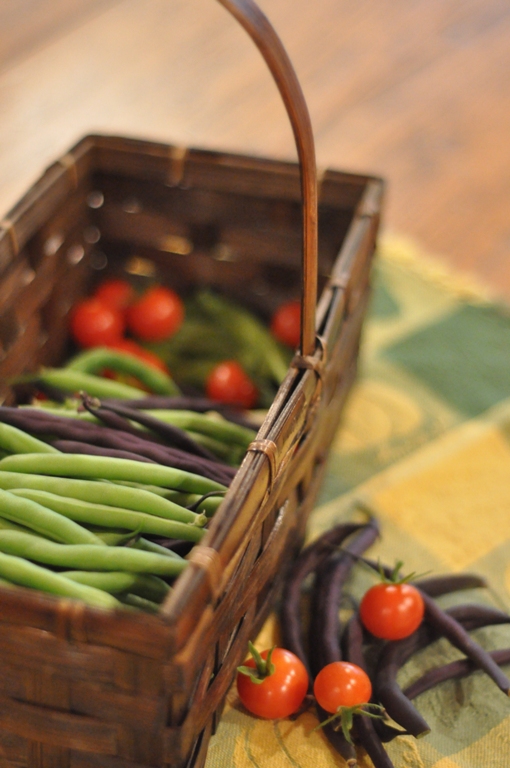
THE FINISHED PRODUCT…
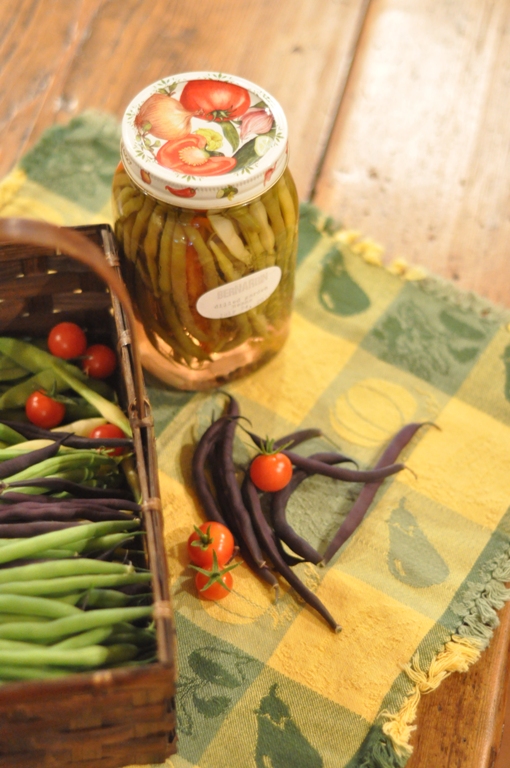
Put Up Total:
- 37 x 500mL Wide Mouth Jars
- 3 x 1 L Wide Mouth Jars
- 1 x Old Regular Mouth Jar
Plus, some like it hot and Matt definitely does so we added sliced Jalepenos to a few jars.
Put Up Total:
- 7 x 500mL Wide Mouth Jars
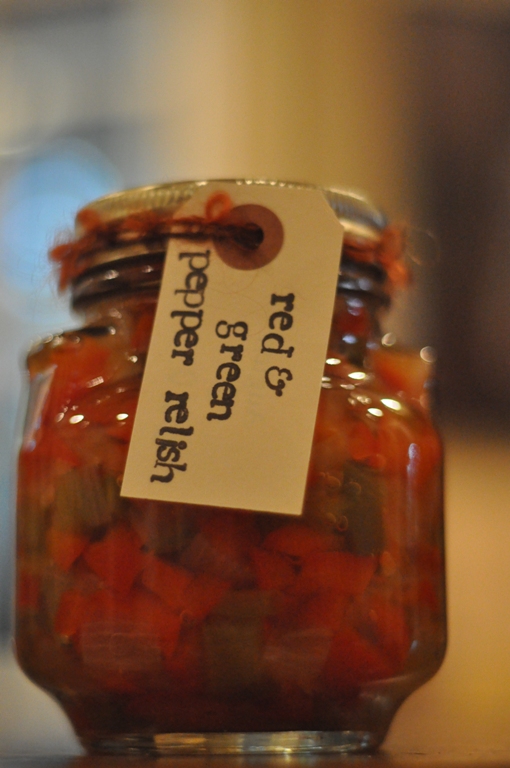
Green and Red Pepper Relish
Busy day. Holiday Monday and we are busy in the kitchen putting up as many different things as we can.
Onto Relish…
Most of the time is spent prepping the food. Chopping the red and green peppers. This process I find so relaxing…you just get into a rhythm of cutthing while listening to music.
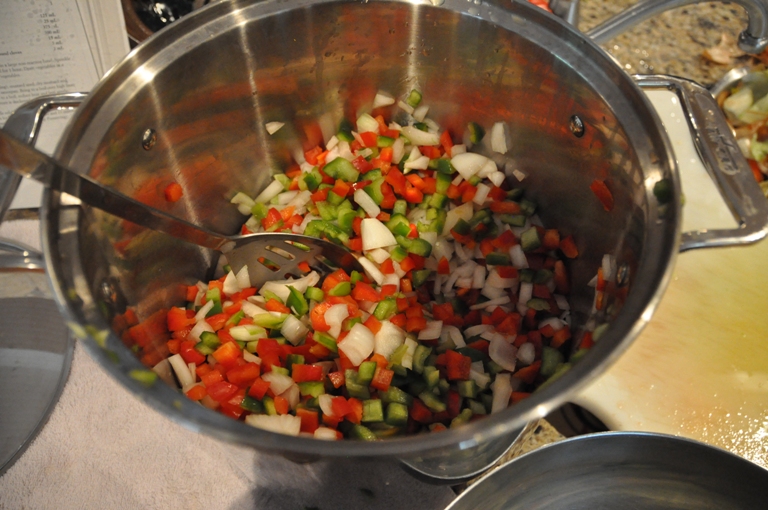
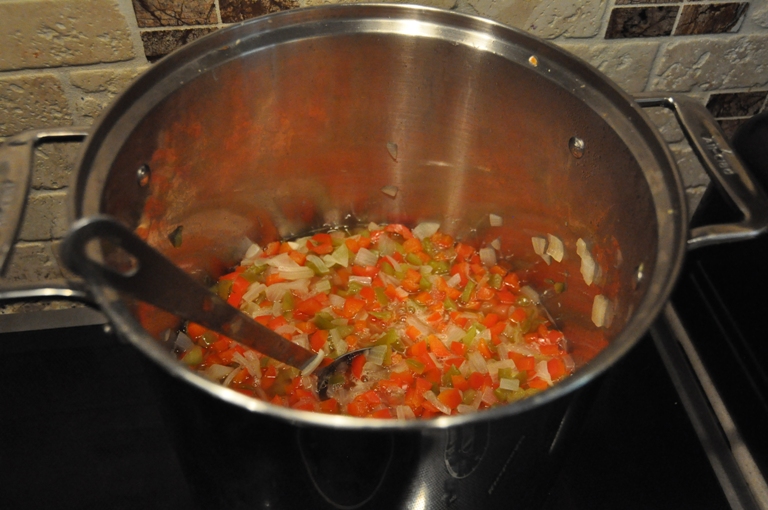
then to the stove for a little heat…SIMMER
Jarring….
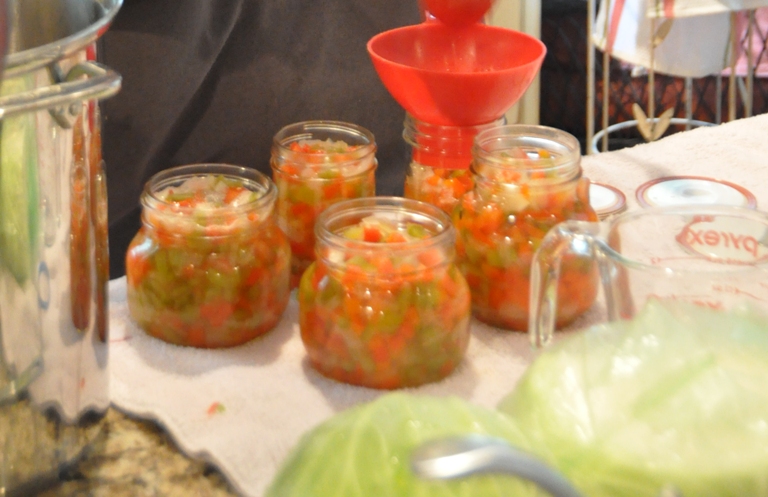
The finished product…
We made a double batch using the Small Batch Preserving Book that was given to us as a Christmas book by a good friend. Over the winter we tried tons of the recipes using citrus fruits while visiting my mom in Florida. Now, we are glad to get a chance to make some of the other goodies using fresh produce.
Put Up Total:
- 2 x 500 mL Wide Mouth Jars with fancy veggie lids
- 4 x 500 L Regular Mouth Jars
- 2 x 250 mL Regular Mouth Jars
- 1 x 500mL? Old Mason Jar


 Putting Up With The Turnbulls