Milkweed Pods
Now, here is an unusual thing to preserve…but so worth it. We first realized the potential of stepping outside of our comfort zone and canning wild foods when we came upon Forbes Wild Foods at the One of a Kind Show in Toronto. As artists we get to travel to a variety of shows each year and are fortunate to be exposed to a number of interesting people and food items. Forbes does a lot of cool different foods and is well worth exploring.
I do recommend carefully researching the type of wild foods you are interested in preserving before going ahead with it because lots of varieties look similar but can be toxic. Milkweed pods do have similar cousins but here in Muskoka, Ontario we are certain that we harvested only the Common eatable Milkweed Pods. When harvesting wild foods it is also so important not to over harvest as this is a natural resource that you will want to be able to can for years to come.
OUR MILKWEED POD RECIPE:
- 4 cups of milkweed pods ranging in size from 1.5″-3″
- wash well and stem milkweed pods
- 3/4 cups of fresh lemon juice
- 1.25 cups white vinegar
- 1/2 cup of white sugar
- tbsp of pickling salt
- a few cloves of garlic to be removed before jarring
- 1/2 tsp black peppercorns
- Mix ingredients together to dissolve
- Bring to a boil
- Add pods and bring back to a boil
- Sterilize jars – we used 250mL and snaps
- Pack milkweed pods into sterilized jars
- laddle boiling brine into jars
- clean rims and add snaps and lids
- process in boiling hot water bath for 10 minutes

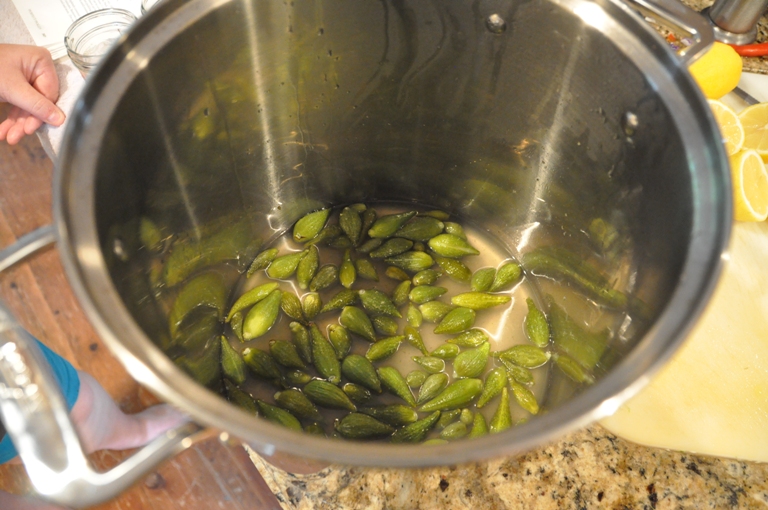
This is the first time that we have preserved these pods so our recipe made need to be tweeked…we will just have to wait to see!
Update: They’re gRRReat! Matt thinks they’re perfect but I want to cut back on the sugar slightly. However, the consistency is excellent and the flavour wonderful. Definitely, time well spent.
Pickled Pears
This holiday Monday was a busy one. We put up 4 different food items using 3 different preserving manuals and one Turnbull original.
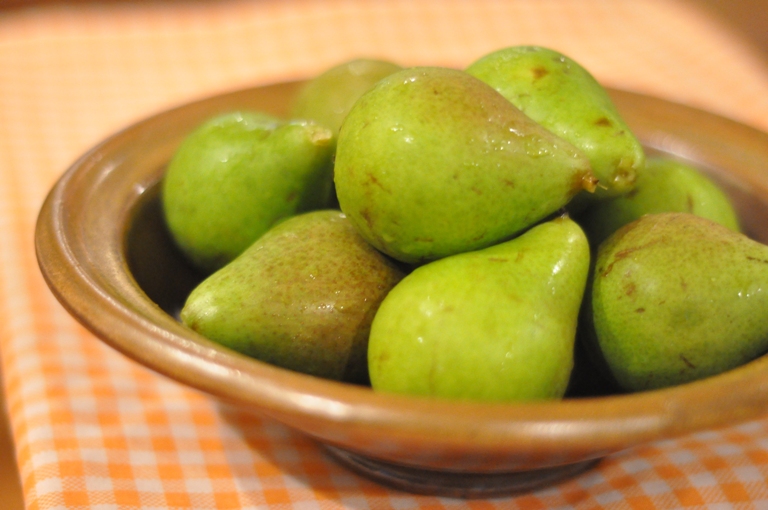 Pickling fruit is a really interesting experiment. Something I think a lot of Europeans do and what a great idea. Matt and I are always on the look for something a little bit different to eat fresh and capture in a jar for later. We were thrilled when we found these sweet little Sugar Pears at our local Veggie Store.
Using The Fruits of the Earth recipe book we discovered this little gem and gave it a whirl. The hot liquid is a great combination of sweet and savory and the rich amber colour with the star anise and dried chili peppers gives the bottled product a wonderful look.
What do you think?

Put Up Total:
- 1 x 500mL Fancy Bernardin Jar and Lid
- 2 x 1L Vintage Jars
Cream Corn
Now that we have invested in a pressure canner the sky is the limit! We purchased it primarily to make and preserve our on fresh and tasty soups for those long winter months but it has already started to open our eyes to the endless possibilities…so much to CAN so little time!
Cream Corn is one of the easiest and most inexpensive veggies to preserve. We purchased 10 dozen cobs for $40. With the three of us working on it (my mom, Matt and I) we husked, blanched, and preserved 10 dozen cobs of fresh Ontario corn in two days. We made 2 different corn relishes, cream corn, and froze the remaining kernels for the soup to come. So sweet and so tasty!
Cream Corn Recipe:
- husk corn cobs
- wash cobs
- blanch corn for approximately 5 minutes working in small batches of 5-6 cobs to one large pot of boiling water
- immediately place in iced cold water
- using a knife or one of the kernel removers cut kernels from the cobs
- then using the back of a knife scrap the cobs clean collecting the milk in your bowl
- add salt and sugar to taste (we didn’t add any as our corn was very sweet and the salt can be added later)
- fill hot sterilized jars with the corn and pack leaving 3/4″ headspace
- following the instructions for pressure canning cream corn
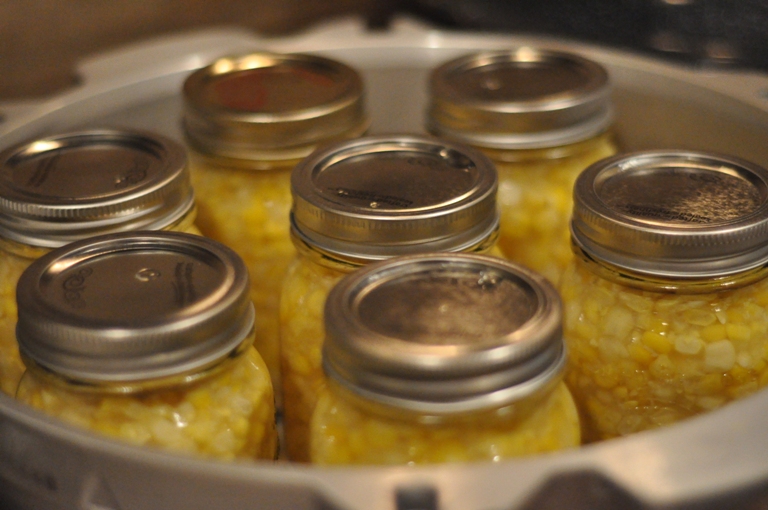
Put Up Total:
- 15 x 500mL Regular Mouth Mason Jars
Red Currant Jam
My mom and I were lucky enough to happen upon both RED and Black Currants at our local Veggie Store. So we got to work figuring out what to make…JAM…of course!
Stemming all 16 pints of RED currants took a bit of time but it is a relatively easy task and we made short order of it.
Using a great olde English recipe we made our jam.
I’ll post the recipe later…here is a picture of it cooking down.


With 16 pints of currants stemmed we were able to make Apricot Red Currant Jam, plain Red Currant Jam and some Jelly.

Put Up Total:
- 3 x 250mL Wide Mouth Jars (Apricot Red Currant Jam)
- 2 x 250mL Wide Mouth Jars (Red Currant Jam)
- 3 x 236mL Jars (Red Currant Jam)
- 1 x 250mL Regular Mouth Jars (Red Currant Jelly)
- 1 x 236mL Jar (Red Currant Jelly)
Hot Pickle Mix
Trying this little gem of a recipe was recommended to us by members of our enthusiastic canning club; a club made up of friends who are all into canning, eating, experimenting and just plain loving food. So, after seeing how wonderful our friends jars of the hot pickle mix looked we decided to try our hand at it too.
HOT PICKLE MIX – Another Bernardin Recipe
Using the veggies we could find fresh at the farmers’ market we followed this recipe and made 5 x 1.9 Litre jars of this pickled veggie treat.
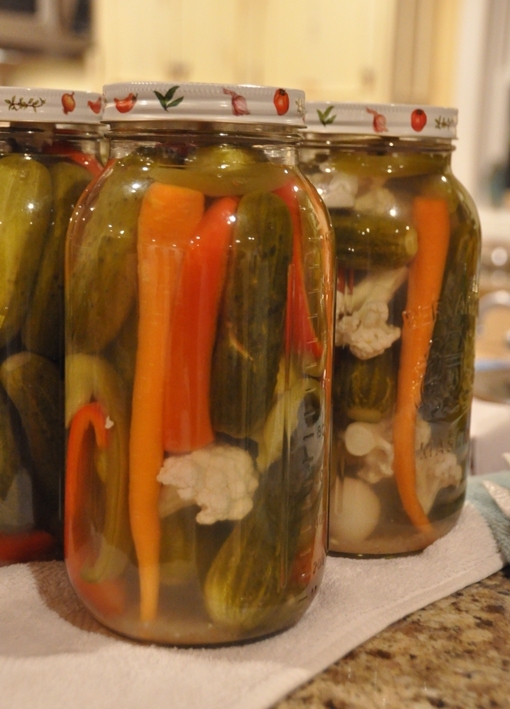
Put Up Total:
- 5 x 1.9 Litre Wide Mouth Jars
Warning: Hopefully you have all read down to the bottom because we are here to caution you against trying this recipe (now we’re really glad we didn’t write the recipe out). Although, they look fabulous in the jar they taste terrible. We were over at our friends place and he cracked open a jar for us to sample and it was disgusting…we all thought it was DISGUSTING!!! We rushed home to open one of our jars only to find the same result. The consistency and taste of these pickles is revolting. So, you’ve been warned ~ Don’t Try These At Home!
Dill Pickles
Cucumbers, cucumbers, cucumbers…where do we begin. While we began sometime in July and have completed three bushels of cucumbers and made a variety of dill pickles, kosher dills, pickle and veggie hot mix, some experimental hot and cool cukes, dill sandwich spears. That may just about cover it.
Dill pickles was the one food item that started us on this journey 1 year ago. And, we’ve enjoyed those tasty pickles all year long. The waiting for 2 months while they matured was the difficult part but we’ve enjoyed them daily since. So we decided to jump in and try our hand at putting up not 1 bushel but 3.
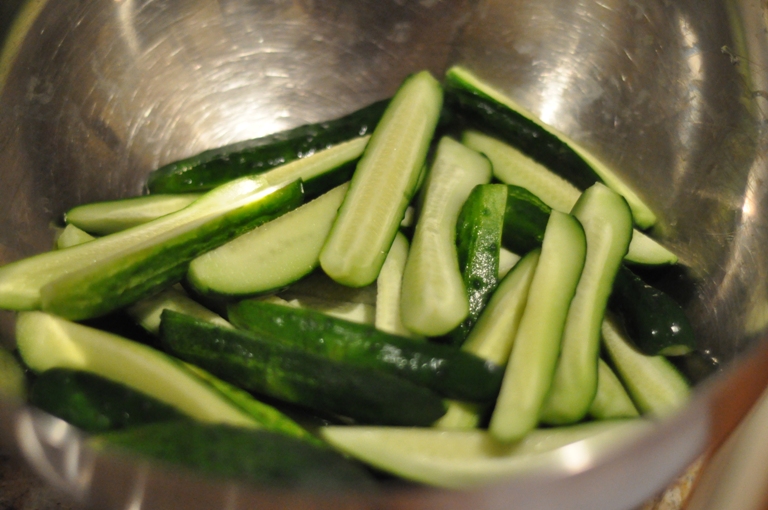
DILL PICKLE SANDWICH SPEARS following Bernardins Recipe
Using Bernardins Recipe we prepared our cukes. We washed them thoroughly, cutting 1/8″ off the blossom end and putting them in a salt brine on cold water with ice for about 4 hours. Last year we washed and scrubbed the cucumbers carefully and put them in cold water until they were all done and the brine was ready but this year we decided to try some of the suggested methods on obtaining REALLY CRUNCHY CUKES. Again, we’ll see.
I’ve read that it is important to make sure the cucumbers are carefully re-rinsed to make sure that the dills do not turn out too salty. Again, we’ll see if we washed them well enough. But, I admittedly love salt and some fell victim during the packing process.
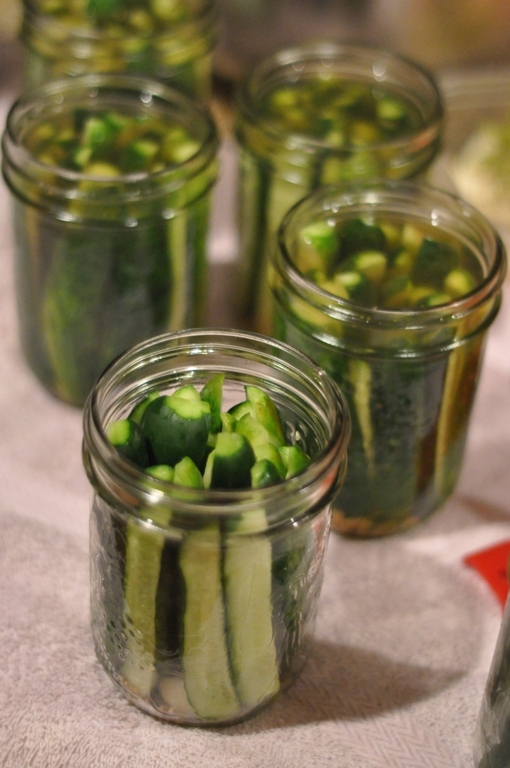
By the end of September we will be trying these little guys.
Putting Up Total:
- 24 x 500mL wide mouth jars


 Putting Up With The Turnbulls