Smash Bomb Beer Jelly ~ The Craze Continues

This morning I decided to make another batch of Beer Jelly using Flying Monkey’s Smash Bomb beer. I plan on going to the brewery in Barrie tomorrow (weather permitting) to replace our keg or kegs and thought it would be nice to drop off a jar of jelly. Smash Bomb is the perfect beer for this jelly. It is hoppy and full of flavour without being too dark or sweet. And, it has a fruity flavour that combines nicely with the orange zest and cinnamon.
Determined to get this one right; set to perfection and without a fire, I decided to pretend this was my first time at this show. You know…beginners luck or not dwelling on the past or something like that. Go figure, it worked. I think this is the best beer jelly I’ve made. It is well set and delicious…if I do say so myself.
The process of making this beer jelly is relatively easy especially if you have preserved jars of homemade apple pectin on hand. All of the ingredients go in at the same time and boil down until set. Sounds easy. But, for those of you who have tried it or are planning to, the problem sneaks up from behind and you are left using all of those frozen spoons and still wondering “is it set?” Okay, let’s talk set. I think it’s fair to say this is where most of us are having a problem with this jelly. Here is what I did differently and I think the result firmly speaks for itself. (1) I added the seeds from the lemon (in a spice ball) to give the mixture a little added pectin boost. I’m not sure how much effect half a dozen seeds have overall but this is the best set beer jelly to date. (2) I also cut back on the sugar using 4 1/2 cups rather than 5 1/4 cups. I was leary about reducing the sugar because sugar does help it to set but I’ve found the past 12 batches a little too sweet. Clearly, I’m slow on the up take but not completely draft or should I say “daft” as I am now making the change. (3) And again, for those of you using a thermometer this one does not set at 220F. It’s more like 230+F.
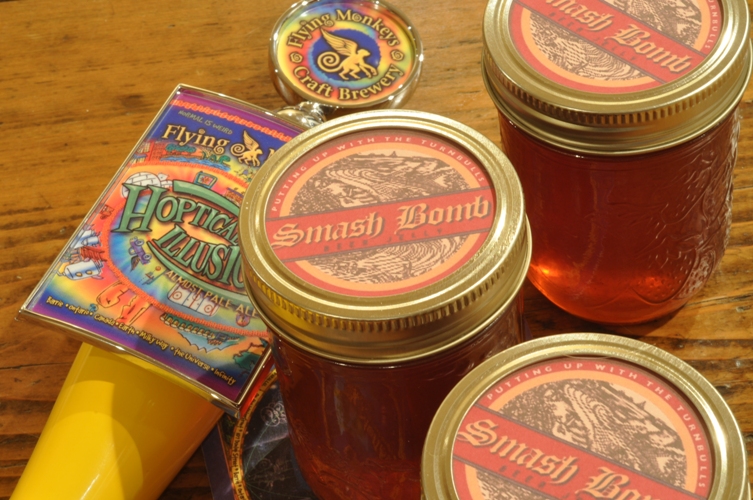
Put up Total:
-
4 x 250mL regular mouth mason jars
Coffee Roasting ~ As Unnecessary as it is Satisfying
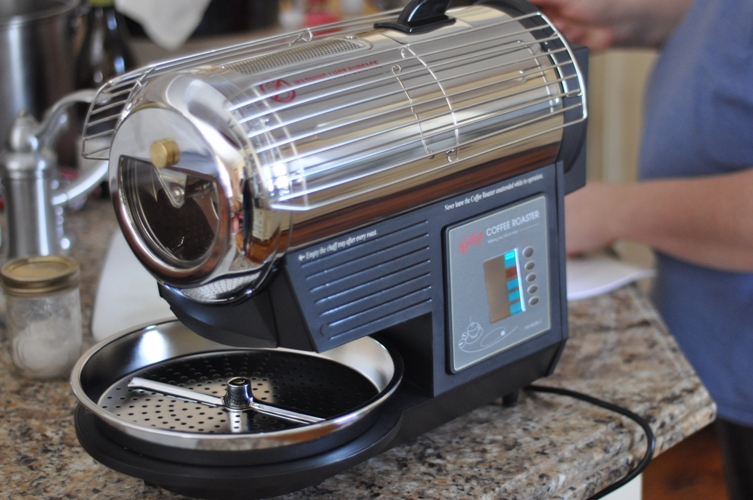
This christmas, I was lucky enough to receive a coffee roaster from Andrea, which is a pretty amazing gift considering she doesn’t even drink coffee! I’d been eyeing up the roasters for a couple of years now, ever since I’d started exploring single origin coffees from different countries. I found the variety in taste from country to country intriguing, even the coffee beans grown within a single country can vary in size, colour and of course taste. Over the last few years as coffee drinkers have been educating themselves as to the origins of the coffee they drink, the demand for better beans as well as better conditions for the people producing beans has been a step in the right direction for the industry. Fair Trade, organic, Rainforest Alliance are an example of the catch phrases you’ll find on coffee packaging wherever coffee is sold. I’m under no kind of illusion to think that the main motivation for advertising this is to sell more product. And, that the publics demand for beans with a conscious may have as much to do with being trendy as with actually giving a damn. Back to roasting.
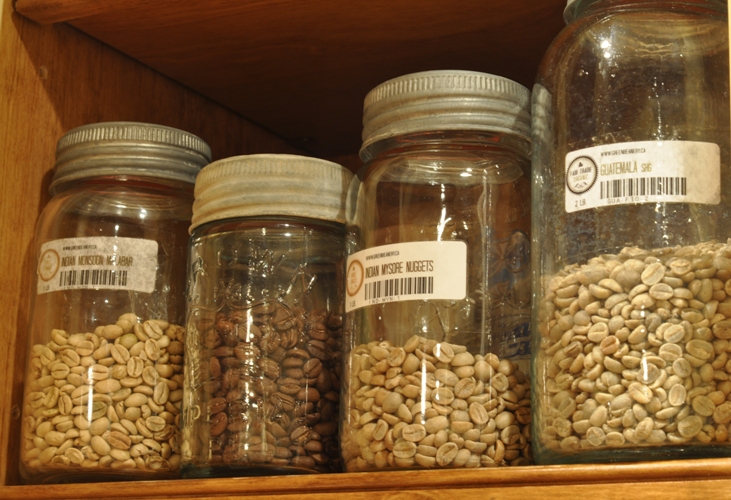
So, I’ve mentioned how readily available better beans are becoming and that’s a positive. The issue now becomes, at least for people like us that are completely mental, is that we’re at the mercy of the people roasting these exceptional beans. That’s not to say that the roasters don’t know what they’re doing, it’s just not feasible for them to roast a single type of bean to three different roast levels. That being said the roast level can have as much bearing on flavour as does the origin of the beans themselves.
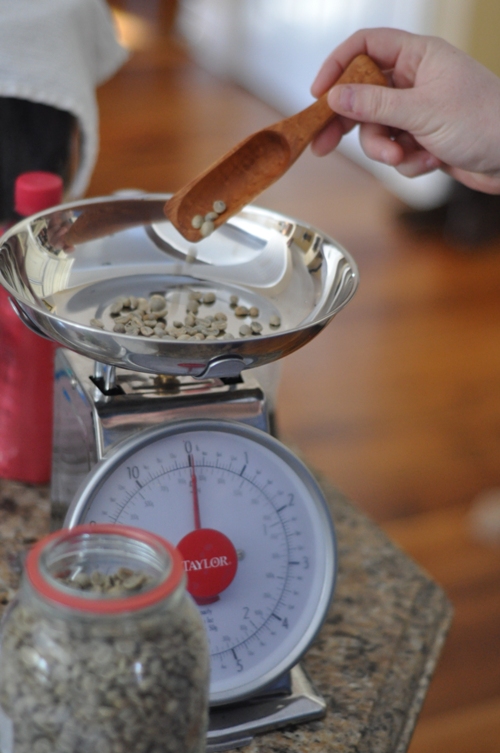
So naive me thought I would get a roaster and have fresh roasted beans, roasted the way I want them. The whole thing seemed pretty easy, get the roaster, get some green beans and enjoy. The slogan on the roaster even reads “Making Your Life So Easy.” To put this whole thing into context, I would compare it to plunking a monkey down in front of a nuclear reactor and saying “have at it.” Roasting coffee beans is the most intensive 25 minutes of my day. There is to be no talking, no dogs barking, just roasting. I feel like having a cigarette after they drop into the cooling tray (and I don’t even smoke). Don’t roast coffee to impress your friends, it only makes them think that you are in fact completely mental. The thing with roasting is that you will make mistakes and you might even wreck some of those beans it took you a week to save up for but I guarantee you’ll learn more in those 25 minutes roasting than you did in an hour of grade ten accounting and when you nail that perfect roast it’s like heaven in your mouth, and all those sane people can never take that away!
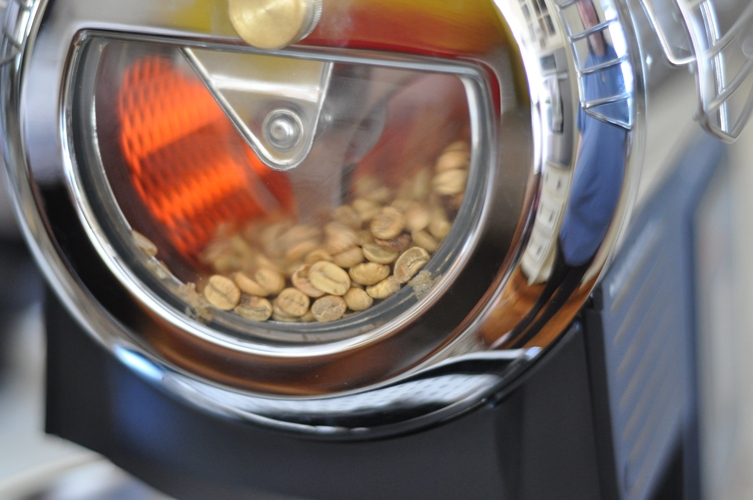
Beans Approaching the End of the Drying Phase
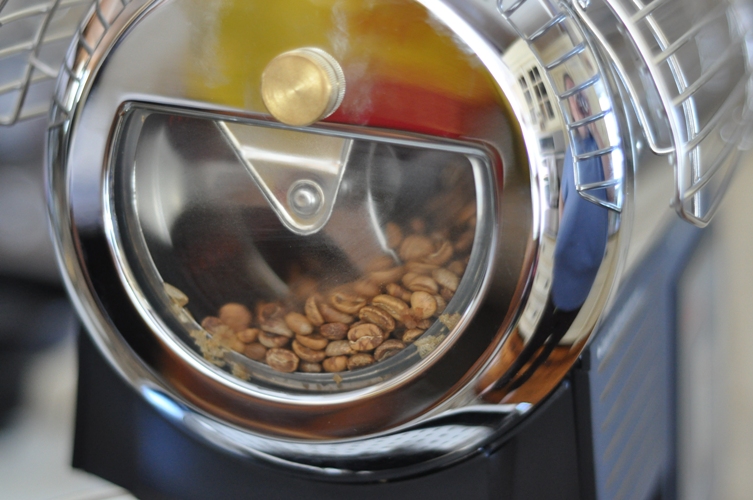
Dry Beans Beginning to Darken
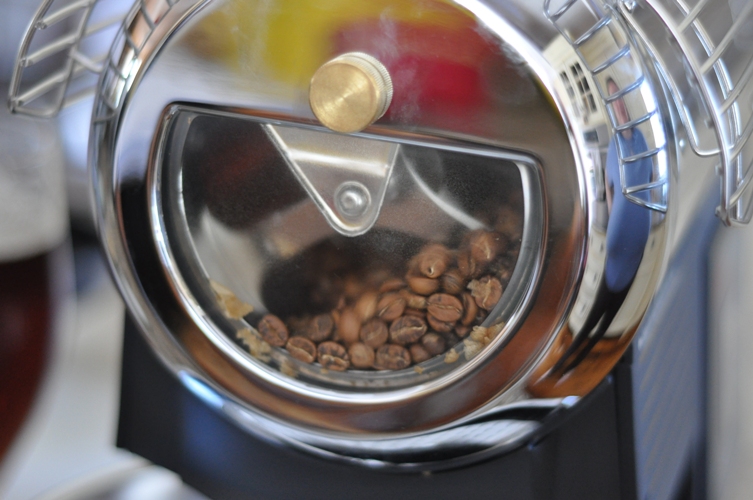
Approaching First Crack
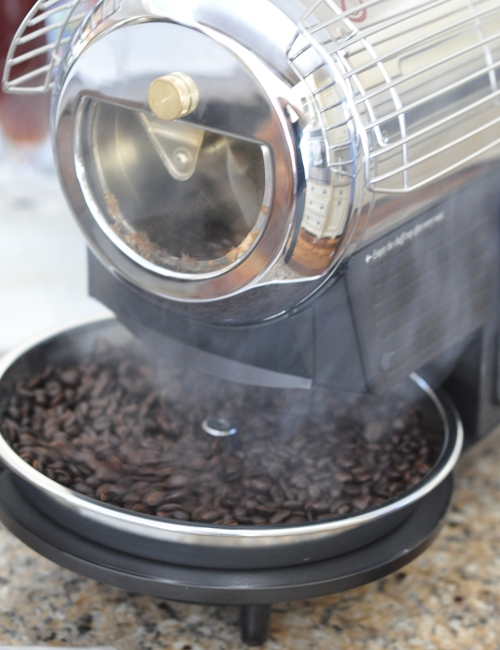
Another batch of roasted coffee beans ready to be “the perfect start to an excellent day. And, isn’t that making my life soooo easy!?!”
Simply Homemade Granola Bars
Around our home we are always looking for easy things to make that can be included in lunches. Afterall, when you are out all day building docks and homes in the freezing cold, you need a substantial and healthy lunch to keep you going.
I’ve been curious about trying to make the “oh so delicious granola cereal” into granola bars and decided today was the day to give it a try. I was pleasantly surprised that it was not only easy but it worked. YEAH!!! And, Matt gives them two thumbs up…although, I’m not sure that means too much as he loves to eat and isn’t fussy. But, I do agree they are really tasty and really (I mean really) easy to make.
This recipe is more or less the exact same recipe that we used to make the granola cereal. If you have a homemade granola cereal you like just make the following highlighted modifications to make them into granola bars.
RECIPE FOR HOMEMADE GRANOLA BARS (makes about 20 bars):
- 3 cups rolled oats (Note: this is half of the oats we used to make the granola cereal)
- 1 cup shredded coconut
- 1 cup wheat germ (optional)
- 1 cup whole wheat pastry or bread flour
- 1/2 cup ground flax seeds
- 1 1/2 cups salted and unsalted sunflower seeds
- 1 cup dried cranberries
- 1/2 cups toasted sesame seeds (we just lightly toasted them in the same pan used for the rolled oats)
- 1/2 cup salted pumpkin seeds
- 2 teaspoons ground cinnamon
- a pinch of freshly grated nutmeg or to taste
- 1/2 teaspoon salt (optional ~ we don’t add any salt because some of the seeds are already salted…do it to your taste)
- 1/2 cup oil (sunflower)
- 1/2 cup of honey (I used a little bit more)
- 1/4 cup maple syrup (next time I would add more to make the bars a little sweeter)
- 2 teaspoons vanilla extract
- 1 cup (250mL or pint jar) of unsweetened thick applesauce
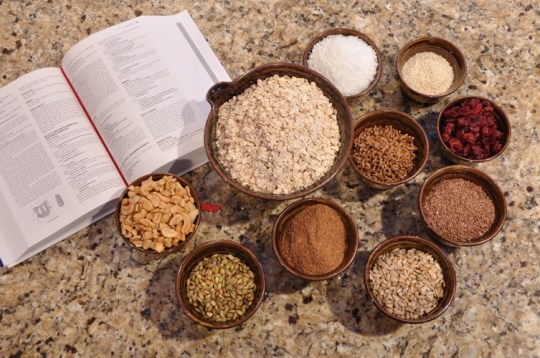
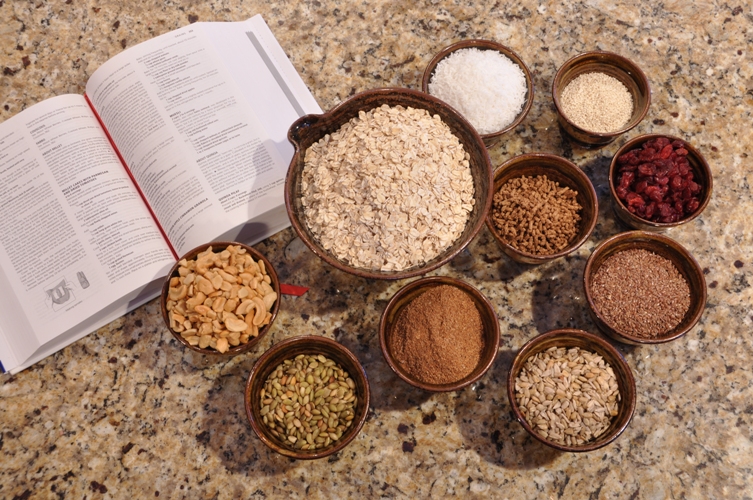
- Preheat oven to 350F.
- Toast oats for 5 minutes in a dry skillet over medium heat. Let cool. Use the same skillet to toast any additional seeds.
- In a large bowl, mix dry ingredients.
- In a separate bowl, mix honey, oil, maple syrup, and applesauce and blend well. Add vanilla.
- Combine dry and wet ingredients and blend together gently until well moistened. The mixture should be moist but not too wet. If it is still crumbly, add a little more applesauce. Be sure to add it in small spoonfuls because you do not want this mixture to be too wet.
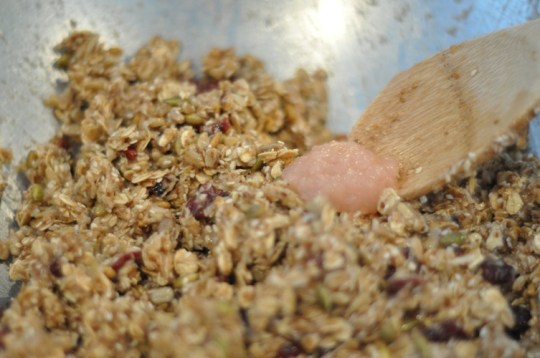
- Line a pan approximately 10″ x 13″ with parchment paper and press mixture into pan. I used a pan that was a couple of inches deeper than a cookie sheet so that my bars would be about an inch thick.
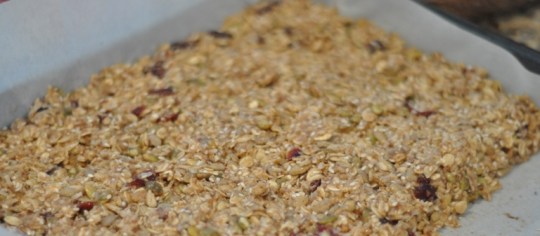
- Bake at 350F for 30 minutes. Cut into bars while warm, and leave to cool. Note: Do not remove the bars from the pan until they are completely cool or they may break apart.
- You can substitute any of the seeds and dried fruit for your own favorites or make additions like chocolate chips or toasted nuts. Just be sure not to increase the amounts too much or you may have to adjust the amount of flour to make them form into bars.
- Layer bars (placing a piece of parchment paper between each layer)in an air tight container and store in the refrigerator for 1 week or in the freezer for longer.
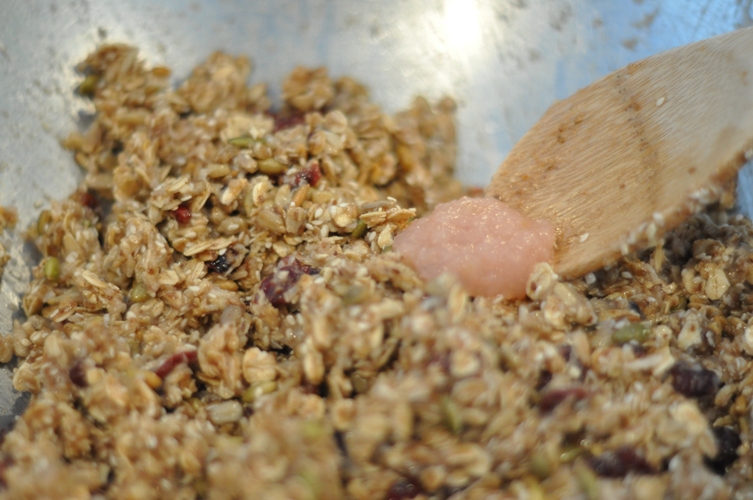
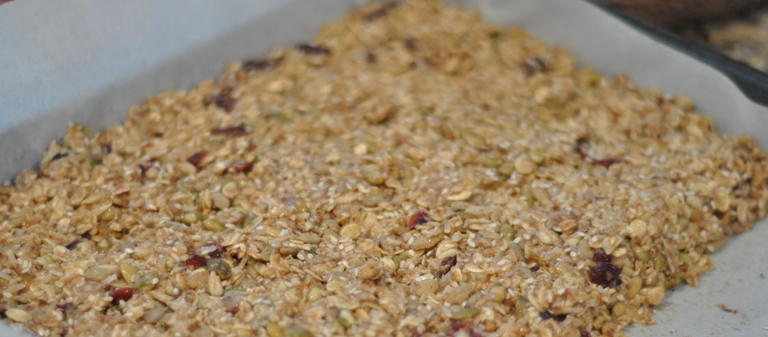
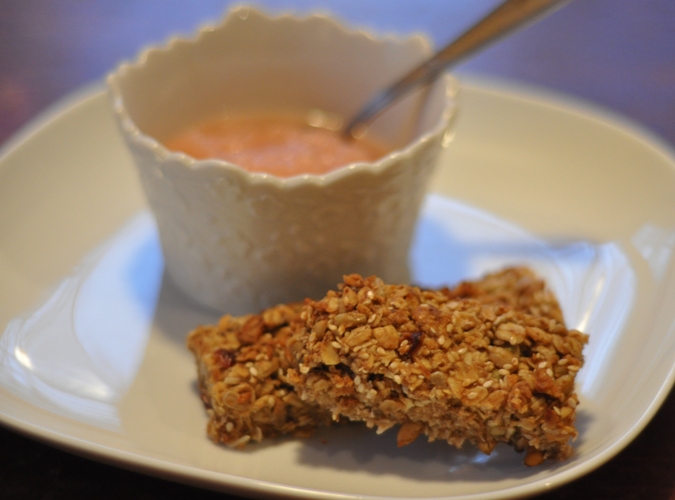
These are a great addition to any lunch but also make an excellent breakfast bar for those on the run. Have fun experimenting!
Cranberry, Orange, and Apricot Chutney
Chutney’s are savory preserves that can add flare to your favorite dinner meals of pork or chicken but they can also dress up a ham or turkey sandwich. They have a smooth jam like consistency with the additional complexity of a sour and/or savory element. This recipe comes from Mary Anne Dragan’s canning book Well Preserved and it’s a great one to try over the winter months when these ingredients are readily available at your grocery store. Some of you may even find cranberries, dried apricots and oranges kicking around the kitchen (as we did).

This is the same olde truck we photographed at the marsh this fall...behind the truck are the cranberry fields covered in a couple of feet of snow.
So, put away the winter blues by getting your toes wet and ready for the upcoming canning season by making this preserve. It doesn’t get much simpler than this, as all of the ingredients go in at the same time…how easy is that!?! And, despite being simple to make, this savory preserve tastes great with a sweet burst of refreshing flavours similiar to a winter marmalade. It’s a great combination and a perfect recipe for first time canners. Give it a try…you won’t be disappointed!
RECIPE FOR CRANBERRY, ORANGE, AND APRICOT CHUTNEY:
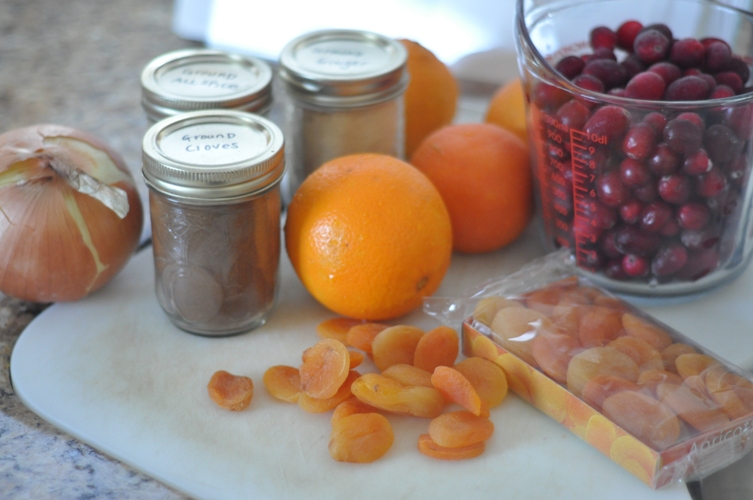
- 1 Orange
- 4 cups (950mL)cranberries
- 1 cup (240mL) chopped dried apricots
- 1/2 cup finely chopped onion (we used a Spanish onion)
- 3/4 cup cider vinegar
- 3/4 orange juice (freshly squeezed)
- 1/2 cup water
- 2 cups brown sugar
- 1/2 tsp each ground cloves, ground ginger, and ground allspice
- Prepare for water bath canning.
- Slice the orange very thinly, discarding the ends and seeds. Chop very finely.
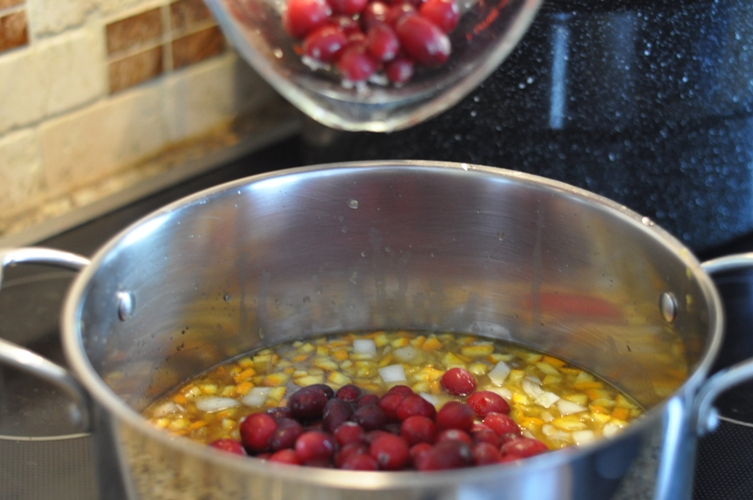
- Combine ALL the ingredients into a stainless steel preserving pan and bring to a boil over medium heat. Simmer, stirring often, for about 20 minutes, or until the mixture thickens.
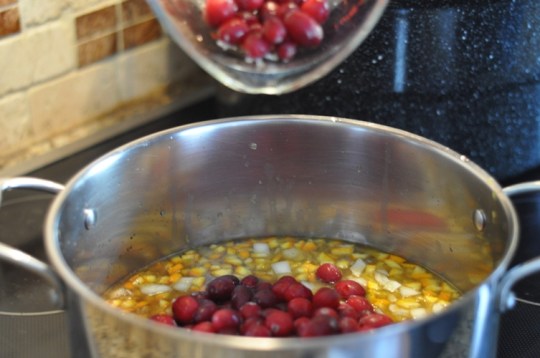
- Remove from heat. Ladle into hot sterilized jars, leaving 1/2″ headspace. Wipe rims with a damp paper towel, add lid, and ring adjusting it to finger-tip tight. Process 250ml jars in boiling water bath for 10 minutes and 500mL jars for 15 minutes.
- Remove lid and wait 5 minutes before removing the jars.
- Check seal, label, and store in a cool dark place.
While chutneys are quite good straight off the stove, the flavours will mature in the jars. We try to wait at least 1 month before busting into them…but if you can wait longer (3 months or so) they taste even better.
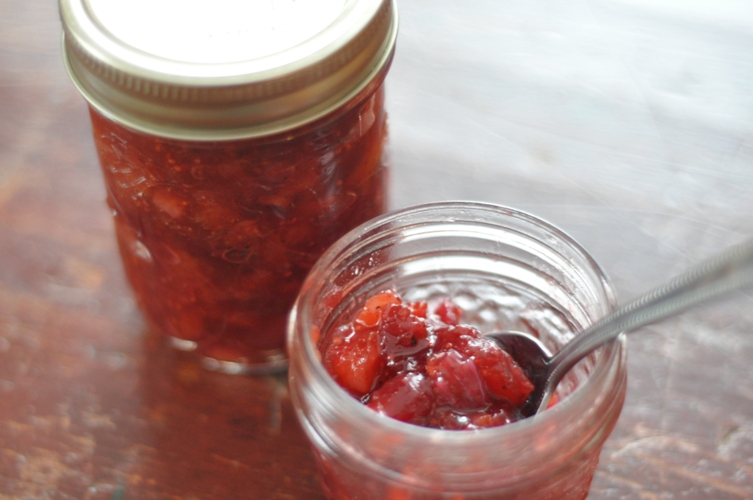
Put up Total:
- 3 x 250mL wide mouth mason jars
- 2 x 250mL regular mouth mason jars
Note: the pH level on this preserve (for us) tested below 3.50.
Eat’n Up ~ Spicy Salsa Omelette
For the most part, weekends here are spent cooking, canning, and experimenting in the kitchen. As well as, playing, walking, and enjoying the outdoors with our 3 Labrador’s.
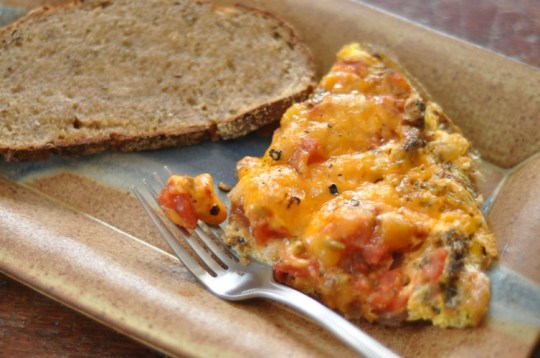
Today, Matt whipped up the most delicious spicy salsa omelette using our home canned Parrots Head Spicy Salsa. It was so tasty and filling I just can’t help sharing it. Really this can be done using any kind of home canned salsa and any kind of ingredients you like in your omelette…but here is what we did.
RECIPE FOR SPICY SALSA OMELETTE (serves 4):
- 3 slices bacon
- 1/2 cup coarsely chopped red onion
- 8 eggs
- 1 tbsp dried oregano
- 1 tbsp dried basil
- 1 x 250mL (1/2 pint) jar of homemade Salsa
- 1 cup grated old cheddar
- salt and pepper to taste
- Preheat oven broiler.
- Chop bacon, saute until brown, and add onions for the last 2 minutes of sauteing
- Crack eggs into a bowl and beat. Pour eggs into saute pan and stir to combine bacon, onions, and eggs well.
- Sprinkle oregano and basil over the top of the mixture.
- Cook over medium heat until omelette begins to set.
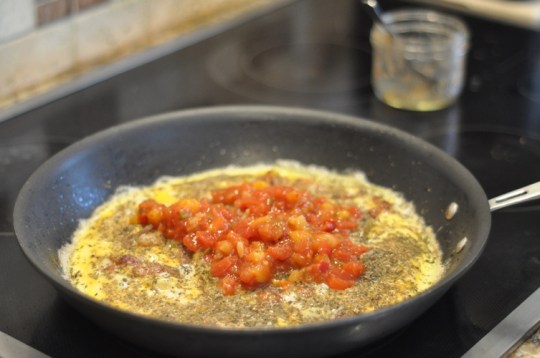
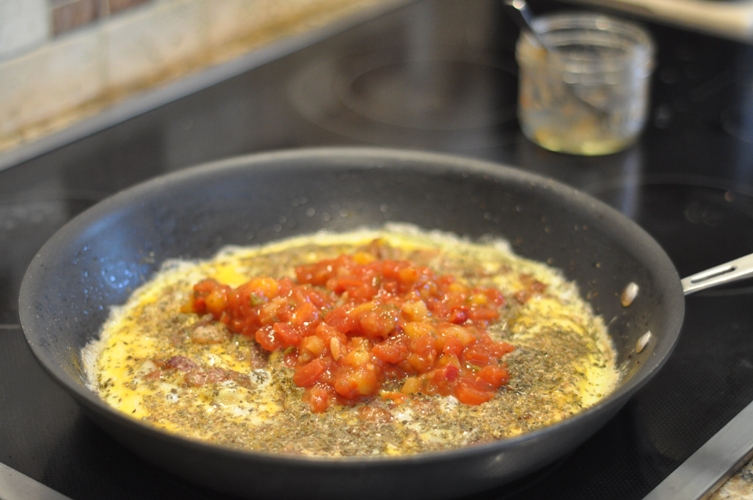
- Spoon on salsa and spread over the entire surface of the omelette.
- Grate and sprinkle cheese on top.

- Put under oven broiler until cheese has melted.
- Add salt and pepper to taste and serve.
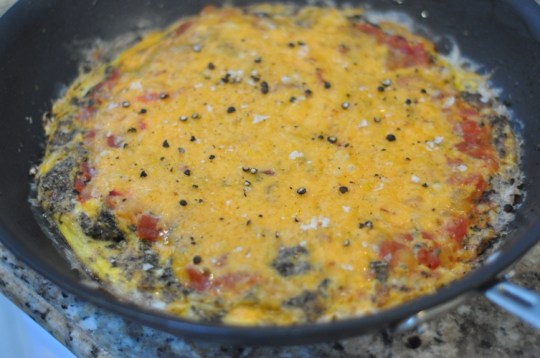

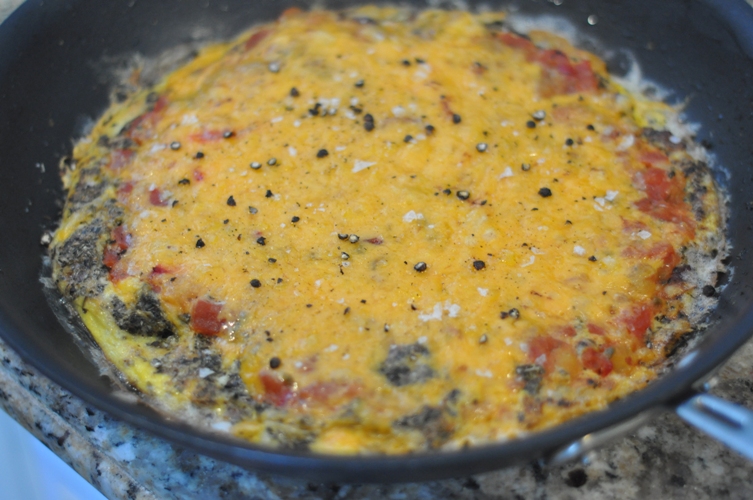
It’s a great way to use a jar of home canned salsa to add great favour to omelettes or even scrambled eggs. And, it really is so easy; I think next time I could do it!
Sauerkraut – Rye Bread
I’ve made this bread using both commercial yeast as well as using a sourdough starter exclusively for a naturally leavened loaf. While the sauerkraut together with the caraway seeds are at the forefront of this bread the use of the starter cannot help but add complexity to the loaf. If you are not already nourishing your own starter, a good source for info can be found at The Fresh Loaf. I used Debra Wink’s recipe for my starter with success after multiple failures with other recipes. After about 4 days you will have a successful starter, at which point you can proceed with the recipe.
Firm Starter
- 2/3 cup Barm
- 1/2 cup Bread Flour
- 1/2 cup Dark Rye Flour
- 1/8 to 1/4 cup Water at room temperature
- Remove the barm from the refrigerator 1 hour before making your firm starter.
- Add the flour and barm along with just enough water to form a ball. Knead briefly just until the ingredients are hydrated. Place in a lightly oiled bowl and cover with plastic wrap.
- Ferment at room temperature for about 4 hours, or until the starter doubles in size. Refrigerate overnight.
Final Dough
- 3 1/2 cups Bread Flour
- 1 cup Dark Rye Flour
- 2 tsp Salt
- 3 tbsp Chestnut Honey
- 2 cups Sauerkraut
- 1 tbsp Caraway seeds
- 1 1/2 cups Water lukewarm (90-100 degrees F)
Remove the firm starter from the refrigerator 1 hour before making the dough. Cut the starter into 10 pieces on a lightly floured counter and leave to de-chill for an hour misted with oil and covered with plastic wrap.- In a large bowl stir together the flour, salt and caraway seeds. Add the starter, honey and enough water to form a ball. Knead until ingredients are hydrated, about 5 mins.
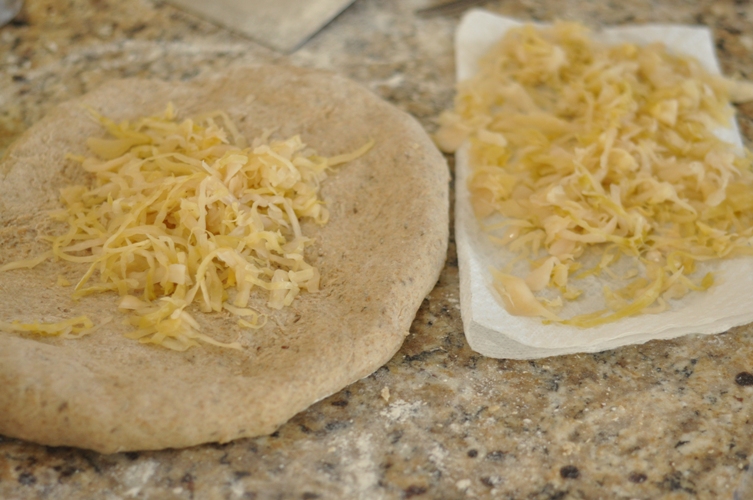
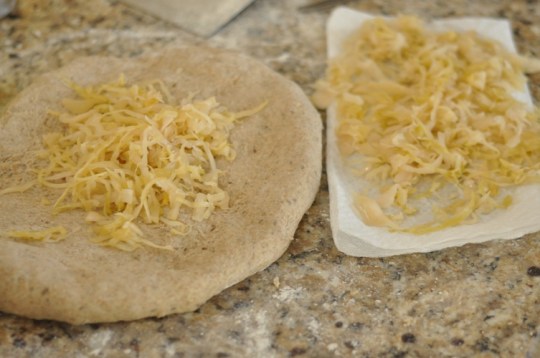 Dry the sauerkraut as much as possible using paper towels. Stretch the dough out flat on the counter. Add half the sauerkraut, then fold the dough over and knead a few times. Repeat the process with the remaining kraut. Place the dough in a lightly oiled bowl,cover with plastic wrap and ferment at room temperature for 3 to 4 hours or until the dough has doubled in size.
 - Carefully remove the dough from the bowl and divide into two equal pieces. Shape the dough into your desired loaf shapes.
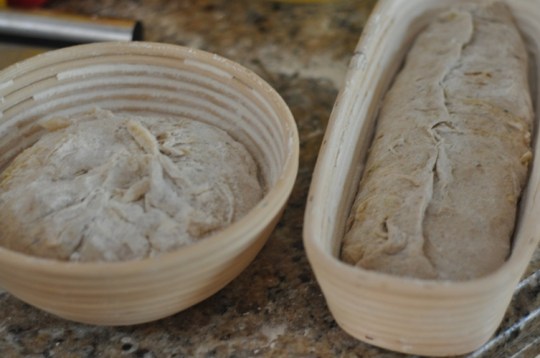
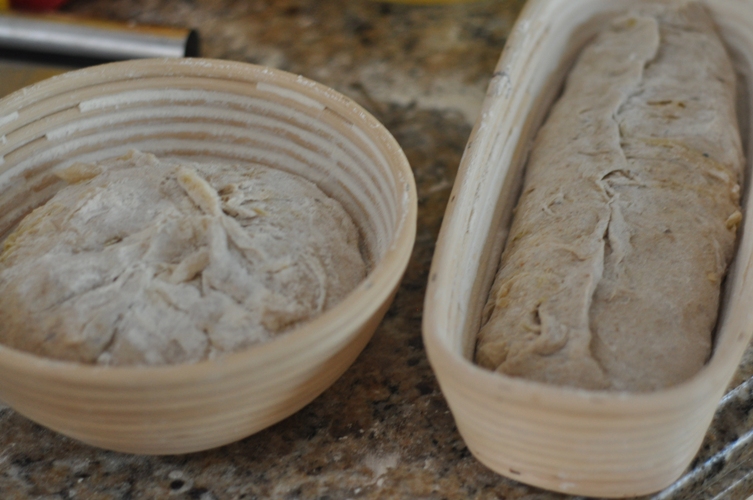
- Proof in brotforms or on a parchment lined baking sheet dusted with cornmeal. Mist the exposed dough with spray oil and cover with plastic wrap. Proof for 2 to 3 hours or place in the refrigerator overnight. If retarding overnight, remove them from the refrigerator at least 4 hours before baking.
- Preheat your oven to 450 degrees F for a least 45 mins before baking if using a baking stone (if not using the baking stone preheat your oven until it reaches temperature). Place a steam pan in the oven to preheat as well. Remove the plastic wrap from the dough 10 mins before baking.
- If the dough was proofed in a basket, gently turn it out onto a parchment lined baking sheet dusted with cornmeal. If you are not using a baking stone, bake the loaves directly on the sheet pan. Just before placing in the oven score the loaves.
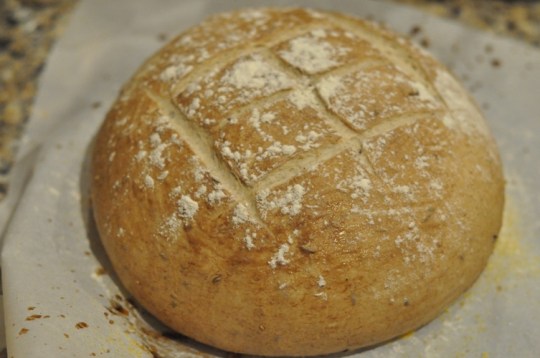 Then slide onto the baking stone. Quickly pour 1 cup hot water into the steam pan and close the door. After 30 seconds mist the dough with hot water. Repeat twice more at 30 second intervals. Bake the loaves for 15 mins then lower the oven temp to 425F, continue baking for 25 mins or until the loaves are a rich brown colour and register 205 degrees F in the centre.
 - Transfer the loaves to a cooling rack and allow to cool for at least an hour before slicing.
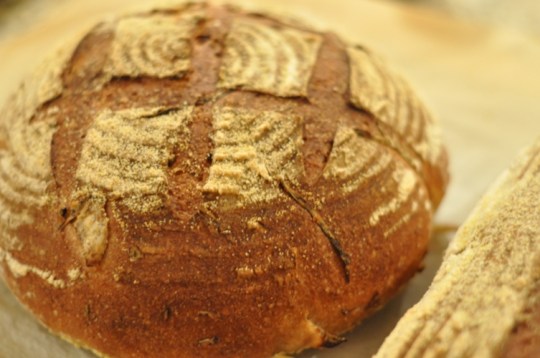
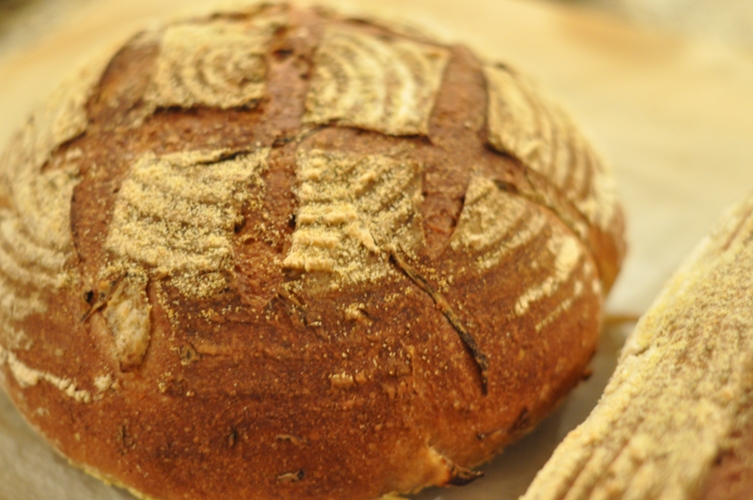
This bread has quickly become a family favorite and is an excellent way to use some of your home canned Sauerkraut.


 Putting Up With The Turnbulls